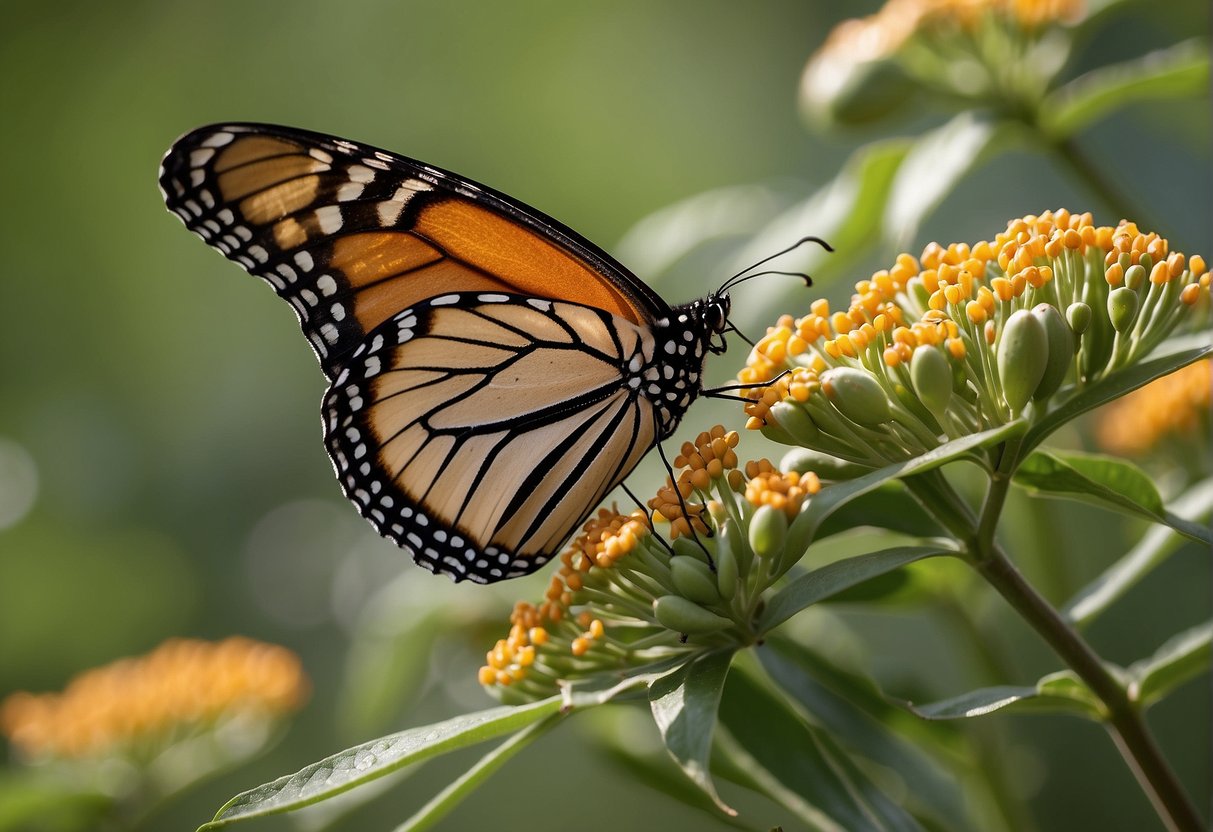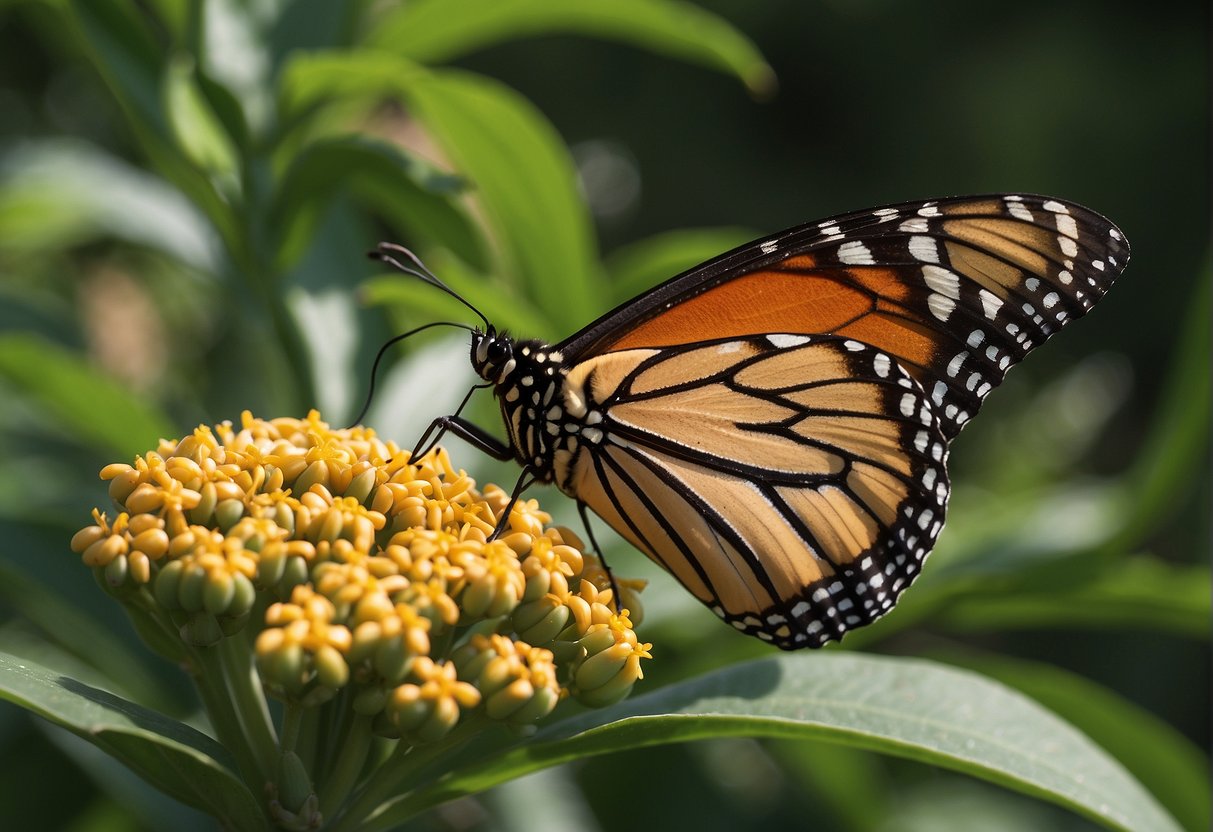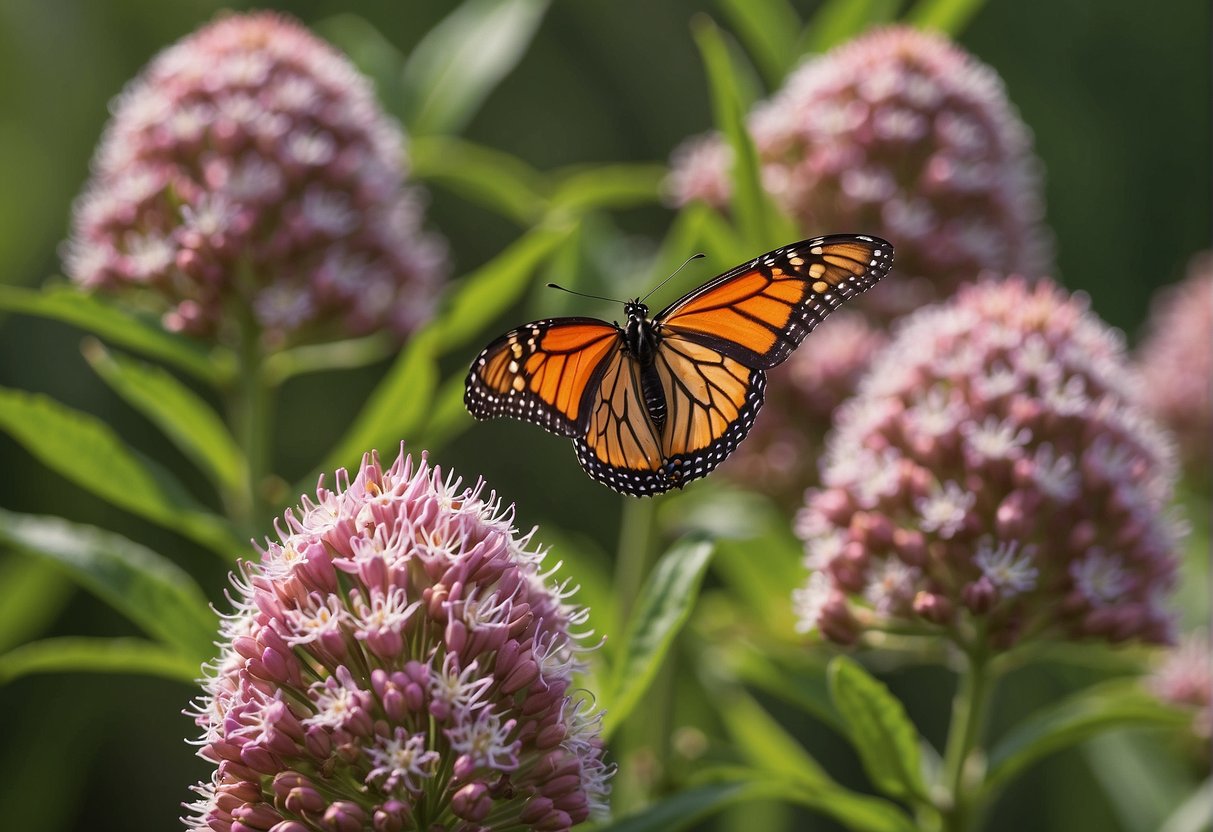

If you’ve ever spotted a monarch butterfly, perhaps you were captivated by its vibrant orange and black design, a hallmark that easily distinguishes it. Renowned for their extensive migrations, these butterflies embark on journeys spanning thousands of miles, traveling from their North American breeding locations down to Mexico. But, were you aware that milkweed plays a vital role in the life cycle of the monarch butterfly?
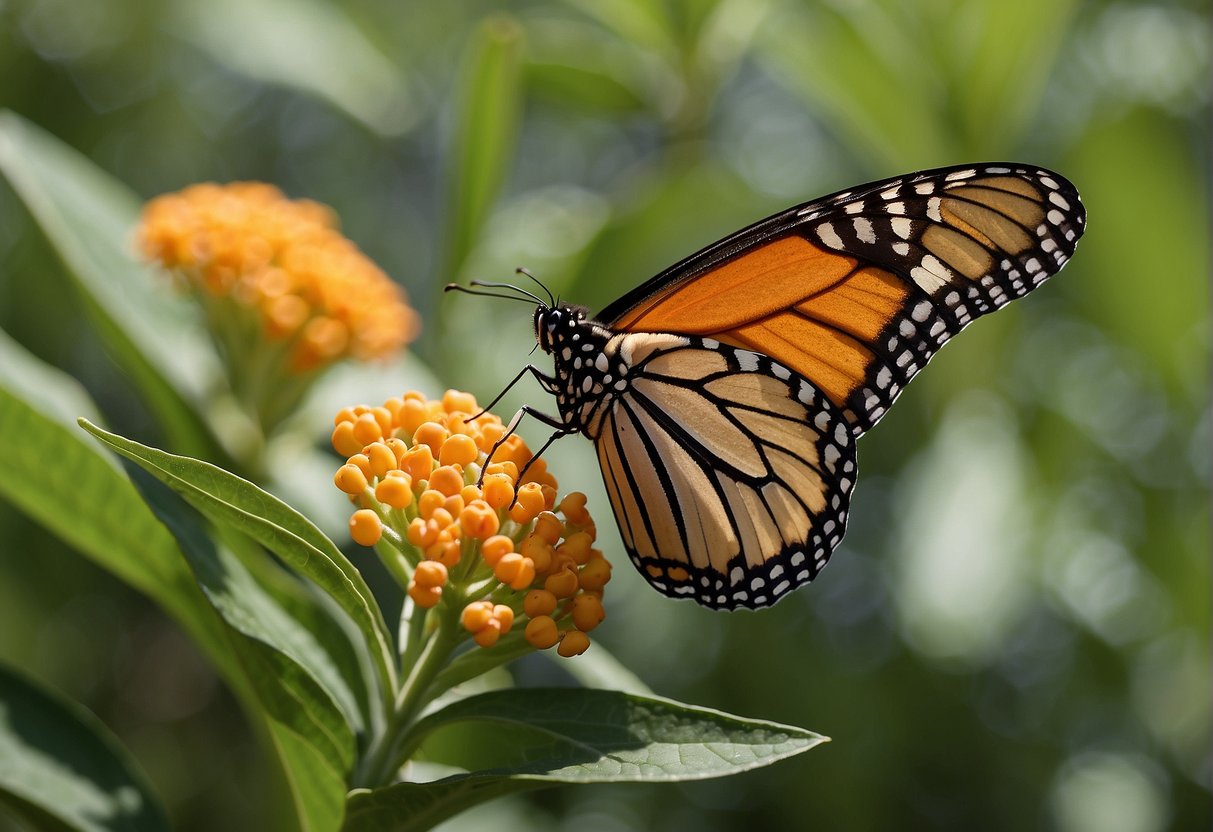
Milkweed is often called the keystone plant for monarch butterflies because it is the only plant that monarch caterpillars can eat. Without milkweed, monarchs would not be able to complete their life cycle and their populations would decline. In this article, we’ll take a closer look at the role of milkweed in the life of a monarch butterfly, including how it affects their migration, breeding, and conservation efforts.
Key Takeaways
- Milkweed is the only plant that monarch caterpillars can eat, making it a crucial part of their life cycle.
- Monarch butterflies rely on milkweed for breeding and migration, and conservation efforts have focused on planting more milkweed to support their populations.
- Understanding the role of milkweed in the life of a monarch butterfly is important for conservation efforts and protecting this iconic species.
Milkweed as the Keystone Plant for Monarch Butterflies
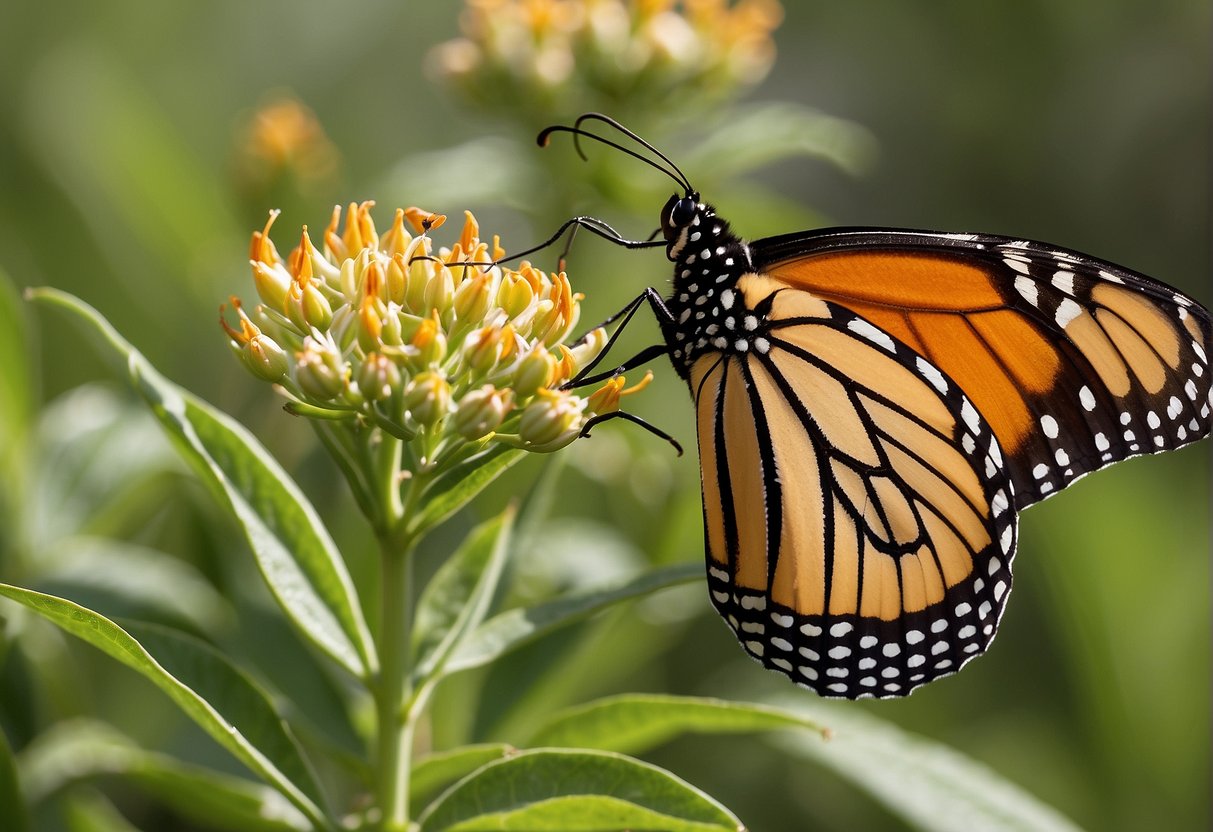
Milkweed is a crucial plant for the survival of monarch butterflies. It serves as the primary host plant for monarch larvae, providing them with the necessary nutrients to grow and develop. Without milkweed, monarch populations would decline drastically.
The Lifecycle Dependency on Milkweed
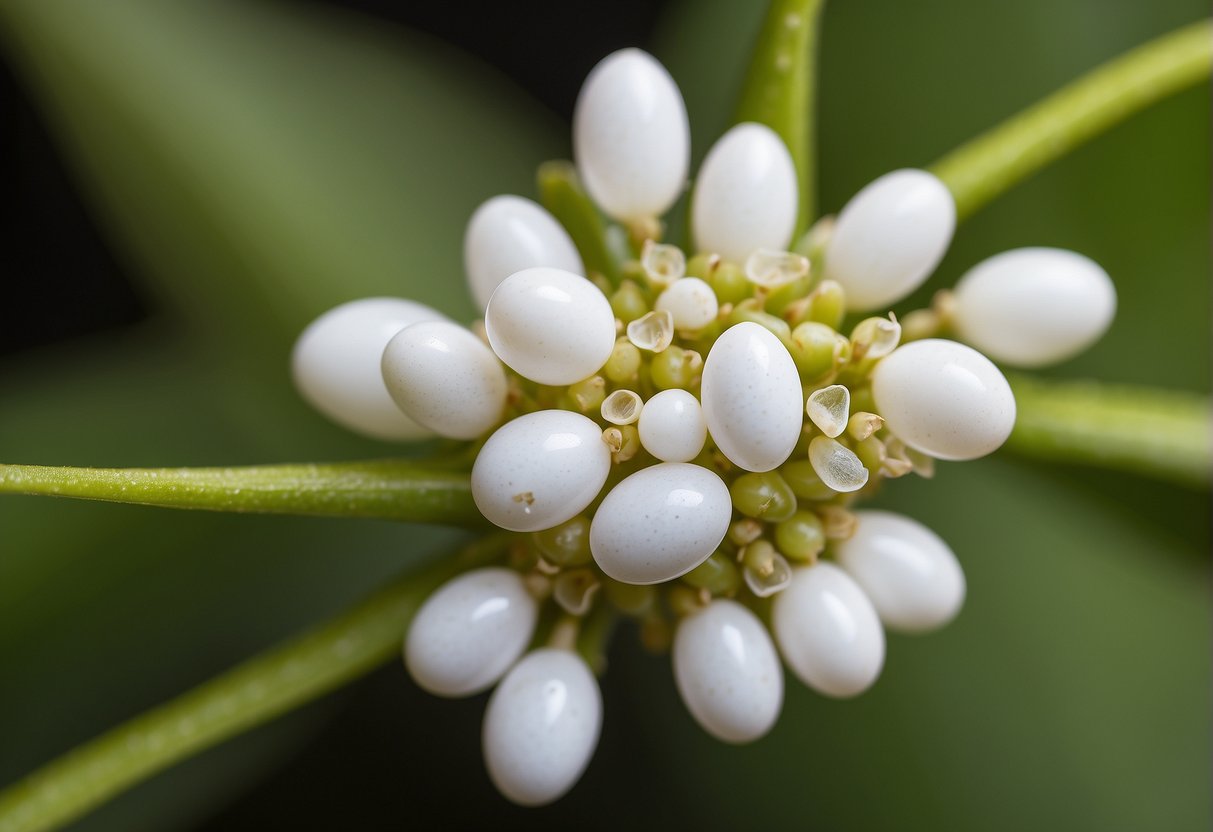
Monarch butterflies have a coevolutionary relationship with milkweed plants. Female monarchs lay their eggs exclusively on milkweed, as it is the only plant that provides the necessary cardiac glycosides and cardenolides that monarch larvae need to survive. Once the eggs hatch, the larvae feed on the milkweed leaves, growing and molting several times before forming a chrysalis and eventually emerging as an adult butterfly.
Varieties of Milkweed and Their Importance
There are over 100 species of milkweed, each with its unique characteristics and adaptations. Some of the most common species of milkweed include the common milkweed (Asclepias syriaca) and the swamp milkweed (Asclepias incarnata). Native milkweed species are particularly crucial for monarch conservation efforts, as they are well adapted to the local climate and provide the best nutrition for monarch larvae.
Tropical milkweed (Asclepias curassavica) is a non-native species that has become popular among gardeners due to its bright colors and long blooming period. However, it can be harmful to monarch populations as it can harbor a parasite that can be lethal to monarch larvae.
Threats to Milkweed and Impact on Monarch Populations
Milkweed populations have been declining due to habitat loss, herbicide use, and other factors. This loss of milkweed has had a severe impact on monarch populations, which have declined by over 80% in recent years. Conservationists and gardeners are working to restore milkweed habitats and promote the use of native milkweed species to help support monarch populations.
In conclusion, milkweed is a vital plant for the survival of monarch butterflies. Its unique relationship with monarchs highlights the importance of preserving native plant species and the role they play in supporting local ecosystems.
Monarch Butterflies: Migration, Breeding, and Conservation
Migration Patterns and Milkweed’s Role
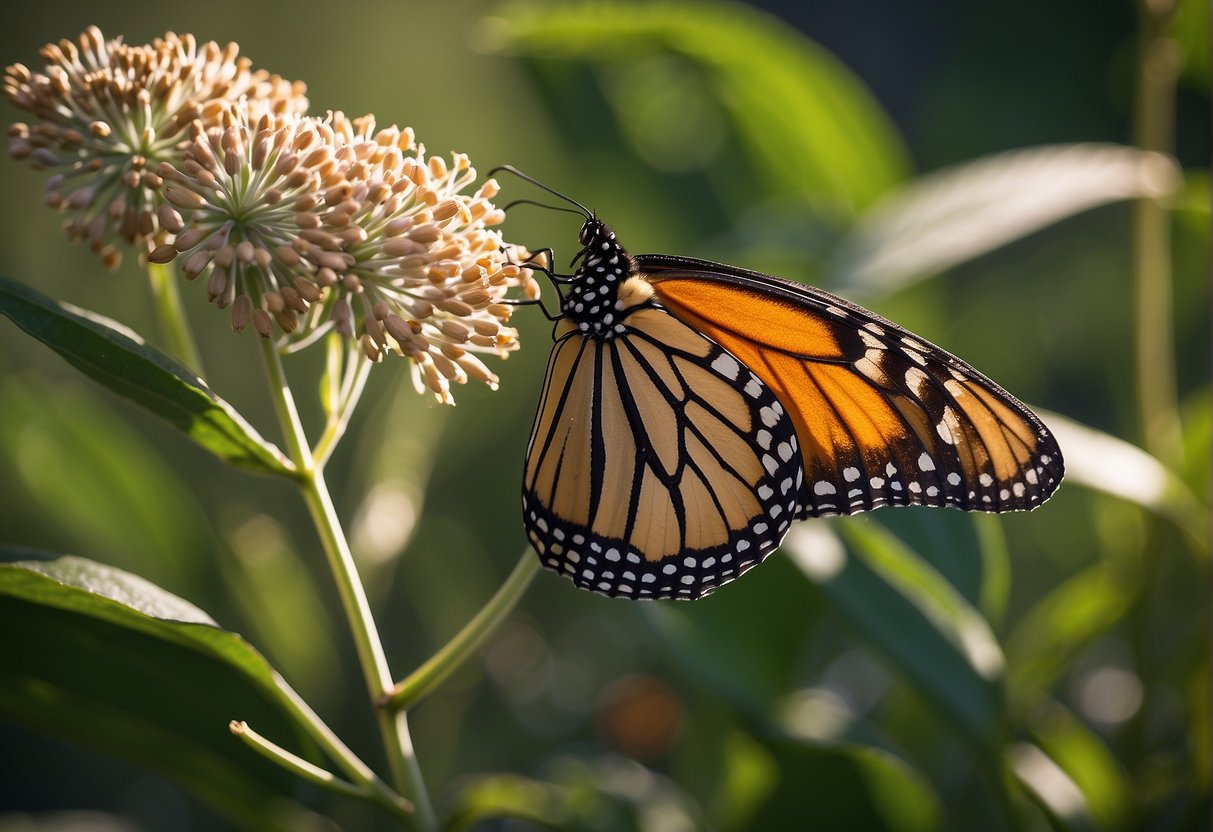
As a monarch butterfly, you are known for your incredible migration patterns. Every year, you travel thousands of miles from your breeding grounds in North America to your wintering grounds in Mexico. Your wings are strong, but your journey would not be possible without the help of milkweed.
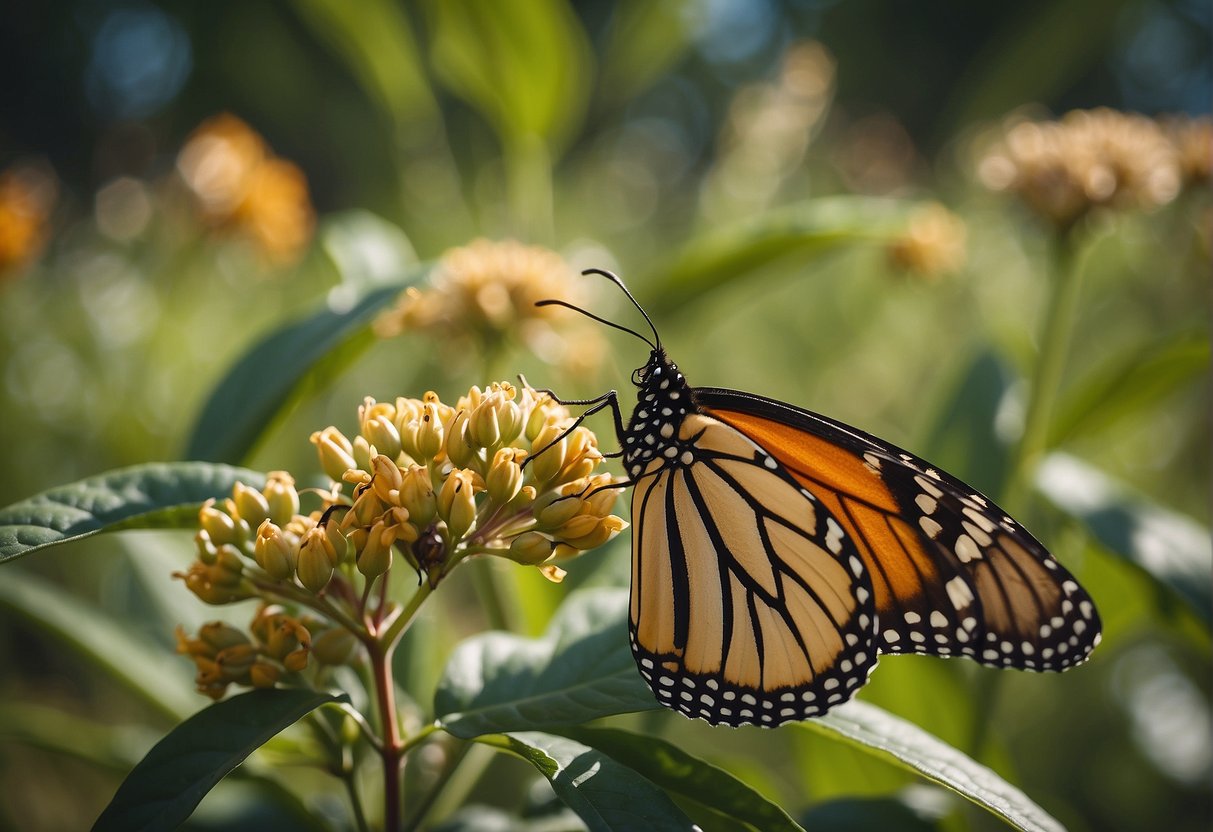
Milkweed is a crucial part of your life cycle. As a caterpillar, you feed exclusively on milkweed leaves, which provide the nutrients you need to grow and develop. As an adult butterfly, you rely on milkweed for a different reason: it is the only plant on which you lay your eggs. Without milkweed, your offspring would have no breeding habitat.
Breeding and Reproductive Reliance on Milkweed
As a male monarch butterfly, your role in breeding is to find a mate. You use your keen eyesight to search for a female monarch, and once you find one, you mate with her. The female monarch then lays her eggs on milkweed leaves, and the cycle begins again.
Female monarchs have a more complex role in breeding. They must find the right milkweed plant on which to lay their eggs. They use their sense of smell to locate the plant, and once they find it, they carefully lay their eggs on the underside of the leaves. The eggs hatch into tiny caterpillars, which feed on the milkweed leaves until they are ready to pupate and become adult butterflies.
Conservation Strategies for Monarch Butterflies and Milkweed
As a monarch butterfly, you face many challenges in your life. Loss of habitat due to logging and development, as well as the use of pesticides, have greatly reduced the amount of milkweed available to you. This has led to a decline in your population, and conservation efforts are underway to help protect you and your habitat.
One of the most important conservation strategies is to plant milkweed. This helps to provide breeding habitat for monarchs and ensures that there is enough food for caterpillars to grow and develop. Conservationists are also working to protect overwintering habitats in Mexico and California, where monarchs gather in large numbers.
By understanding the role of milkweed in your life cycle, we can work together to protect you and your habitat. With continued conservation efforts, we can help ensure that future generations of monarch butterflies can continue their incredible migration patterns and thrive in their natural habitats.
Frequently Asked Questions
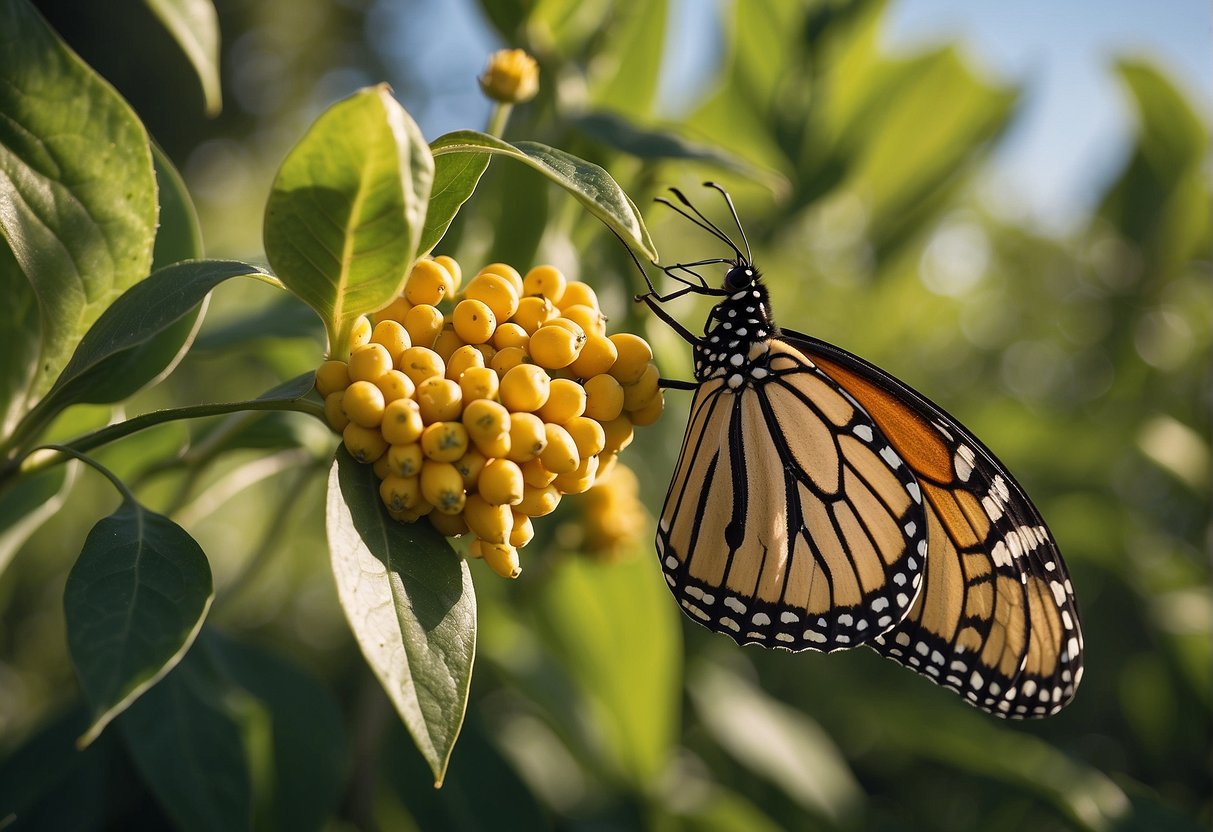
Why is milkweed essential for monarch butterfly survival?
Milkweed is essential for monarch butterfly survival because it is the only plant that the monarch butterfly larvae can eat. The monarch butterfly cannot survive without milkweed because it is the only plant the butterfly will lay its eggs on.
What part does milkweed play in the monarch butterflies’ life cycle?
Milkweed plays a critical role in the monarch butterflies’ life cycle. The monarch butterfly will lay its eggs on the milkweed plant, and the larvae will feed on the leaves of the milkweed plant. The milkweed plant is the only plant that the monarch butterfly larvae can eat. Once the larvae have eaten enough, they will form a chrysalis and undergo metamorphosis to become an adult butterfly.
How does milkweed affect the health and development of monarch caterpillars?
Milkweed is essential for the health and development of monarch caterpillars because it provides them with all the nutrients they need to grow and develop. The milkweed plant contains toxins that are harmful to other insects, but the monarch caterpillar is immune to these toxins. The toxins in the milkweed plant make the monarch caterpillar taste bad to predators, which helps protect them from being eaten.
What are the consequences for monarch butterflies if milkweed populations decline?
If milkweed populations decline, it can have serious consequences for monarch butterflies. Without milkweed, the monarch butterfly will not have a place to lay its eggs, and the larvae will not have a source of food. The decline in milkweed populations is one of the main reasons why monarch butterfly populations have been declining in recent years.
Apart from being a food source, how else does milkweed benefit monarch butterflies?
Apart from being a food source, milkweed also benefits monarch butterflies by providing a place for them to lay their eggs. Milkweed plants also provide shelter and protection for monarch butterflies from predators and the elements.
What is the ecological significance of the relationship between milkweed and monarch butterflies?
The relationship between milkweed and monarch butterflies is ecologically significant because it is an example of coevolution. As the monarch butterfly evolved, it became specialized to feed on the milkweed plant, and the milkweed plant evolved to produce toxins that protect it from other insects but not the monarch butterfly. This relationship is an example of how plants and animals can evolve together and depend on each other for survival.