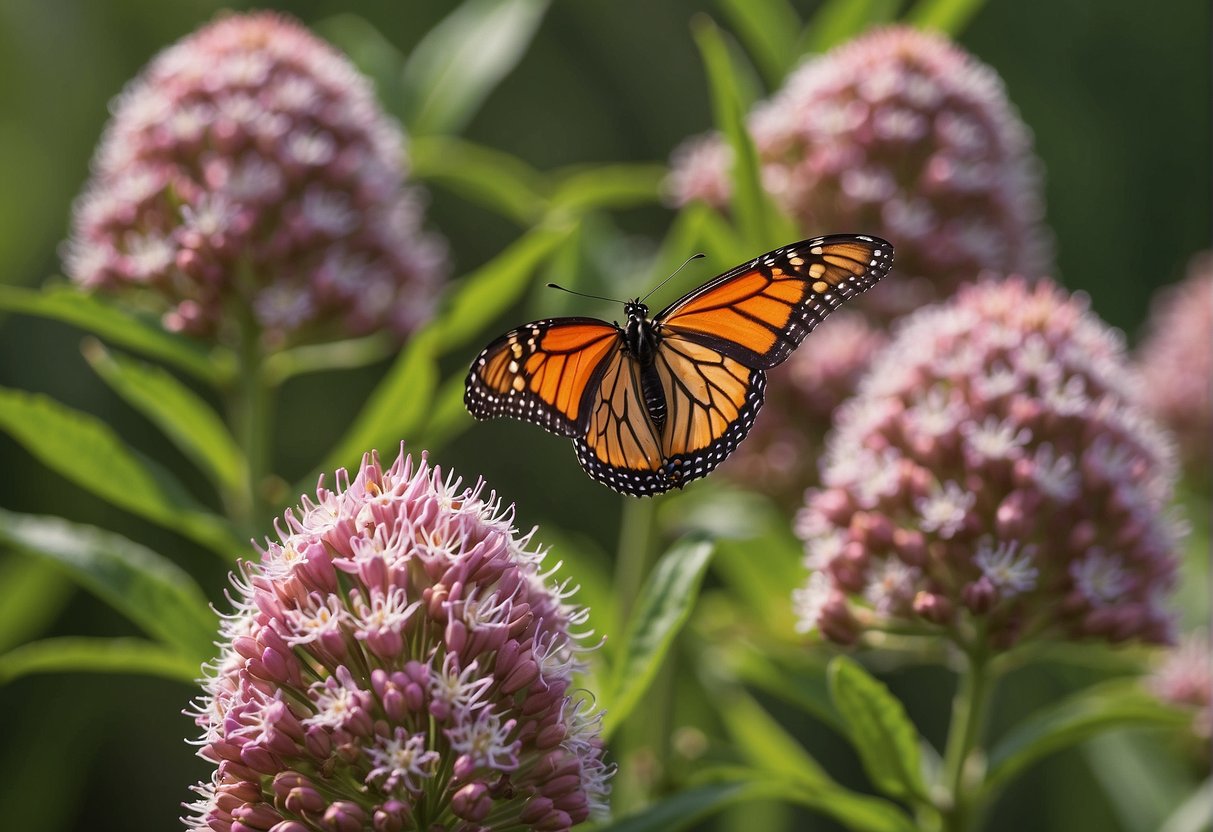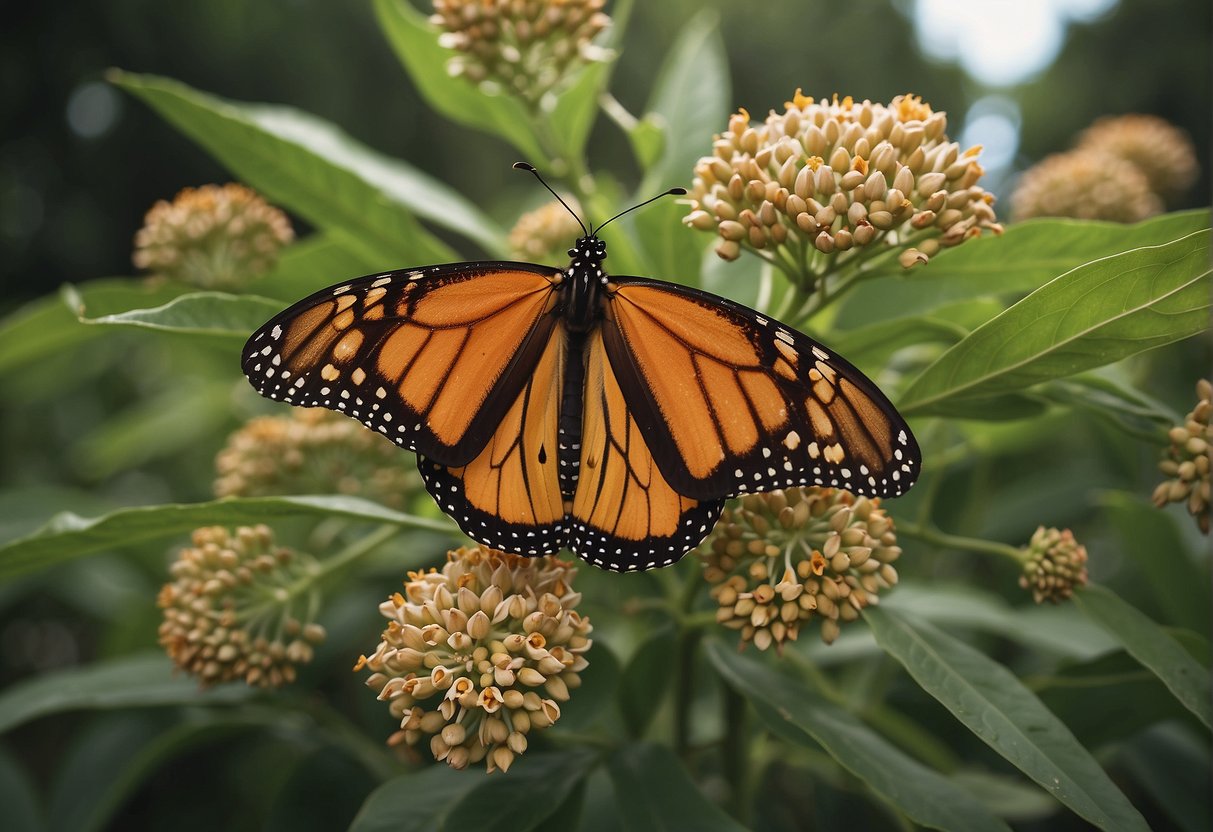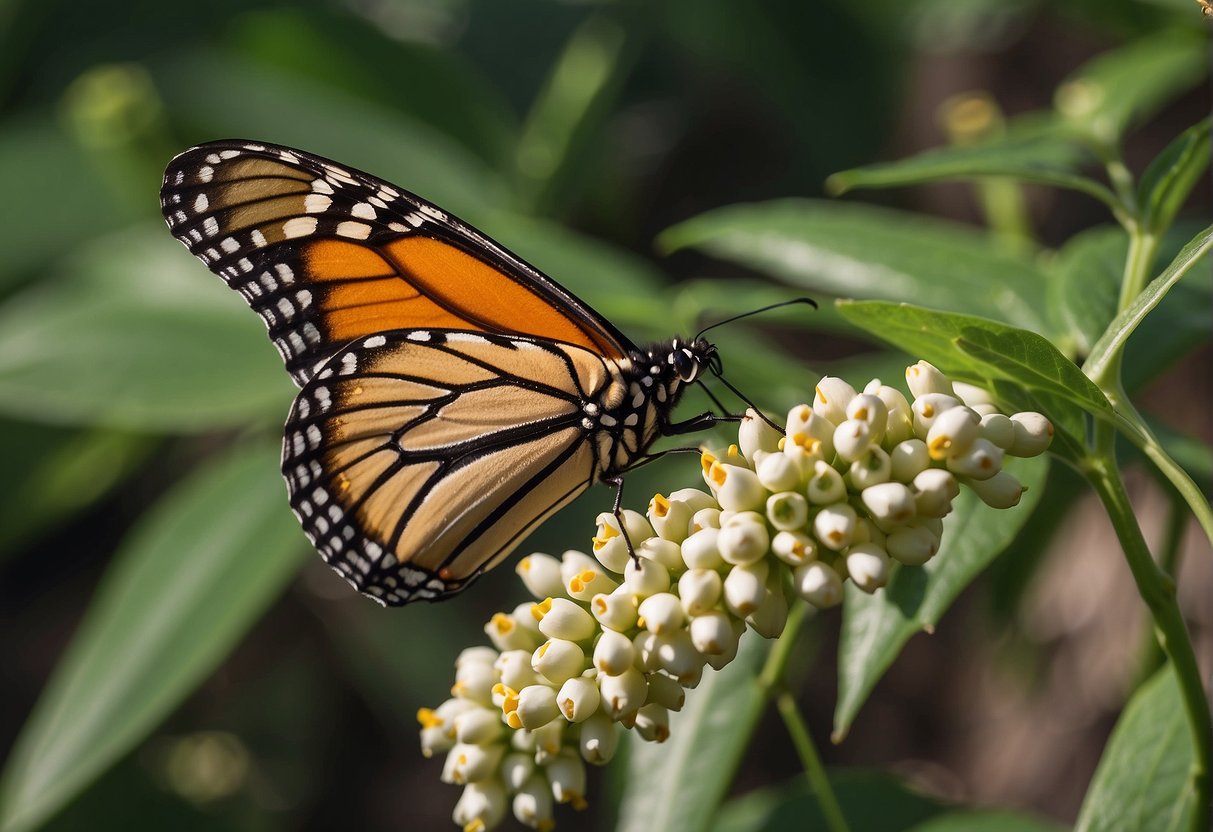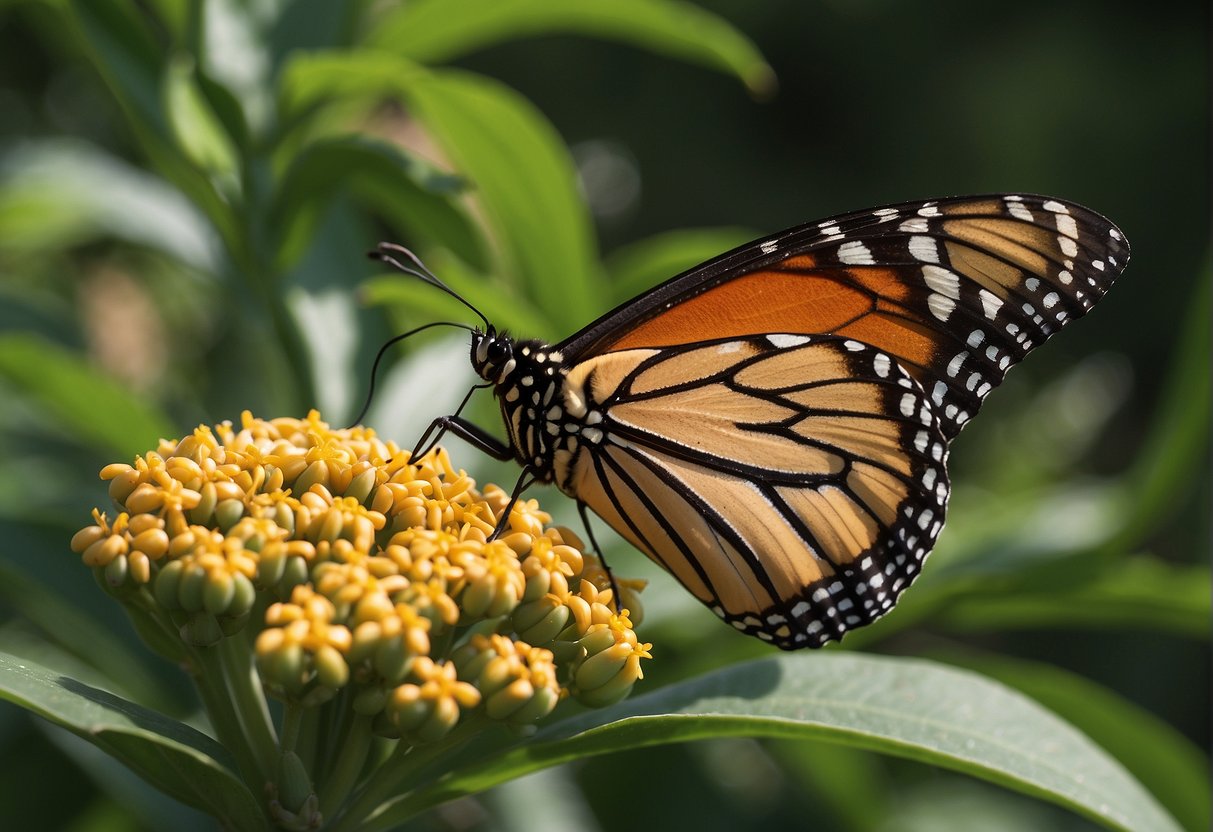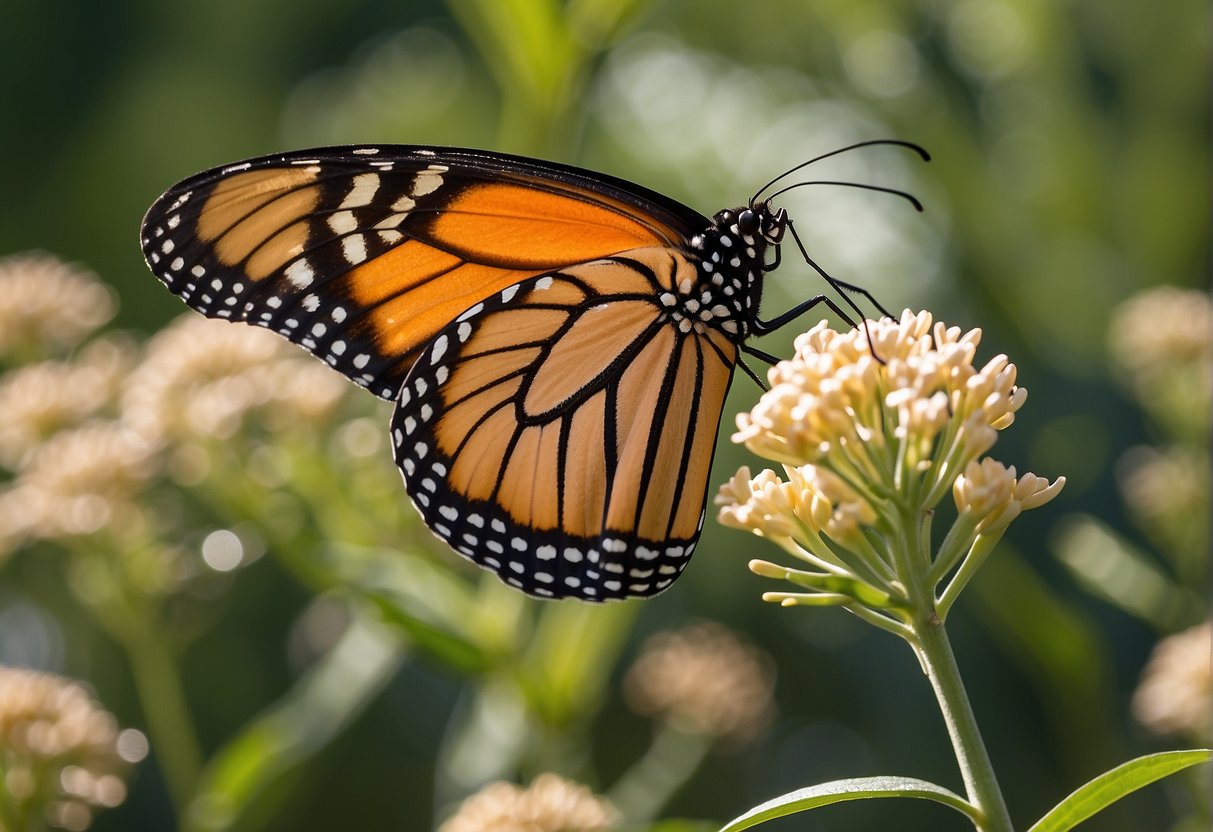

Have you ever observed a monarch butterfly? Its vivid orange and black wings are hard to miss. However, are you aware that these butterflies depend on milkweed plants to survive? Milkweed serves as the exclusive host for monarch egg laying, and its leaves constitute the main nourishment for the monarch larvae. Therefore, how does milkweed play a role in the life of monarchs? Let’s delve deeper into this connection.
The Life Cycle of Monarch Butterflies and the Role of Milkweed
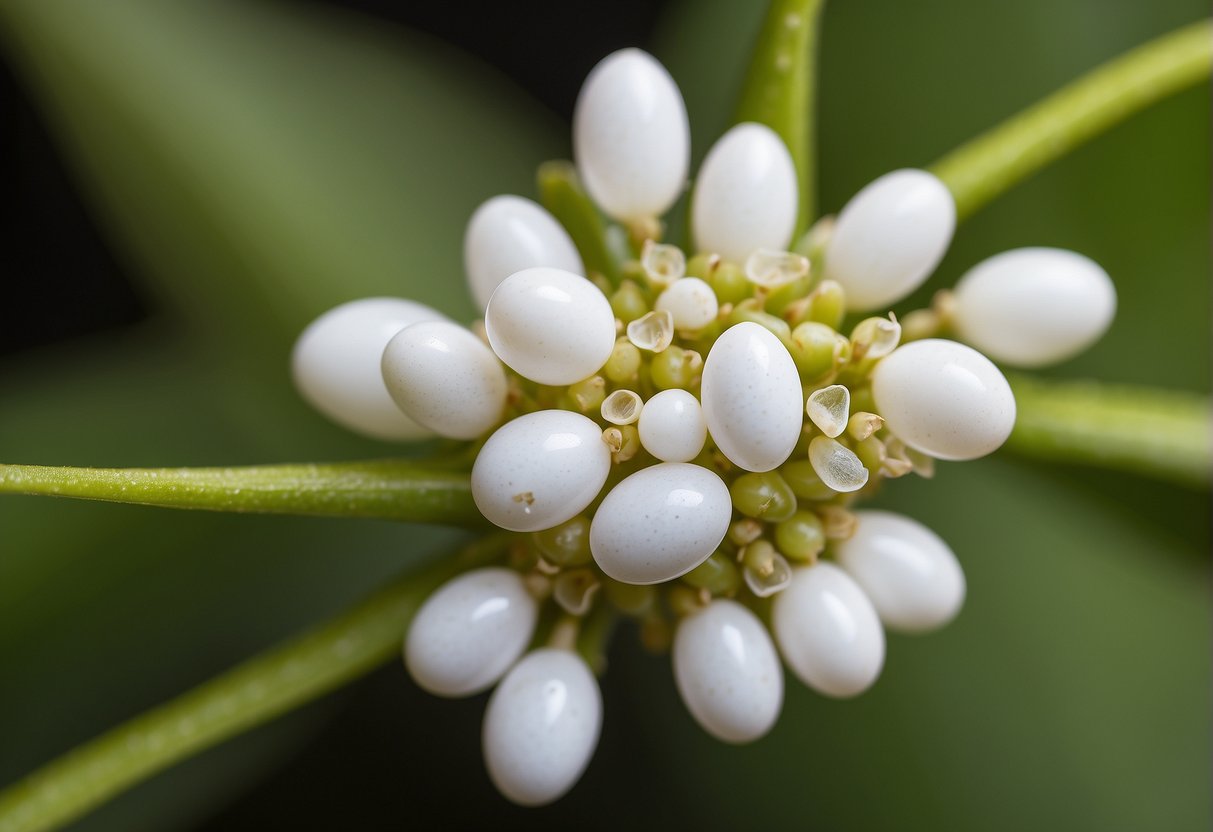
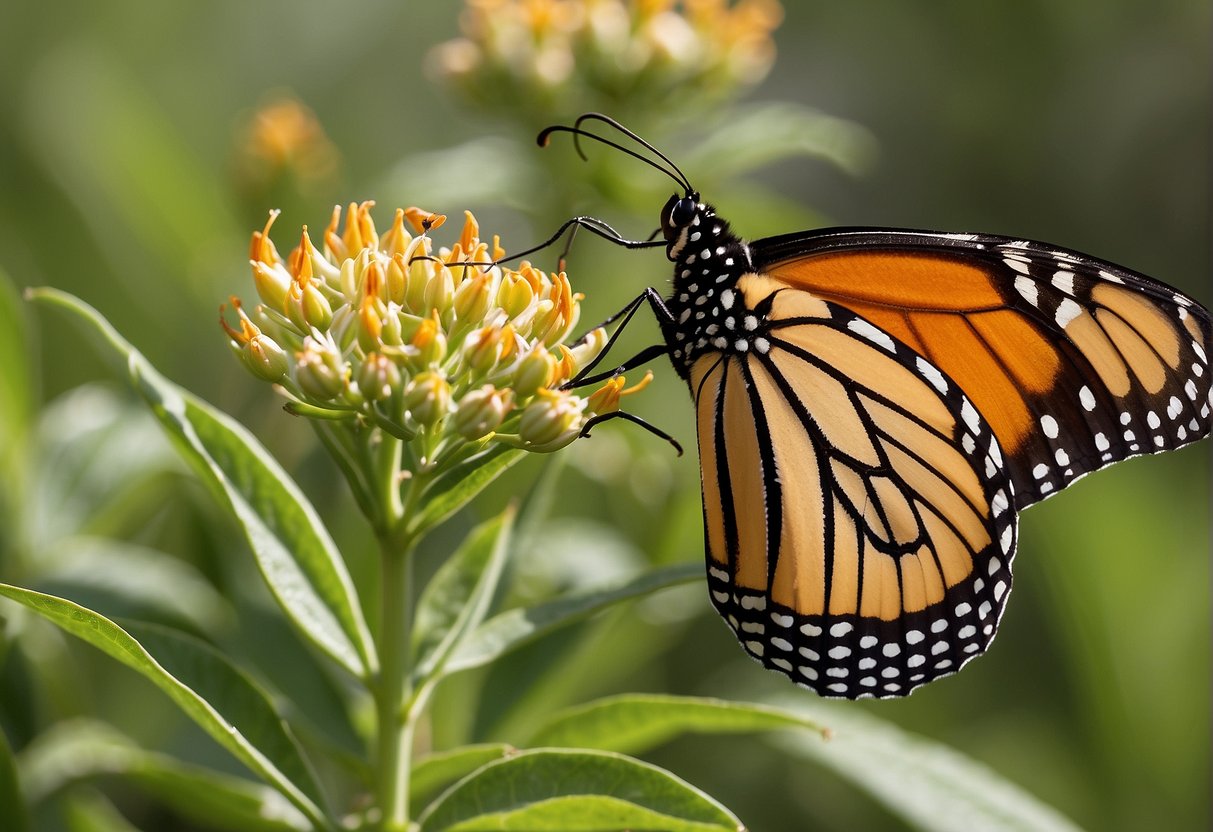
To understand the relationship between milkweed and monarchs, it’s important to know a bit about the butterfly’s life cycle. Monarchs go through four stages: egg, larva (caterpillar), pupa (chrysalis), and adult butterfly. Female monarchs lay their eggs on milkweed plants, and the tiny caterpillars that emerge feed exclusively on the leaves. As they grow, the caterpillars shed their skin several times before forming a chrysalis. Inside the chrysalis, the caterpillar transforms into a butterfly. Without milkweed, the monarch life cycle would not be possible.
Conservation Efforts and Ecological Impact
Unfortunately, milkweed is in decline due to factors such as habitat loss and the use of herbicides. This is a problem for monarchs, whose populations have also been declining in recent years. Conservation efforts are underway to protect and restore milkweed habitat, which in turn helps to support monarch populations. The relationship between milkweed and monarchs is just one example of how species are interconnected and how important it is to protect biodiversity.
Key Takeaways
- Milkweed is essential to the survival of monarch butterflies, as it is the only plant that monarchs lay their eggs on and the primary food source for monarch caterpillars.
- The decline of milkweed due to habitat loss and herbicide use is a major threat to monarch populations.
- Conservation efforts are underway to protect and restore milkweed habitat and support monarch populations.
The Life Cycle of Monarch Butterflies and the Role of Milkweed
Monarch butterflies have a unique life cycle that is closely tied to milkweed plants. Milkweed is the only plant that monarchs lay their eggs on, and it is also the primary food source for monarch caterpillars. In this section, we will explore the different stages of the monarch butterfly life cycle and the important role that milkweed plays in each stage.
Egg Laying and Milkweed Selection
Female monarch butterflies lay their eggs on the underside of milkweed leaves. They carefully select the milkweed species that they lay their eggs on, as different milkweed species have varying levels of toxicity that can affect the survival of the developing caterpillars. Once the eggs are laid, they take around 3-4 days to hatch.
Caterpillar Development and Milkweed Consumption
The newly hatched monarch caterpillars feed exclusively on milkweed leaves. They consume large quantities of milkweed, which contains toxins that make them unpalatable to predators. As the caterpillars grow, they shed their skin several times and go through five instars before reaching their full size.
Adult Monarch Nectar Feeding and Migration
Once the caterpillars have completed their development, they form a chrysalis and undergo metamorphosis to become an adult butterfly. Adult monarchs feed on nectar from a variety of flowers, but they still require milkweed for successful breeding. In the fall, monarchs in North America migrate to Mexico to overwinter in oyamel fir forests. The migration is a remarkable feat, with monarchs covering thousands of miles to reach their overwintering sites.
In conclusion, milkweed is an essential component of the monarch butterfly life cycle. From egg laying to adult nectar feeding and migration, milkweed plays a critical role in the survival and success of monarch butterflies.
Conservation Efforts and Ecological Impact
Decline of Monarch Populations and Contributing Factors
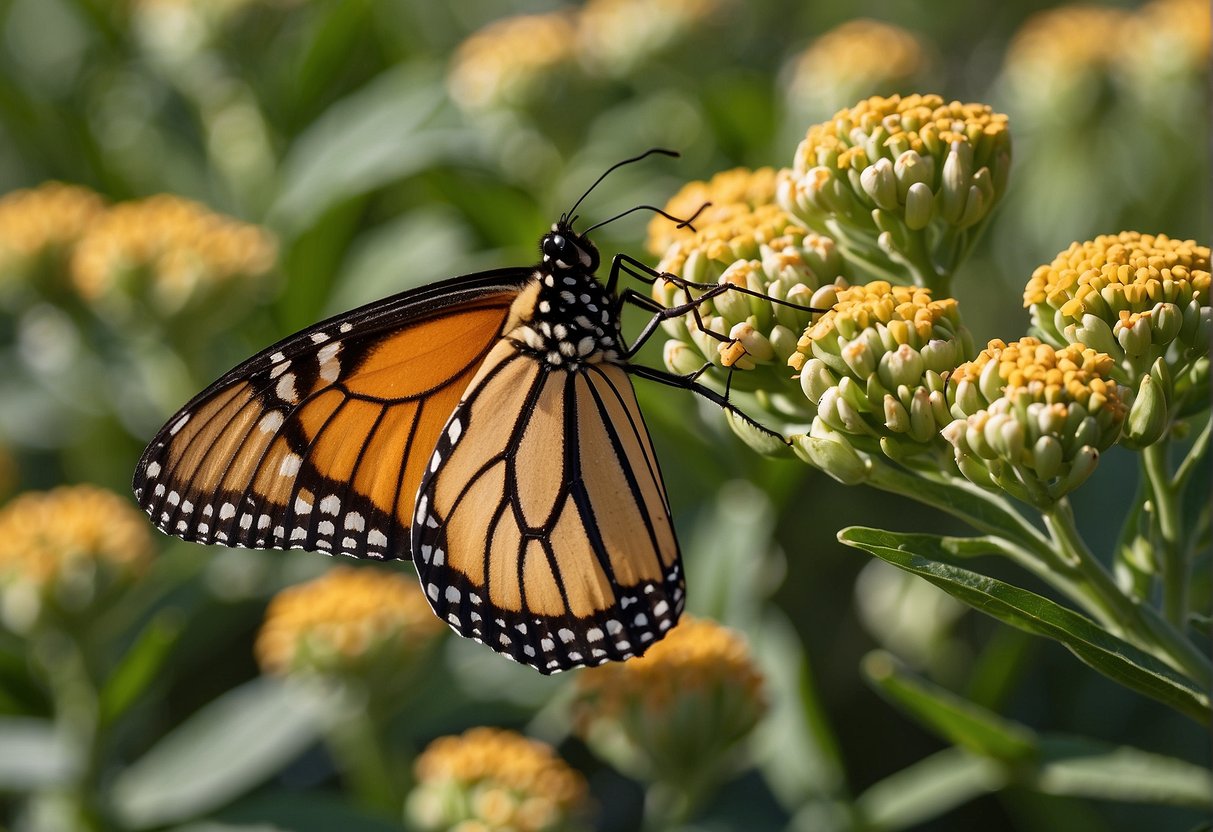
Monarch butterfly populations have been in decline for several decades due to various factors. Habitat loss, climate change, and the use of pesticides are some of the primary reasons for the decline. Monarch butterflies rely on milkweed plants for food and as a place to lay their eggs. The loss of milkweed plants due to habitat loss and pesticide use has had a significant impact on the monarch population.
In addition to habitat loss, the monarch butterfly also faces threats from predators such as birds and spiders. The decline of the monarch population has led to concerns about the species becoming endangered.
Protective Measures and Milkweed Restoration
To protect the monarch butterfly and prevent it from becoming endangered, various protective measures have been put in place. One of the most effective measures is to restore milkweed plants in areas where they have been lost due to habitat destruction or pesticide use.
Planting native milkweed species in gardens and other areas can help to provide the necessary habitat for monarch butterflies to thrive. The Endangered Species Act has also been used to protect the monarch butterfly and its habitat.
Overall, conservation efforts and milkweed restoration are essential for protecting the monarch butterfly and preventing its decline. By taking action to restore milkweed plants and protect the monarch’s habitat, we can help to ensure the survival of this beautiful and important species.
Frequently Asked Questions
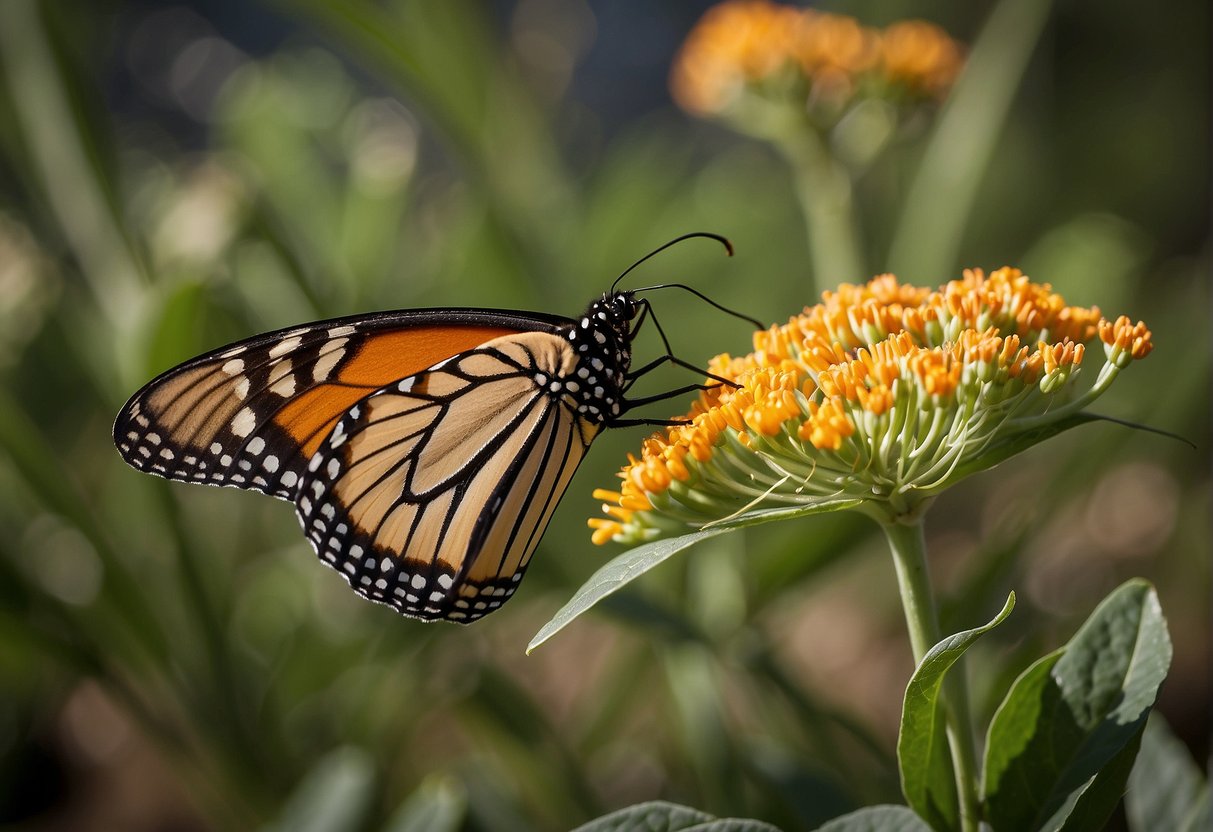
How do monarch butterflies benefit from milkweed plants?
Monarch butterflies lay their eggs on milkweed plants, and the caterpillars feed solely on the leaves of the plant. The toxins in the milkweed make the caterpillars and adult butterflies toxic to predators, which helps protect them from being eaten.
What are the consequences of monarch caterpillars consuming milkweed?
The toxins in milkweed, known as cardenolides, make monarch caterpillars and adult butterflies toxic to predators. These toxins can also affect the growth and development of the caterpillars, and consuming too much milkweed can be fatal.
Why are certain types of milkweed considered detrimental to monarch populations?
Some types of milkweed, such as tropical milkweed, can harbor a parasite that infects monarchs and can be harmful to their health. Additionally, planting non-native milkweed species can disrupt the monarch’s migratory patterns and lead to a decrease in the population.
In what ways does the milkweed plant rely on monarch butterflies?
Monarch butterflies are important pollinators for milkweed plants, and their migration patterns help spread the plant’s seeds to new areas. The presence of monarchs also helps to maintain genetic diversity within milkweed populations.
Can the toxicity of milkweed affect the survival of monarch butterflies?
While the toxins in milkweed can be harmful to predators, they are also essential to the survival of monarch butterflies. Without the protection provided by the toxins, monarchs would be more vulnerable to predation and may not be able to survive.
What impact does the presence of milkweed have on the lifecycle of monarch butterflies?
Milkweed is essential to the lifecycle of monarch butterflies, as it is the only plant on which the caterpillars will feed. Without milkweed, monarch populations would not be able to survive, and their numbers would continue to decline.