Home » Blog » How Tall Do Yucca Plants Grow Indoors: A Comprehensive Guide
How Tall Do Yucca Plants Grow Indoors: A Comprehensive Guide
December 28, 2024
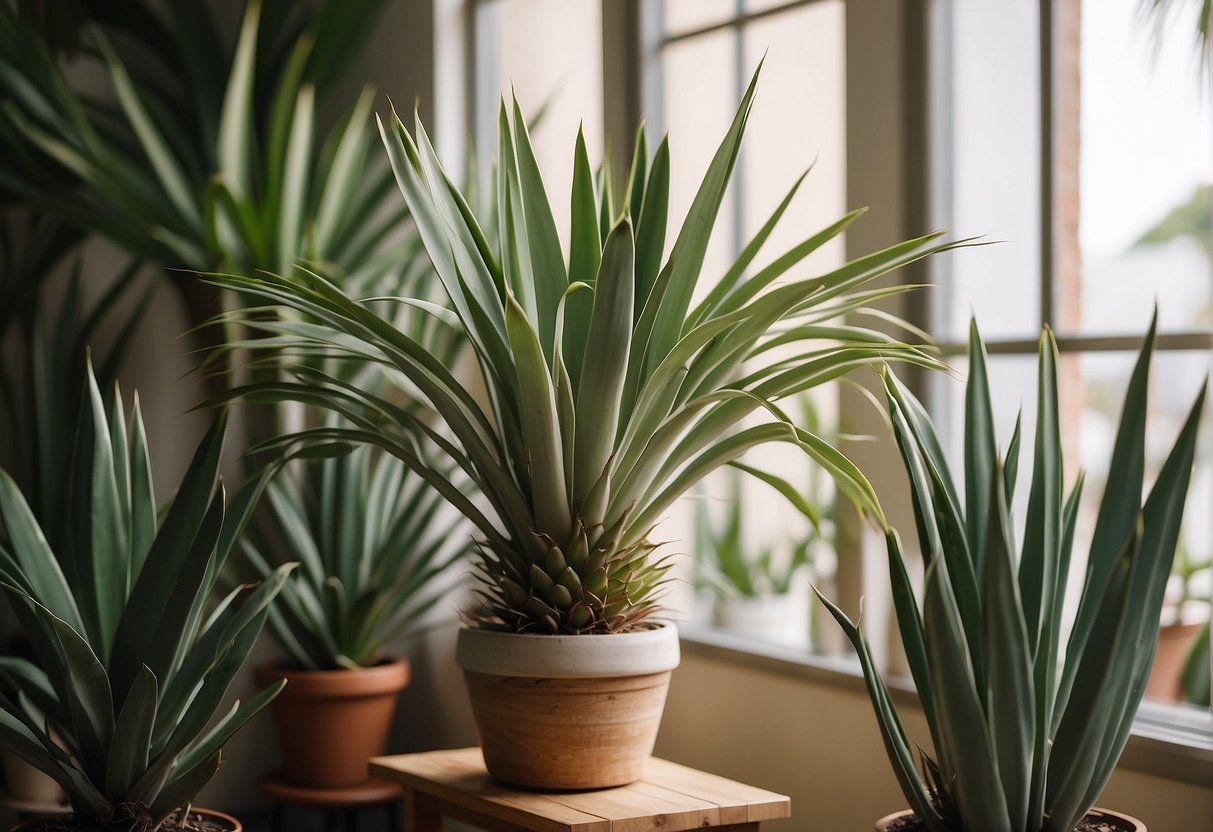
Should you wish to infuse your indoor environment with a hint of desert ambiance, consider acquiring a yucca plant. Renowned for their distinct look and minimal upkeep demands, these robust plants are favored by those who cultivate gardens indoors. However, one may wonder about the potential height a yucca plant can reach within an indoor setting.
The answer to this question depends on a few factors, including the specific type of yucca plant you have, the size of its container, and the conditions in your home. In general, most yucca plants will grow to be between three and eight feet tall when grown indoors, although some varieties can reach up to ten feet under the right conditions. Understanding the factors that contribute to yucca plant growth can help you create the ideal environment for your plant to thrive.
When it comes to indoor yucca plant care, there are a few key things to keep in mind. Proper watering, lighting, and fertilization are all important factors in ensuring that your yucca plant grows to its full potential. Additionally, understanding how to propagate and repot your plant can help you keep it healthy and thriving for years to come. In this article, we’ll explore everything you need to know about growing yucca plants indoors, from their ideal growing conditions to the most frequently asked questions about care and maintenance.
Key Takeaways
Yucca plants can grow to be between three and eight feet tall when grown indoors.
Proper care, including watering, lighting, and fertilization, is essential for optimal growth.
Understanding how to propagate and repot your plant can help you keep it healthy and thriving.
Understanding Yucca Plant Growth Indoors
Yucca plants are popular indoor plants due to their striking appearance and low maintenance requirements. Understanding their growth patterns and needs is crucial to ensure they thrive in your home.
Optimal Conditions for Growth
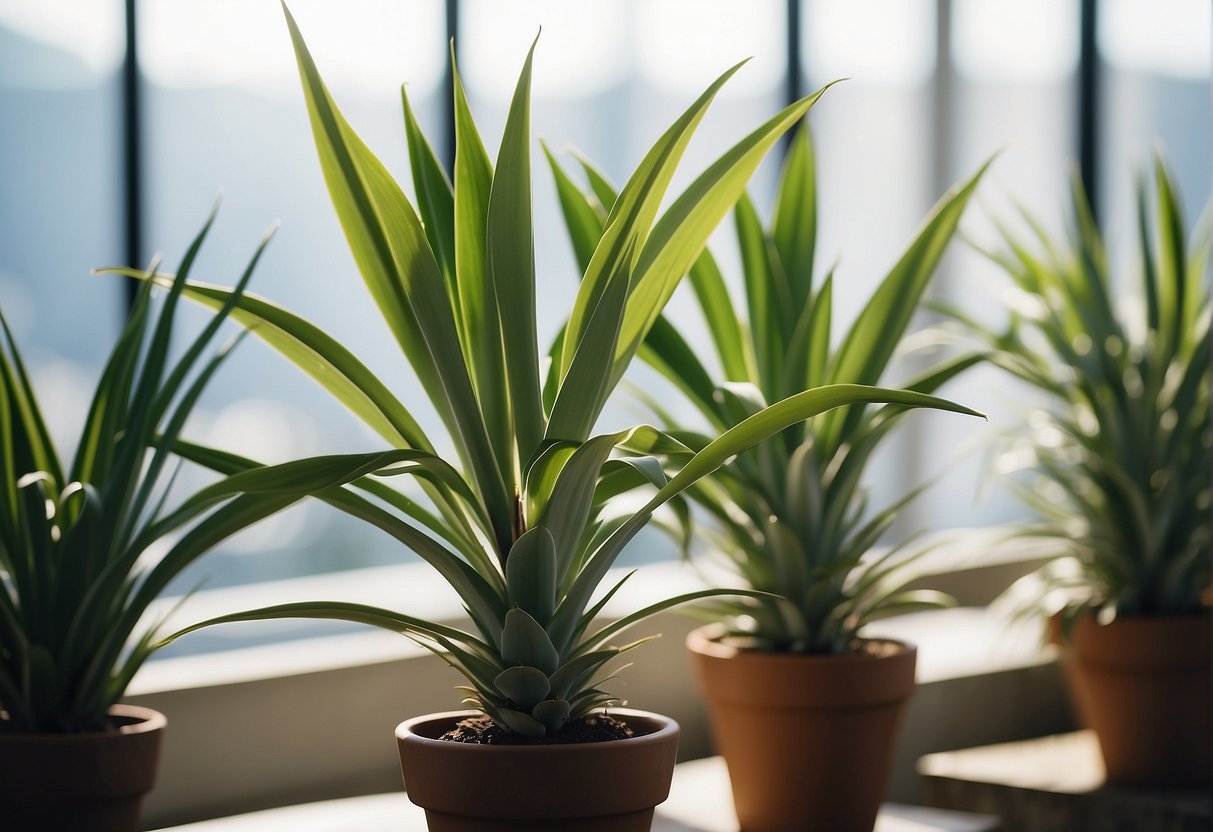
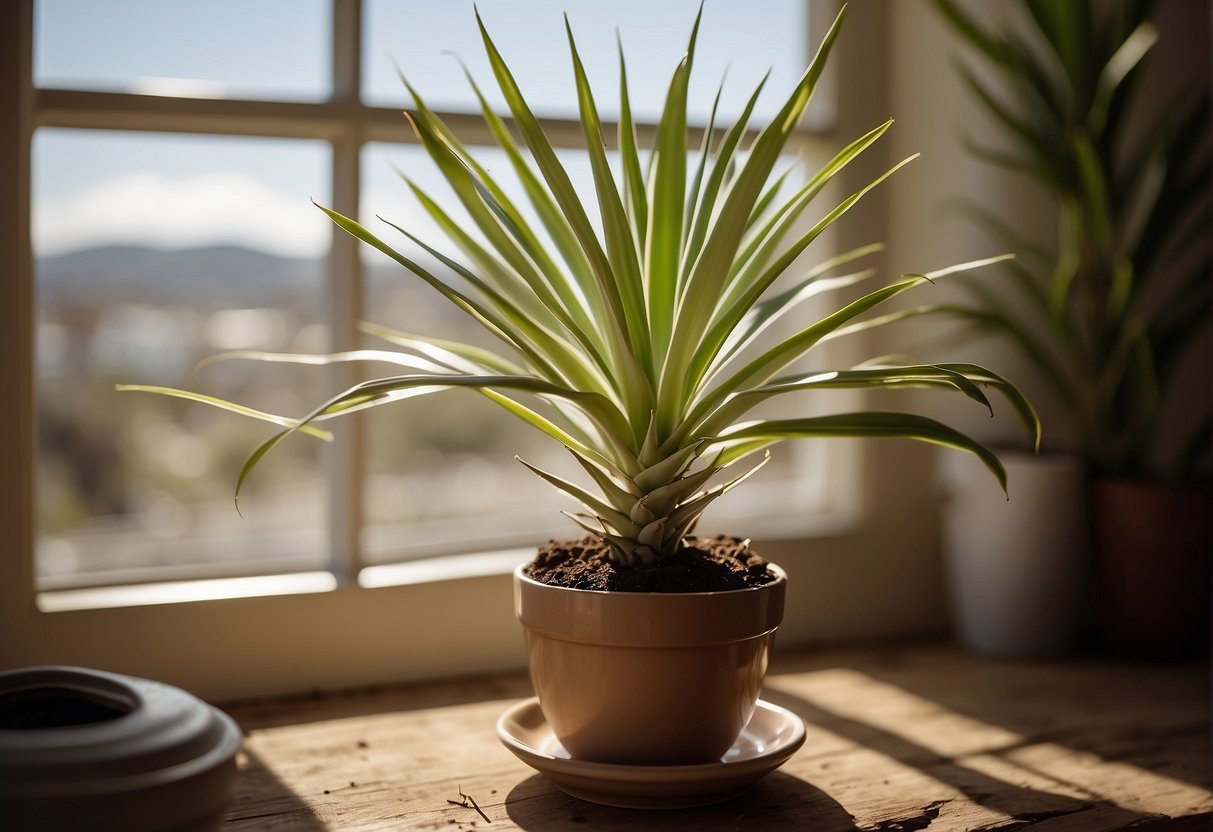
Yucca plants require bright, indirect light to grow properly. A west-facing window is an ideal location for them, as they can receive a good amount of light without being exposed to direct sun.
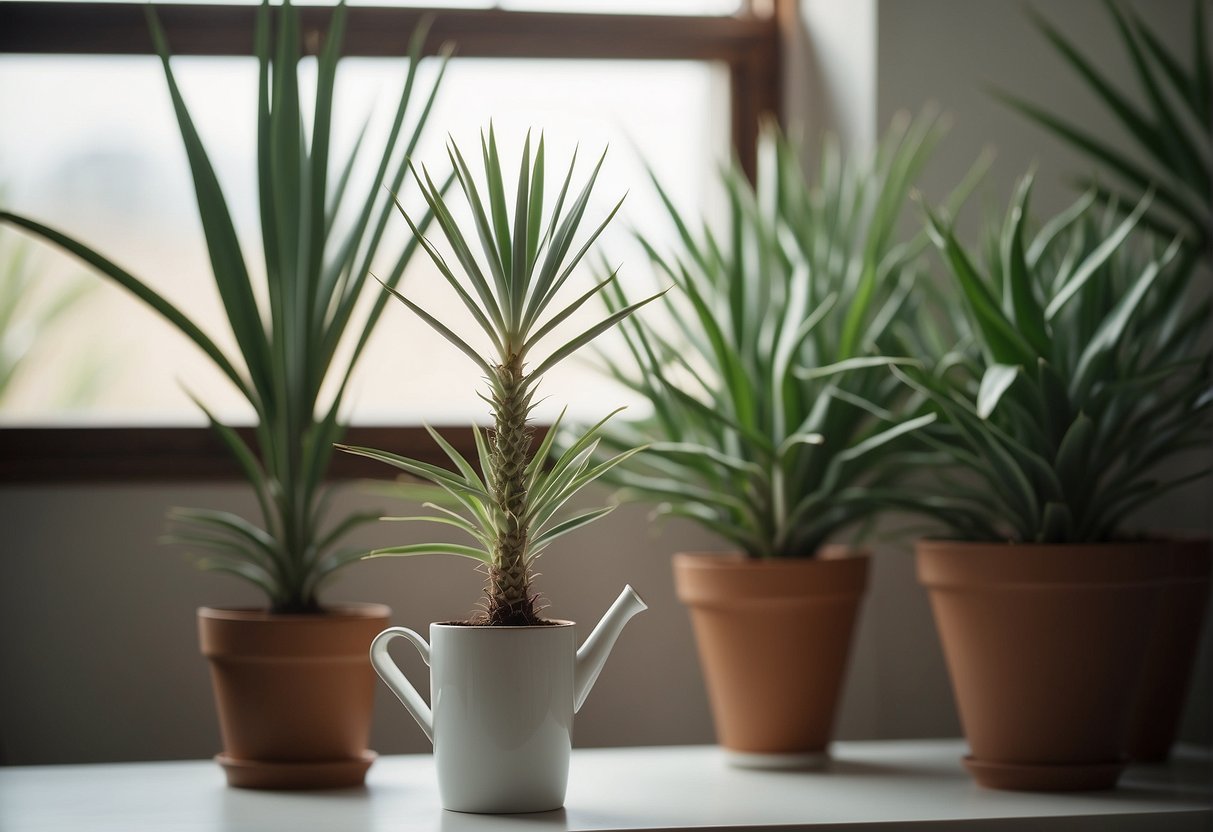
Yucca plants are drought-tolerant and prefer well-drained soil. They do not require frequent watering, and overwatering can lead to root rot and other issues. They prefer temperatures between 60-80°F and moderate humidity levels.
Common Varieties and Their Sizes
There are several common varieties of yucca plants that can be grown indoors, including Yucca elephantipes, spineless yucca, Yucca aloifolia, Yucca gigantea, Yucca flaccida, and Yucca filamentosa. The size of the plant can vary depending on the variety, with some growing up to 10 feet tall.
Potential Growth Challenges
Yucca plants can be susceptible to pests such as mealybugs and scale, as well as diseases like leaf spot. Yellowing leaves and brown leaf tips can also be signs of overwatering or other issues. It is important to monitor your plant regularly and take action if any problems arise.
Maintenance and Care Tips
Yucca plants require minimal maintenance, but regular watering, repotting, and fertilizing can help them grow and thrive. It is important to ensure proper drainage and use well-draining soil to prevent overwatering and root rot. Fertilize your plant every 2-3 months during the growing season with a balanced fertilizer.
Safety and Precautions
Yucca plants contain saponins, which can be toxic to pets if ingested. They also have sharp points on their leaves, so it is important to handle them carefully. Keep them out of reach of children and pets, and wear gloves when handling them. If you suspect your pet has ingested any part of the plant, seek veterinary attention immediately.
Overall, yucca plants are a great choice for indoor plants due to their striking appearance and low maintenance requirements. By providing them with the proper growing conditions and care, you can enjoy their beauty for years to come.
Propagation and Repotting
Yucca plants are easy to propagate and grow, making them a great choice for beginners. Propagation can be done in the spring when the plant is actively growing. There are several effective propagation techniques, including offsets, pups, and stem cuttings.
Effective Propagation Techniques
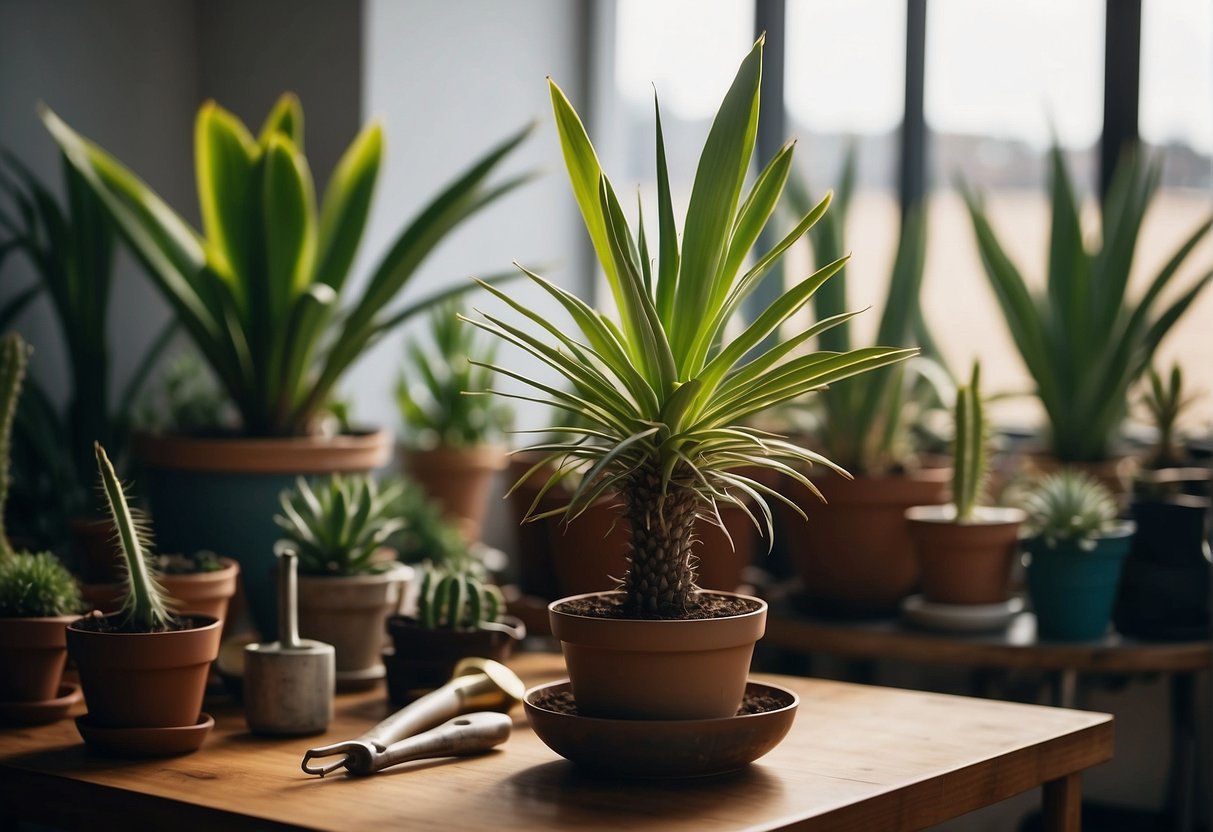
Offsets and pups are small plants that grow from the base of a mature yucca. These can be carefully removed and planted in their own sturdy pot with good drainage. Stem cuttings can also be taken from a mature yucca using a sharp knife. The cutting method involves cutting a stem at an angle and allowing it to dry out for a few days before planting in well-draining soil.
Best Practices for Repotting
When repotting a yucca plant, it is important to use a sturdy pot with good drainage. Yucca canes can be quite heavy, so a sturdy pot will prevent the plant from toppling over. Design and aesthetic considerations should also be taken into account when selecting the right container. Yucca plants make a great focal point in any room, so choose a container that complements your decor.
Design and Aesthetic Considerations
Yucca plants are a great addition to any indoor space. They are low maintenance and can thrive in full sun or low light conditions. When designing your indoor space, consider using yucca plants as a container plant. They can be grown alone or in groups to create a dramatic effect.
Selecting the Right Container
When selecting a container for your yucca plant, consider the size of the plant and the space it will be displayed in. A container that is too small can restrict growth, while a container that is too large can lead to overwatering. Yucca plants prefer well-draining soil and high humidity, so choose a container that allows for good air circulation.
Overall, yucca plants are hardy and easy to grow, making them a great choice for beginners. They are native to North and Central America and are resistant to agave plant bugs and aphids. With the right care and attention, your yucca plant will thrive and add a touch of green to your indoor space.
Frequently Asked Questions
What are the typical height ranges for yucca plants grown indoors?
Yucca plants grown indoors can reach a range of heights depending on the species and growing conditions. Generally, yucca plants can grow anywhere from 2 to 10 feet tall indoors. However, some species can grow up to 30 feet tall in their natural habitat.
Can indoor yucca plants reach the same size as outdoor ones?
Indoor yucca plants may not reach the same size as outdoor ones due to differences in growing conditions. Outdoor yucca plants have access to more sunlight, space, and nutrients than their indoor counterparts. However, with proper care and maintenance, indoor yucca plants can still grow to a considerable size.
What factors influence the growth height of yucca plants indoors?
Several factors can influence the growth height of yucca plants grown indoors. These include the species of yucca, the amount of sunlight and water they receive, the size of the pot they are planted in, and the quality of the soil.
How can pruning affect the height of an indoor yucca plant?
Pruning can affect the height of an indoor yucca plant by promoting new growth and controlling its overall size. Regular pruning can help maintain the desired height and shape of the plant. However, excessive pruning can stunt the growth of the plant and affect its overall health.
What is the maximum height an indoor yucca plant can attain?
The maximum height an indoor yucca plant can attain depends on the species and growing conditions. Generally, indoor yucca plants can grow up to 10 feet tall. However, some species can grow taller if given the right conditions.
How does pot size impact the growth and height of indoor yucca plants?
Pot size can impact the growth and height of indoor yucca plants by limiting or promoting their growth. A small pot can restrict the root development and stunt the growth of the plant. On the other hand, a large pot can promote the growth of the plant, but it may also lead to overwatering and root rot. It is recommended to choose a pot that is slightly larger than the root ball of the plant and to repot the plant every few years to promote healthy growth.
Hi Lovelies ! I made this blog to share my tips about Home Improvement, Children, Pets, Food, Gadgets, Automotive, Health & Beauty, and ways to be frugal while maintaining a natural lifestyle. Interested to be a Guest Blogger on my website? Please email me at: [email protected]