Home » Blog » What is a Yucca Plant’s Adaptation? Understanding the Unique Characteristics of Yucca Plants
What is a Yucca Plant’s Adaptation? Understanding the Unique Characteristics of Yucca Plants
December 29, 2024
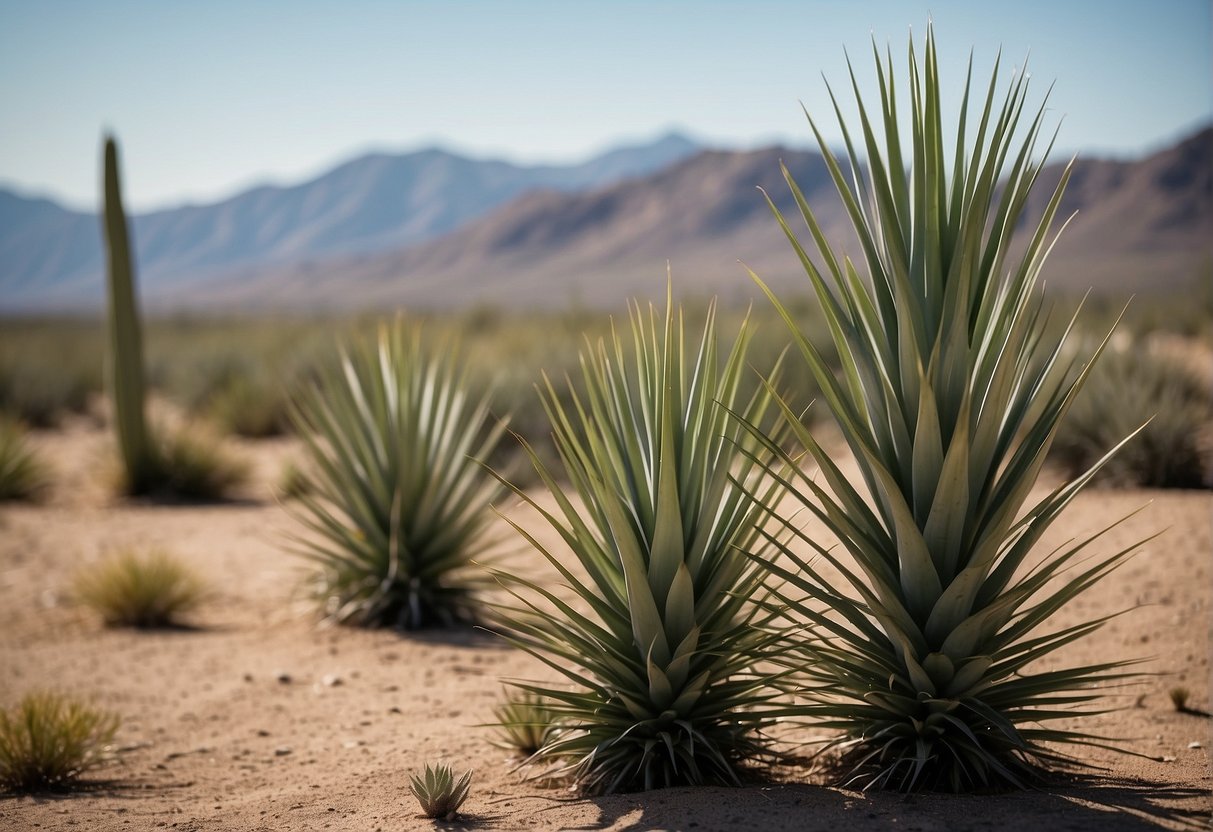
If you know about the yucca plant, you might have observed that it stands out distinctively compared to other vegetation. This distinction arises from the special adaptations yucca plants possess, enabling them to endure and flourish in their surroundings. This piece will delve into those specific adaptations and discuss the ways they benefit the yucca plant.
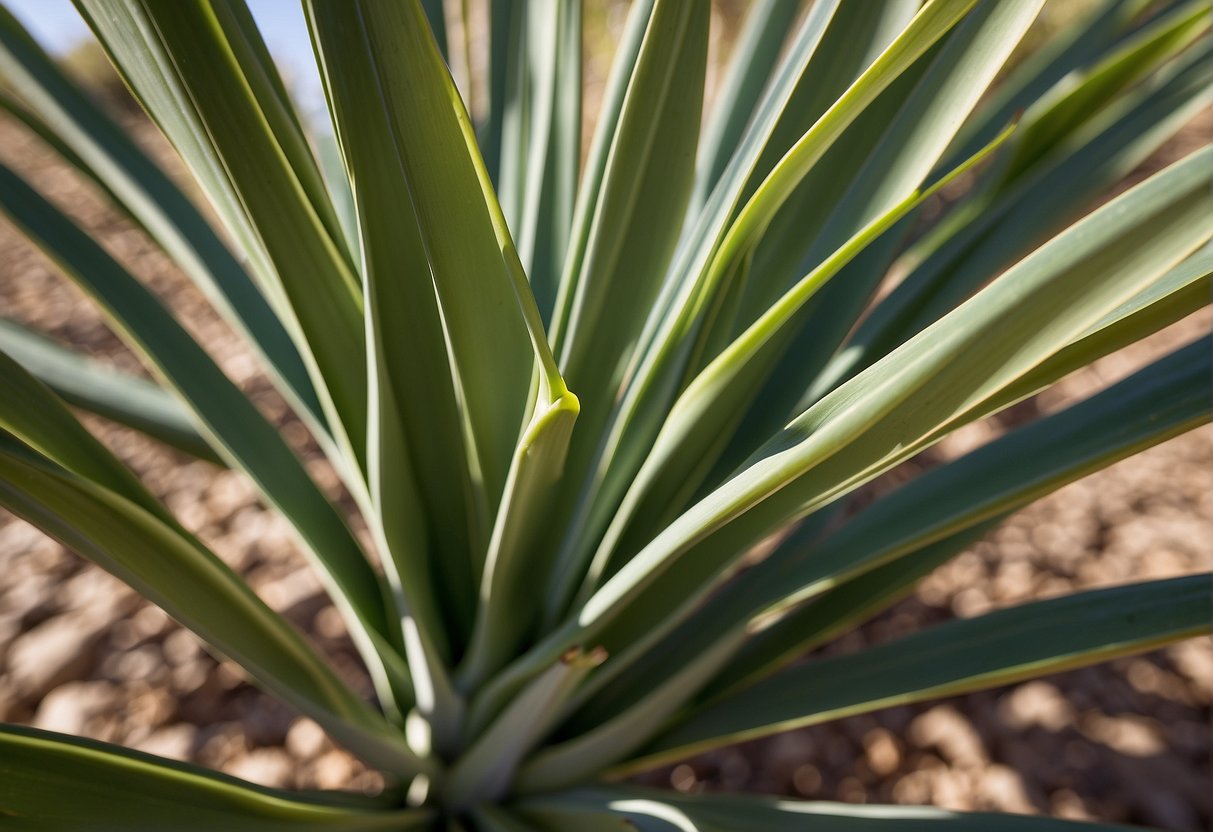
One of the most notable adaptations of the yucca plant is its long, pointed leaves. These leaves are tough and waxy, which helps the plant retain water in the dry desert environment where it typically grows. Yucca plants also have a deep root system that allows them to access water deep underground. Additionally, yucca plants have evolved to rely on a specific type of pollinator, the yucca moth, which helps ensure their survival.
Key Takeaways
Yucca plants have unique adaptations that allow them to survive in the desert environment.
Yucca plants have long, pointed leaves and a deep root system that help them retain water.
Yucca plants rely on a specific type of pollinator, the yucca moth, for their survival.
Yucca Plant Adaptations
Yucca plants are known for their unique adaptations that allow them to thrive in harsh desert environments. These adaptations help yucca plants to survive in arid regions where water is scarce, temperatures are high, and precipitation is low.
Morphological Adaptations
Yucca species have rosettes of sharp, spiky leaves that are often coated with a waxy layer to prevent water loss through transpiration. These leaves are sword-shaped and have a pointed tip that helps to protect the plant from herbivores. Yucca plants also have taproots that can store water for long periods of time, allowing them to survive droughts.
Reproductive Adaptations
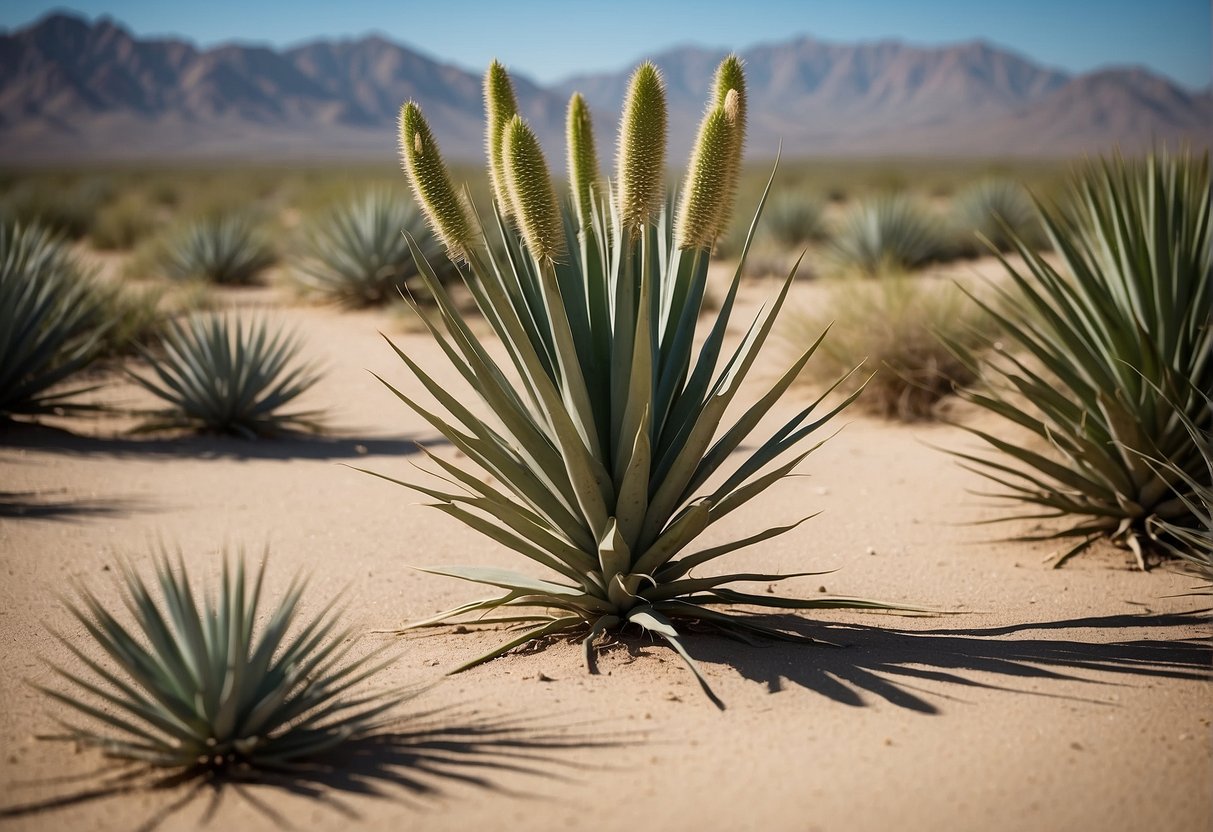
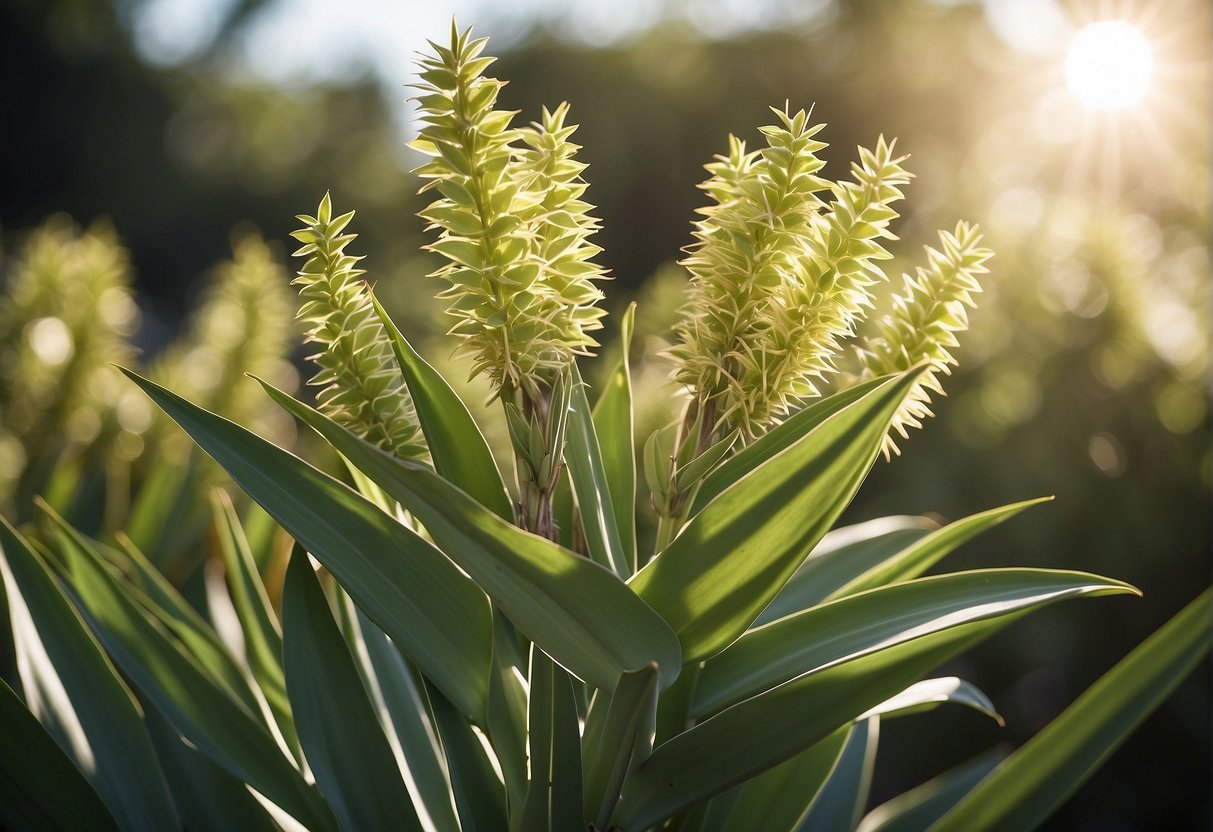
Yucca plants have white flowers that are pollinated by yucca moths. These moths are the only pollinators of yucca plants and have co-evolved with the plant over millions of years. The female yucca moth lays her eggs inside the yucca flower, and the larvae feed on the developing seeds. This relationship ensures that the yucca plant is able to reproduce and that the yucca moth has a food source.
Environmental Adaptations
Yucca plants are adapted to survive in the harsh desert environment. They are drought-tolerant and can survive long periods of time without water. Yucca plants are also adapted to withstand high temperatures and intense sunlight. They are able to survive fires and can quickly recover after a rainfall.
In conclusion, yucca plants have a variety of adaptations that allow them to survive in the desert. These adaptations include morphological, reproductive, and environmental adaptations that help the plant to store water, protect itself from herbivores, and reproduce in a harsh environment.
Yucca Plants in Human Culture
Yucca plants have been an important part of human culture for centuries. They have been used for a variety of purposes, including utilitarian and ornamental uses. Here are some of the ways in which yucca plants have been utilized by humans:
Utilitarian Uses
Yucca filamentosa, also known as Adam’s needle or Spanish dagger, has been used by Native Americans for centuries. The leaves were used to make baskets, clothing, and rope. The roots were used to make soap and shampoo, as they contain saponins, which are natural detergents. The plant was also used for medicinal purposes, as it was believed to have healing properties.
Soapweed yucca, also known as soaptree yucca, was used by Native Americans to make soap. The roots were pounded and mixed with water to create a lather. The plant was also used for medicinal purposes, as it was believed to have antiseptic and anti-inflammatory properties.
Banana yucca, also known as Yucca baccata, is a food source for many Native American tribes. The fruit is high in carbohydrates and can be eaten raw or cooked. The seeds can be ground into flour and used to make bread.
Ornamental Uses
Yucca plants are also popular for their ornamental value. The spineless yucca, also known as Yucca elephantipes, is a popular houseplant. It is easy to care for and can tolerate low light and minimal water. The beaked yucca, also known as Yucca rostrata, is a popular landscaping plant. It has a unique shape and can add interest to any landscape design. Yucca glauca and Yucca aloifolia are also popular landscaping plants.
Yucca plants are known for their green and white foliage, which can add a pop of color to any landscape. They are also drought-tolerant and can thrive in well-draining soil. Yucca plants are a great choice for anyone looking to add a touch of the Southwest to their landscaping.
Frequently Asked Questions
How do yucca plants conserve water?
Yucca plants have several adaptations that help them conserve water in their arid habitats. One of the most notable adaptations is their ability to store water in their thick, fleshy leaves and stems. Additionally, yucca plants have evolved a unique form of photosynthesis called crassulacean acid metabolism (CAM). This process allows yucca plants to open their stomata at night when temperatures are cooler and humidity is higher, reducing water loss through transpiration.
What are the physical characteristics of yucca plants that help them survive in their habitat?
Yucca plants have several physical adaptations that help them thrive in their desert habitats. Their long, tough leaves have a waxy coating that helps reduce water loss through transpiration. Additionally, many yucca species have sharp spines or thorns that deter herbivores from eating them, protecting their valuable water and nutrient reserves.
How do yucca plants interact with their ecosystem?
Yucca plants have a unique relationship with the yucca moth, which is the sole pollinator of many yucca species. The yucca moth lays its eggs in the yucca plant’s flowers, and in exchange, pollinates the flowers as it feeds on their nectar. This mutualistic relationship ensures the survival of both the yucca plant and the yucca moth.
What are the reproductive adaptations of the yucca plant?
Yucca plants have several reproductive adaptations that help them survive in their desert habitats. Many yucca species have long, tubular flowers that are only accessible to their pollinators, ensuring that only the appropriate species of moth can pollinate them. Additionally, yucca plants often produce large quantities of seeds, ensuring that at least some will survive and germinate in the harsh desert environment.
In what ways have yucca plants adapted to desert conditions?
Yucca plants have evolved several adaptations to help them survive in their arid habitats. In addition to their water-conserving adaptations, yucca plants often have deep root systems that allow them to access water deep underground. Additionally, many yucca species have adapted to survive wildfires, with thick, fire-resistant bark that protects their valuable water and nutrient reserves.
What role do yucca plants play in their native environments?
Yucca plants play an important role in their native ecosystems, providing food and habitat for a variety of animals, including the yucca moth. Additionally, yucca plants help stabilize desert soils, reducing erosion and providing important nutrients for other desert plants.
Hi Lovelies ! I made this blog to share my tips about Home Improvement, Children, Pets, Food, Gadgets, Automotive, Health & Beauty, and ways to be frugal while maintaining a natural lifestyle. Interested to be a Guest Blogger on my website? Please email me at: [email protected]