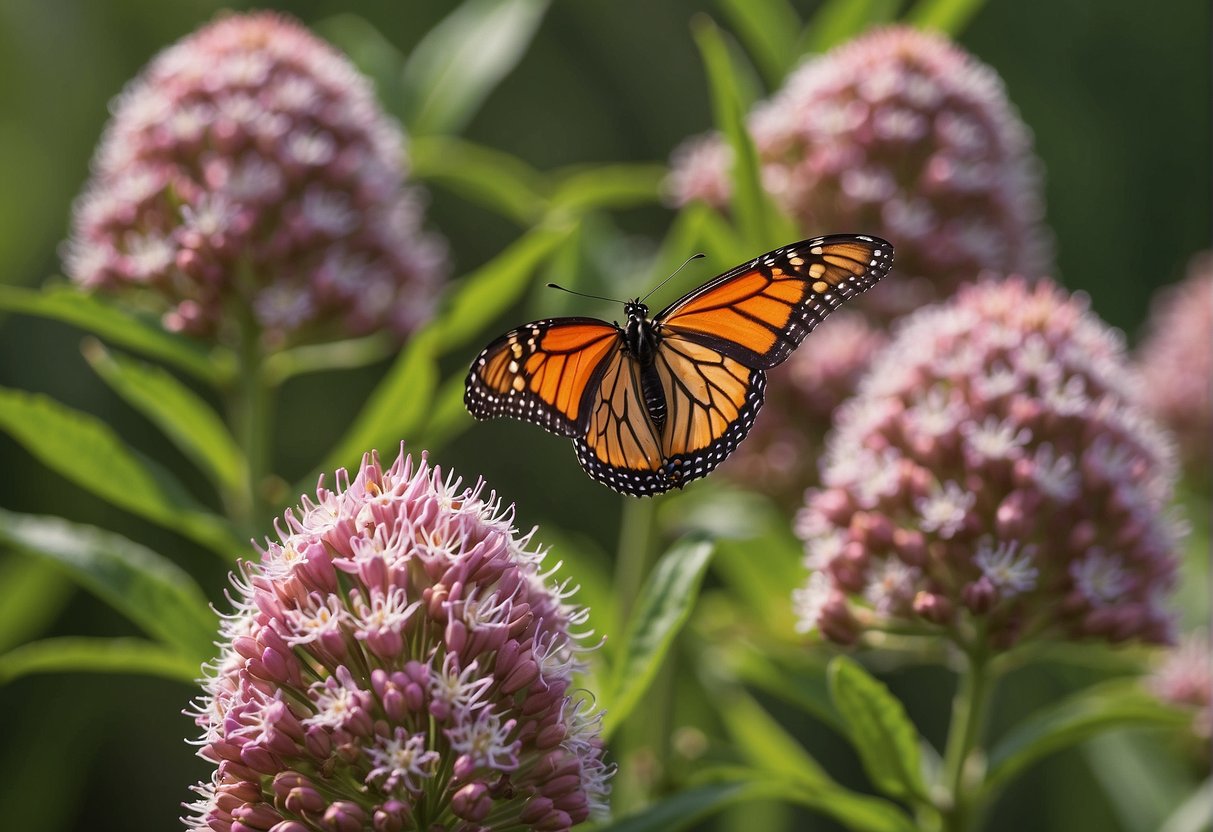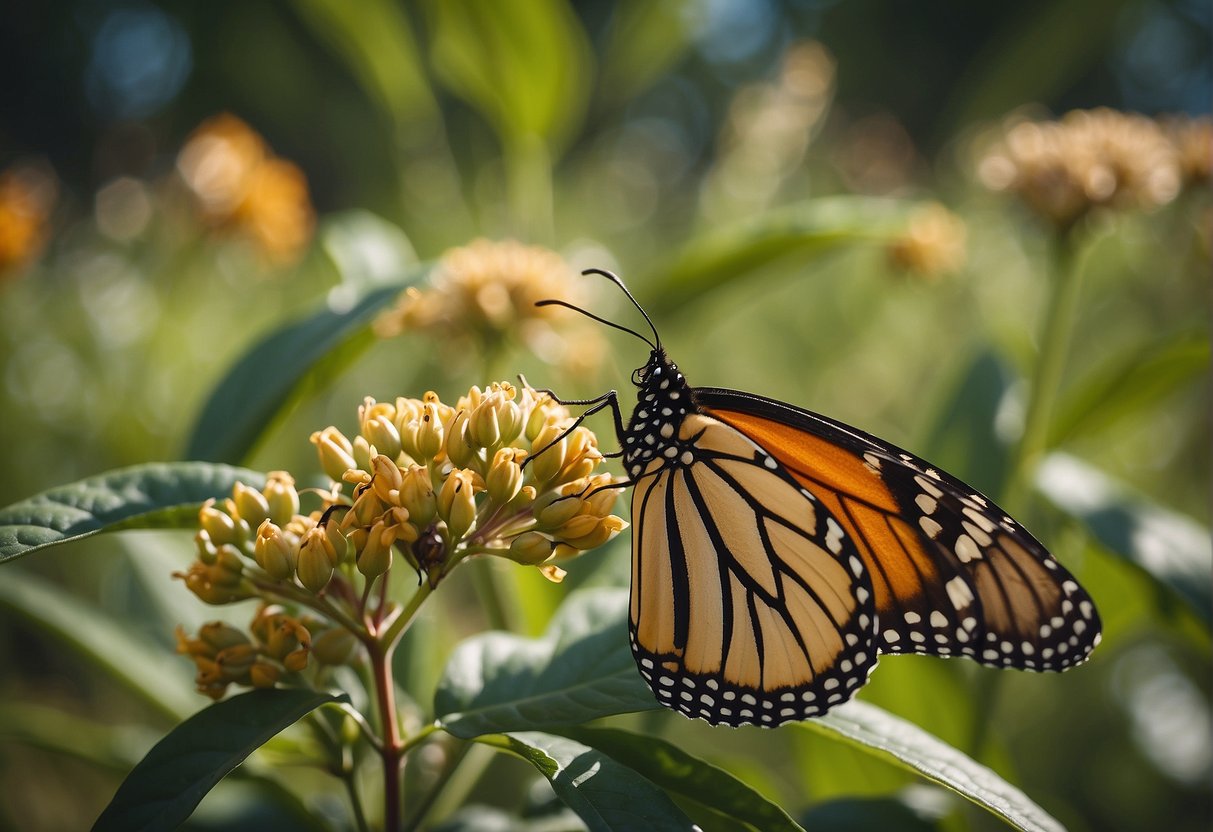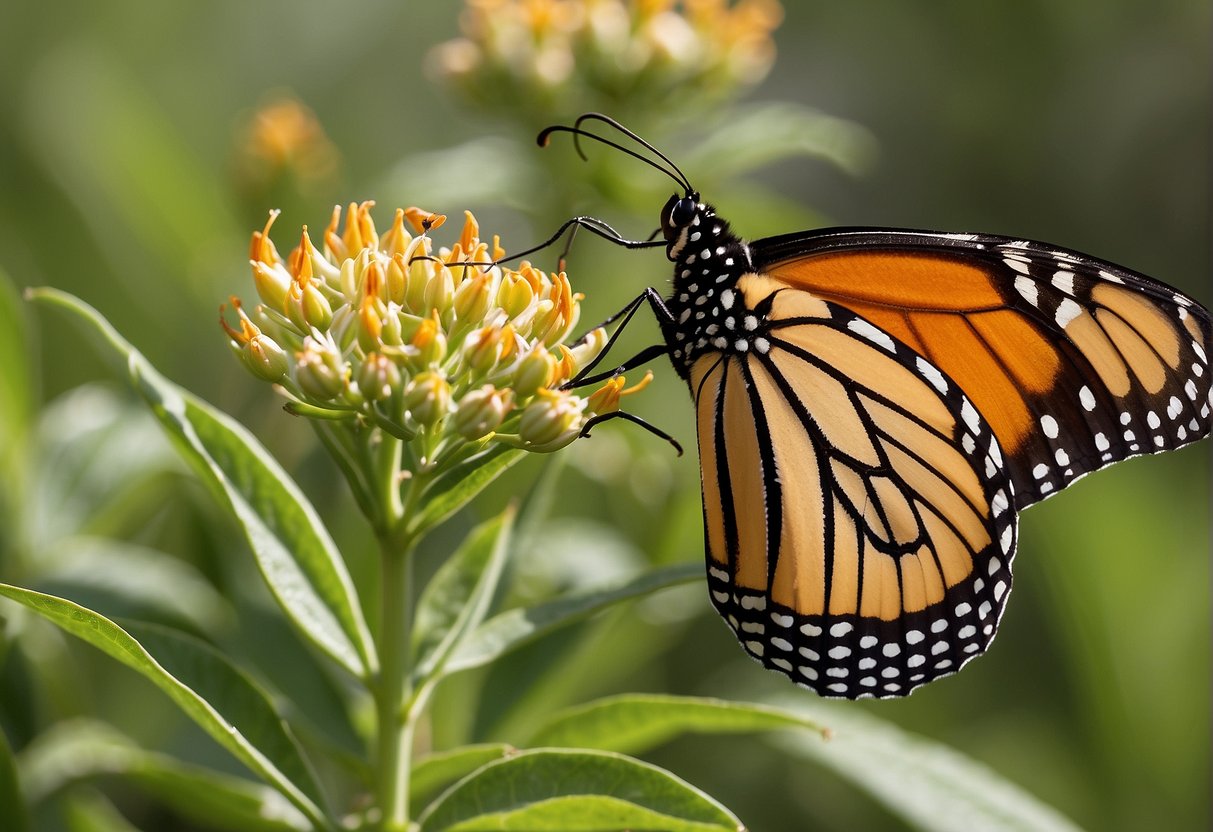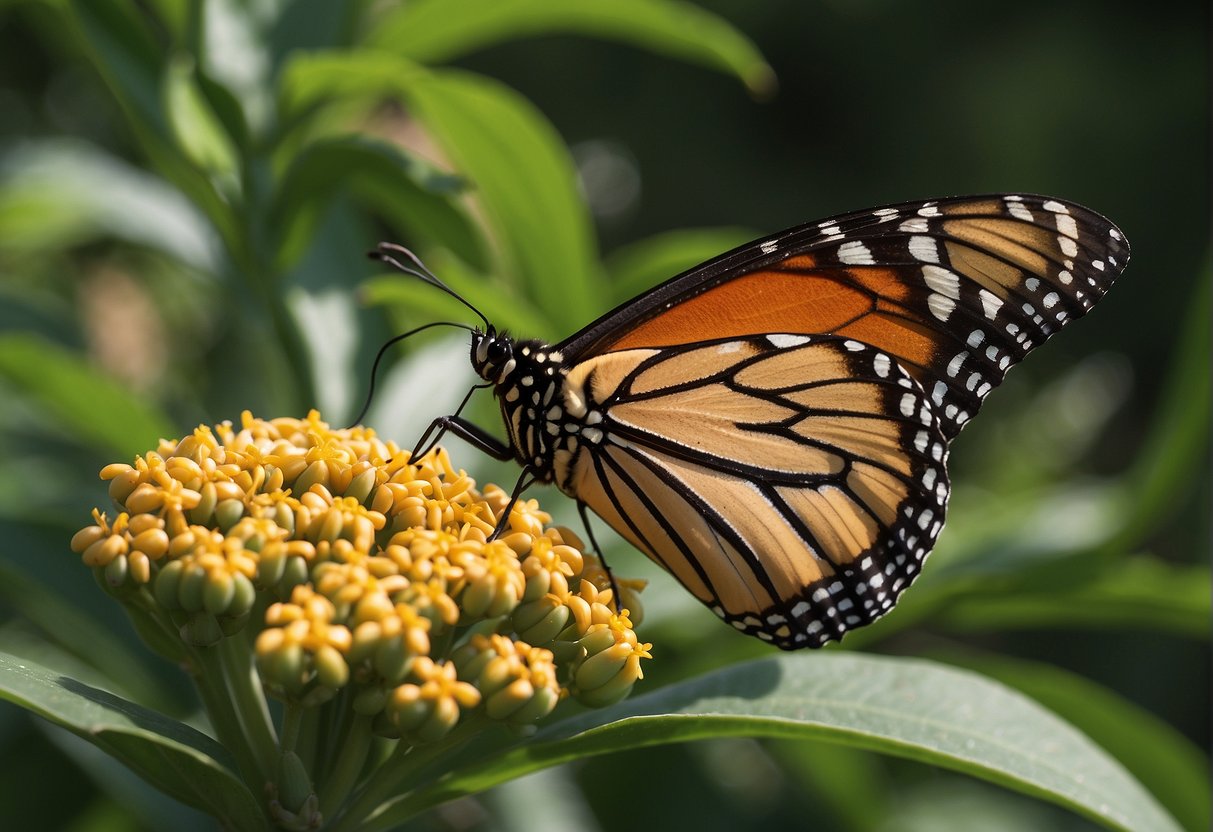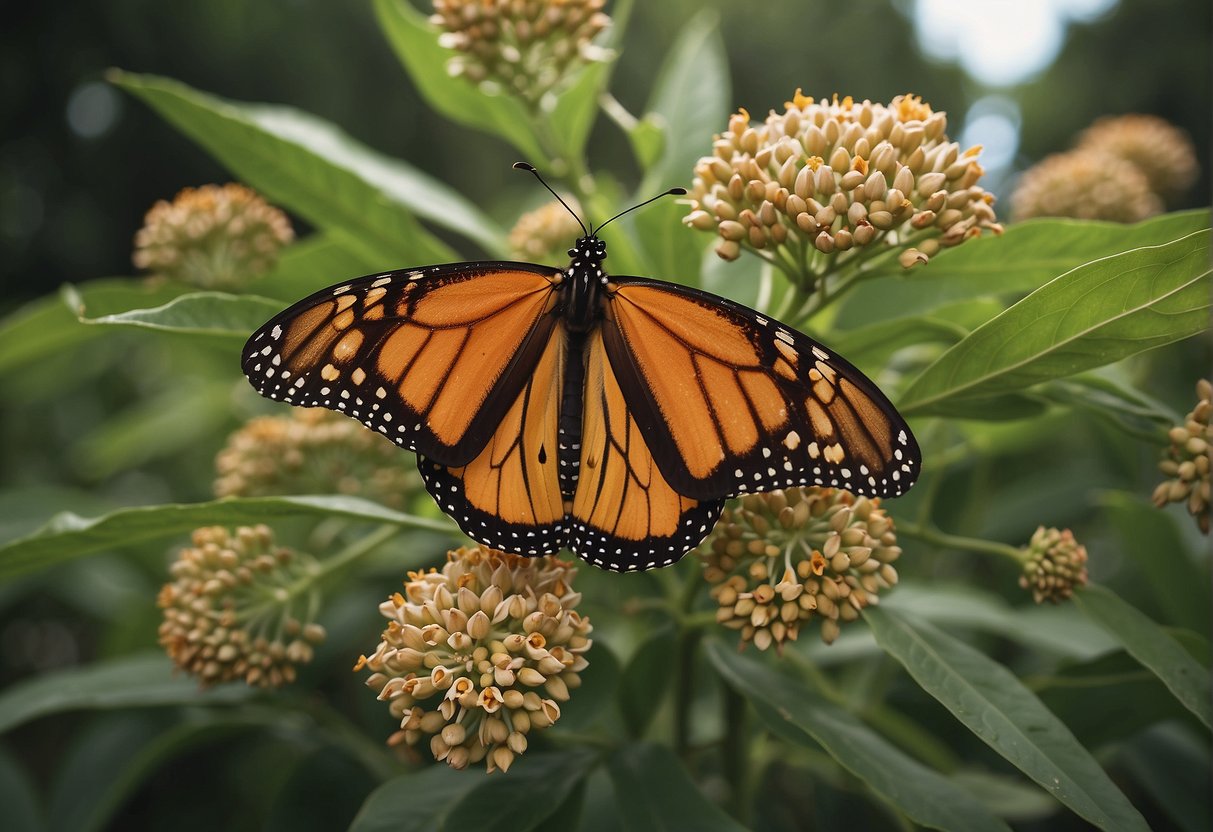

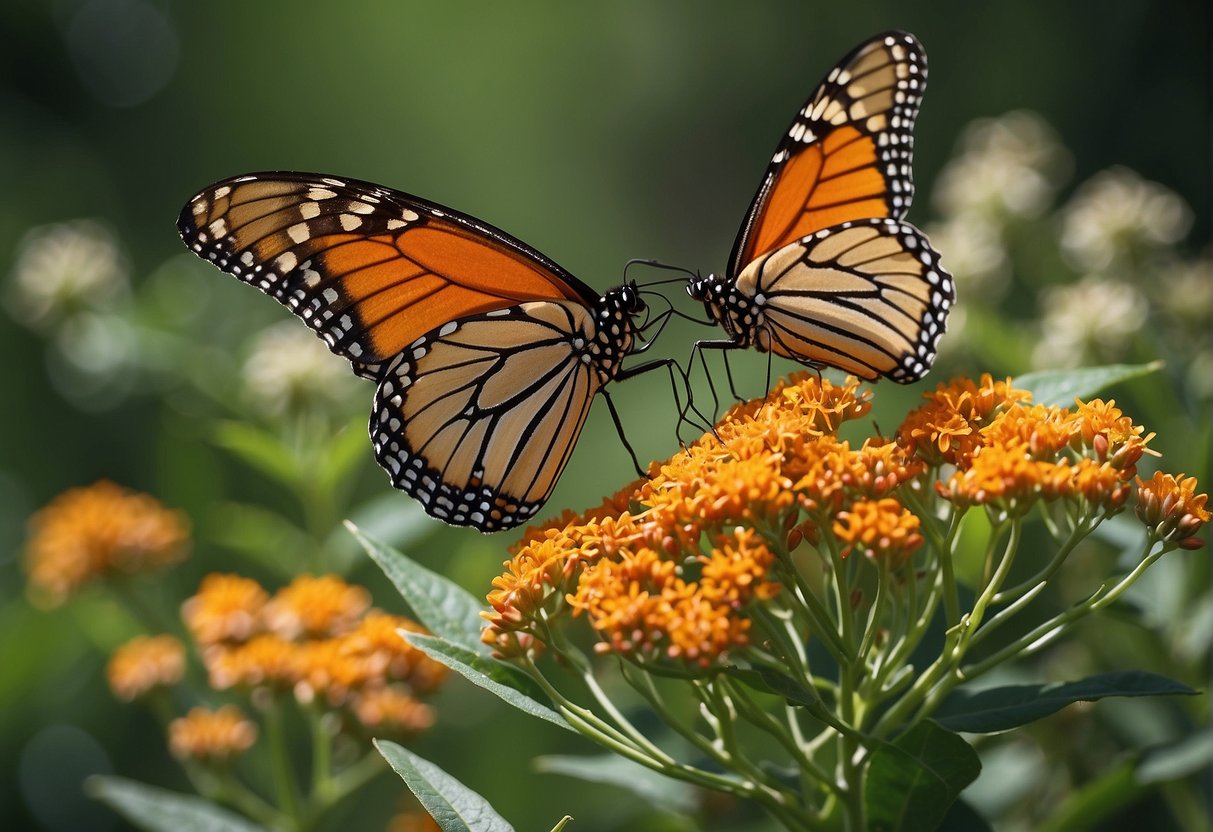
Have you ever observed a monarch butterfly? If so, you likely took note of its vivid orange and black wing pattern. However, are you aware that the survival of the monarch butterfly is heavily dependent on a particular plant? Milkweed, a widespread wildflower across North America, serves as the essential nourishment for monarch caterpillars and is vital for the continuation of the monarch butterfly’s life cycle.
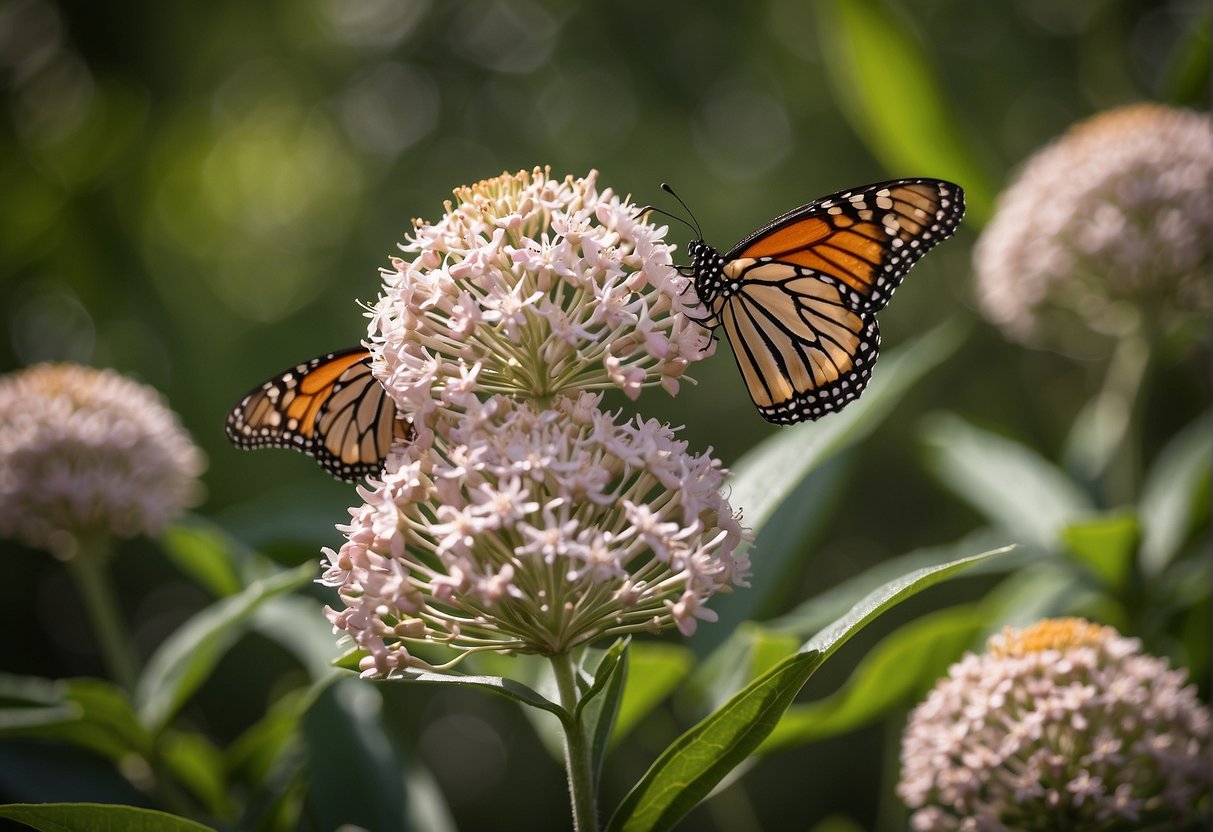
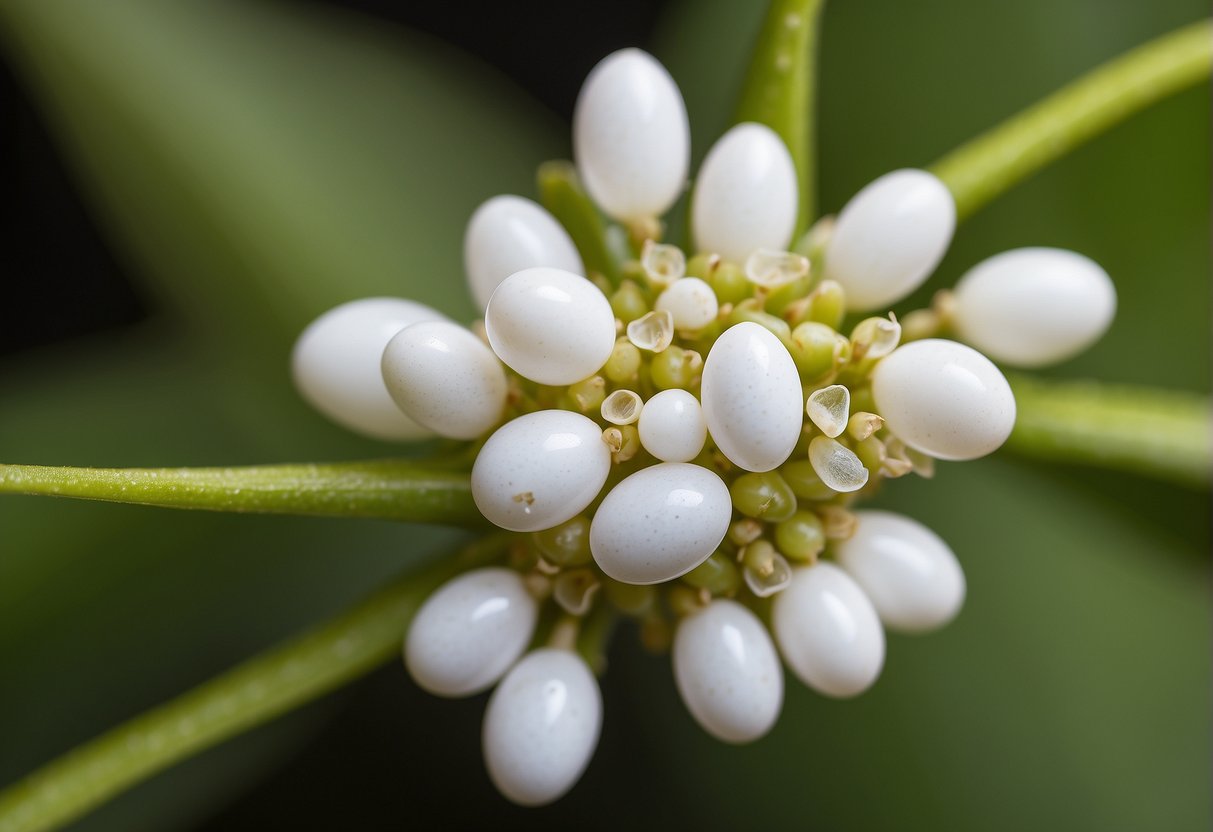
The symbiotic relationship between milkweed and monarch butterflies is fascinating. Monarch butterflies lay their eggs on milkweed plants, and when the eggs hatch, the caterpillars feed on the milkweed leaves. The toxins in the milkweed plant make the caterpillars unpalatable to predators, which helps them survive. As the caterpillar grows, it sheds its skin several times before forming a chrysalis, where it undergoes metamorphosis and transforms into a butterfly.
Key Takeaways
- Milkweed is the primary food source for monarch caterpillars and plays a crucial role in the monarch butterfly’s life cycle.
- Monarch butterflies lay their eggs on milkweed plants, and the toxins in the milkweed make the caterpillars unpalatable to predators.
- The symbiotic relationship between milkweed and monarch butterflies is an important conservation issue, and community involvement is crucial for protecting these species.
The Symbiotic Relationship Between Milkweed and Monarchs
The monarch butterfly is one of the most recognizable and beloved insects in North America. The monarch’s life cycle is intimately tied to the milkweed plant, which is the monarch’s host plant. In this section, we will explore the symbiotic relationship between milkweed and monarchs, and how you can cultivate milkweed to attract monarchs to your garden.
Milkweed as the Monarch’s Host Plant
Milkweed is the only plant that monarchs will lay their eggs on, and it is the sole food source for monarch caterpillars. Monarch caterpillars will only eat milkweed leaves, and they will consume a lot of them. In fact, a single caterpillar can eat up to 20 milkweed leaves in a day. Milkweed is therefore essential to the monarch’s survival, and the decline in milkweed populations has contributed to the decline in monarch populations.
Attracting Monarchs with Milkweed
If you want to attract monarchs to your garden, planting milkweed is the best way to do it. There are many different milkweed species to choose from, each with its own unique characteristics. Some milkweed species are native to North America, while others are tropical. Some milkweed species have showy flowers that attract pollinators, while others have small, inconspicuous flowers.
Milkweed Varieties and Their Characteristics
Here are some of the most common milkweed species and their characteristics:
- Common milkweed (Asclepias syriaca): This is the most well-known milkweed species, and it is native to North America. It has large, pink flowers and can grow up to 6 feet tall.
- Swamp milkweed (Asclepias incarnata): This milkweed species is also native to North America and has pink flowers. It prefers moist soil and can grow up to 5 feet tall.
- Butterfly weed (Asclepias tuberosa): This milkweed species has bright orange flowers and is native to North America. It prefers full sun and well-drained soil.
- Tropical milkweed (Asclepias curassavica): This milkweed species is not native to North America, but it is a popular choice for monarch gardens because it blooms for a longer period of time than native milkweeds. It has red and yellow flowers and can grow up to 3 feet tall.
- Showy milkweed (Asclepias speciosa): This milkweed species is native to North America and has large, pink flowers. It can grow up to 5 feet tall.
- Whorled milkweed (Asclepias verticillata): This milkweed species is native to North America and has small, white flowers. It prefers dry soil and can grow up to 3 feet tall.
Environmental Factors Affecting Milkweed and Monarch Populations
Milkweed and monarch populations are affected by a variety of environmental factors, including climate change, habitat loss, and pesticide use. It is important to plant native milkweed species and avoid using pesticides in your garden to help support milkweed and monarch populations.
Cultivating Milkweed for Monarchs
To cultivate milkweed for monarchs, plant the seeds in well-drained soil in the spring. Milkweed seeds have a low germination rate, so it is best to plant several seeds in each location. Once the seedlings have sprouted, water them regularly and fertilize them sparingly. Milkweed plants will produce seed pods in the fall, which can be used to propagate new plants.
Interactions with Other Species
Milkweed plants are an important source of nectar for many pollinators, including bees and butterflies. However, milkweed plants are also toxic to many other species, including birds and predators like the milkweed bug. It is important to be aware of the potential toxicity of milkweed plants and to handle them with care.
Conservation Efforts and Community Involvement
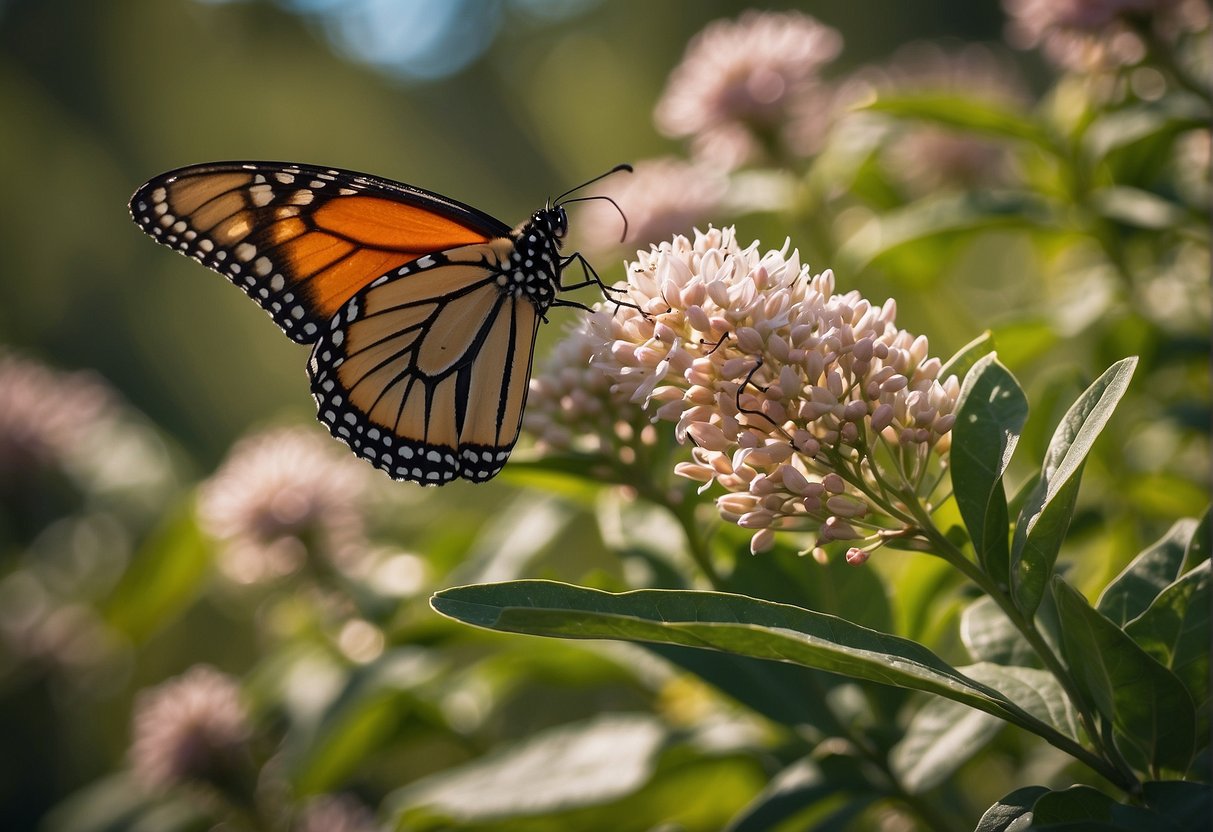
Conservation efforts and community involvement are crucial for protecting the monarch butterfly and its habitat. Here are some ways that individuals and organizations can make a difference:
Protecting Monarch Habitats
One of the most important steps in conserving monarch butterflies is protecting their habitats. This includes preserving and restoring milkweed and wildflower populations, which provide critical food and shelter for monarchs. Native milkweed species such as common milkweed and swamp milkweed are particularly important for supporting monarch populations. However, habitat loss and the use of pesticides have contributed to a decline in milkweed and wildflower populations, making it essential to protect and restore these habitats.
Educational Outreach and Citizen Science
Education and citizen science are powerful tools for raising awareness about monarch conservation and engaging communities in conservation efforts. By providing information on monarch biology, habitat needs, and conservation challenges, individuals can make informed decisions about how to support monarch populations. Citizen science programs such as Monarch Watch and Journey North allow individuals to contribute to monarch research and conservation efforts by reporting sightings, tagging butterflies, and monitoring milkweed populations.
Creating Monarch-Friendly Spaces
Creating monarch-friendly spaces in gardens and landscapes is another way to support monarch populations. Planting milkweed and other native wildflowers can provide critical food and shelter for monarchs, while also creating beautiful and biodiverse landscapes. Butterflyweed (Asclepias tuberosa) is a popular ornamental milkweed species that is also an important food source for monarchs. It is important to avoid the use of pesticides and to provide a variety of milkweed species to support monarchs throughout their life cycle.
Challenges and Future Directions
Despite conservation efforts, monarch populations continue to decline, making it important to continue to research and address the challenges facing monarchs. Pesticide use, habitat loss, and climate change are all factors contributing to monarch declines, and it is essential to develop effective strategies for addressing these challenges. Continued research on monarch biology, migration, and habitat needs is critical for developing effective conservation strategies and ensuring the long-term survival of this iconic species.
Frequently Asked Questions
What makes milkweed an essential habitat for monarch butterflies?
Milkweed is the only plant that monarch butterflies lay their eggs on and that caterpillars eat. Without milkweed, monarchs cannot complete their life cycle. Milkweed also provides nectar for adult monarchs, making it an important food source during migration and breeding.
How does the presence of milkweed influence monarch butterfly migration?
Milkweed is crucial for monarch butterfly migration because it provides a place for females to lay their eggs and for caterpillars to feed. As monarchs migrate, they rely on milkweed to fuel their journey and to lay the next generation of eggs.
What is the significance of milkweed in the monarch butterfly’s life cycle?
Milkweed is essential to the survival of monarch butterflies. Without milkweed, monarchs cannot lay eggs or complete their life cycle. Milkweed also provides nectar for adult monarchs, making it an important food source during migration and breeding.
How do different types of milkweed affect monarch butterfly populations?
Different types of milkweed can affect monarch butterfly populations in different ways. Some species of milkweed are more attractive to monarchs than others, and some species may be more toxic to monarch caterpillars. It is important to plant a variety of milkweed species to provide a diverse habitat for monarchs.
What role does milkweed play in the diet of monarch caterpillars?
Milkweed is the only plant that monarch caterpillars eat. The toxins in milkweed that make it unpalatable to most animals are sequestered by the caterpillars and used for their own defense against predators.
Why are some species of milkweed considered harmful to monarch butterflies?
Some species of milkweed, such as tropical milkweed, can disrupt monarch migration patterns and lead to disease outbreaks. It is important to plant native species of milkweed that are adapted to local climates and ecosystems to support healthy monarch populations.