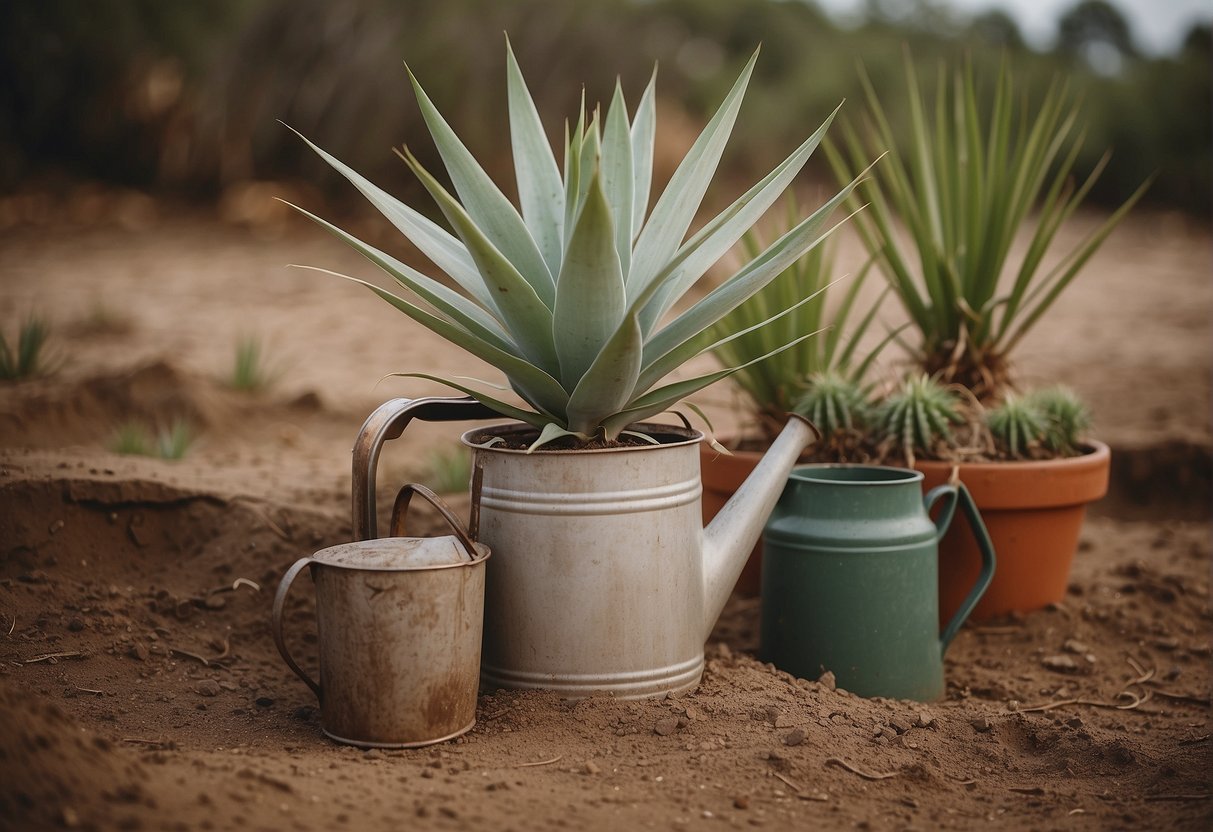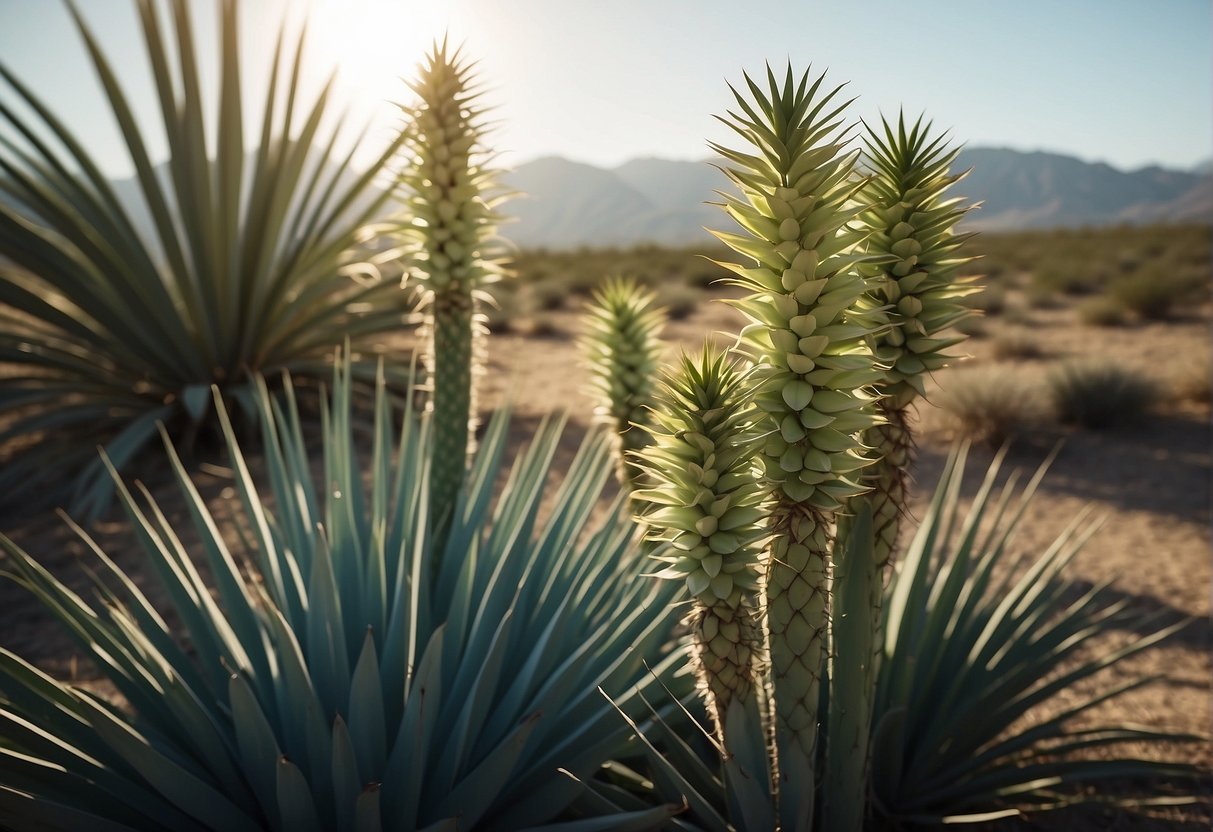

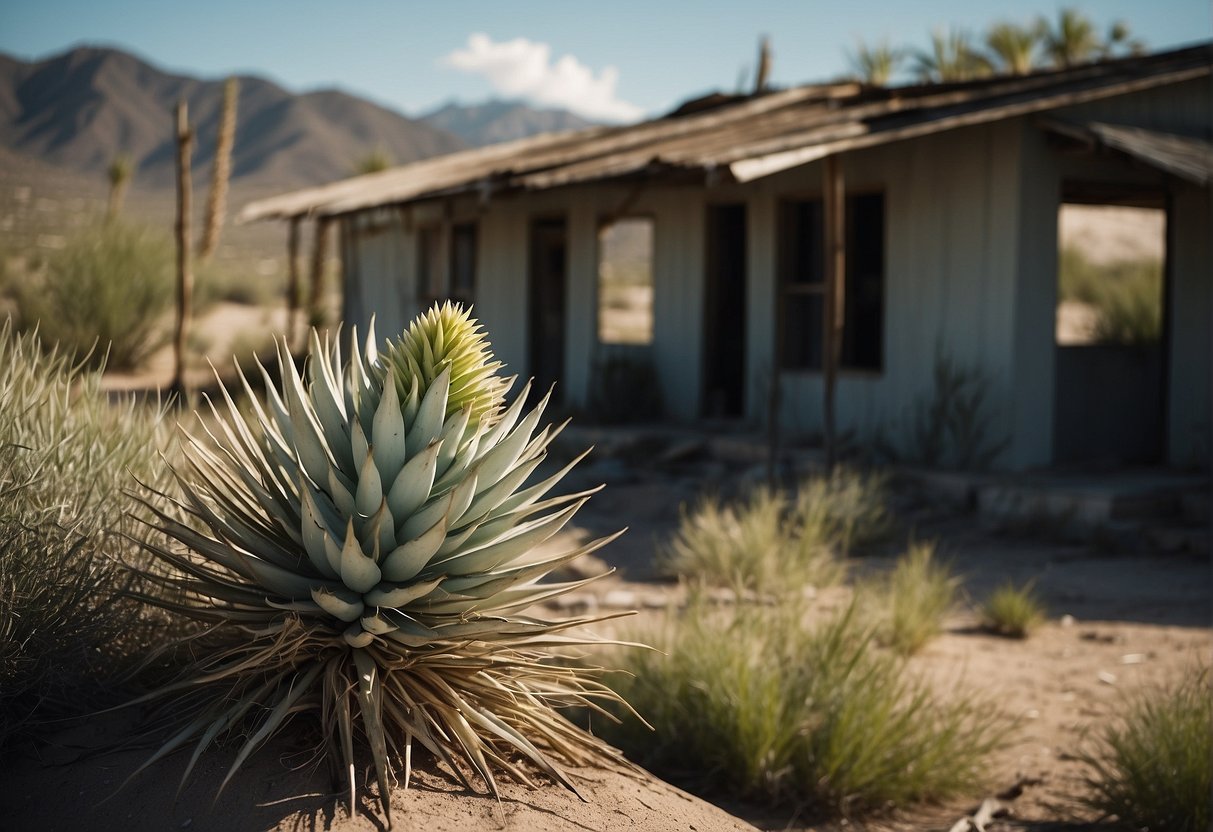
Have you ever wandered around an old homestead and observed yucca plants growing there? These resilient desert vegetation appear to flourish among the ruins of once inhabited places. But what’s the reason behind this? Why do yucca plants seem to prosper so much at old homesites?
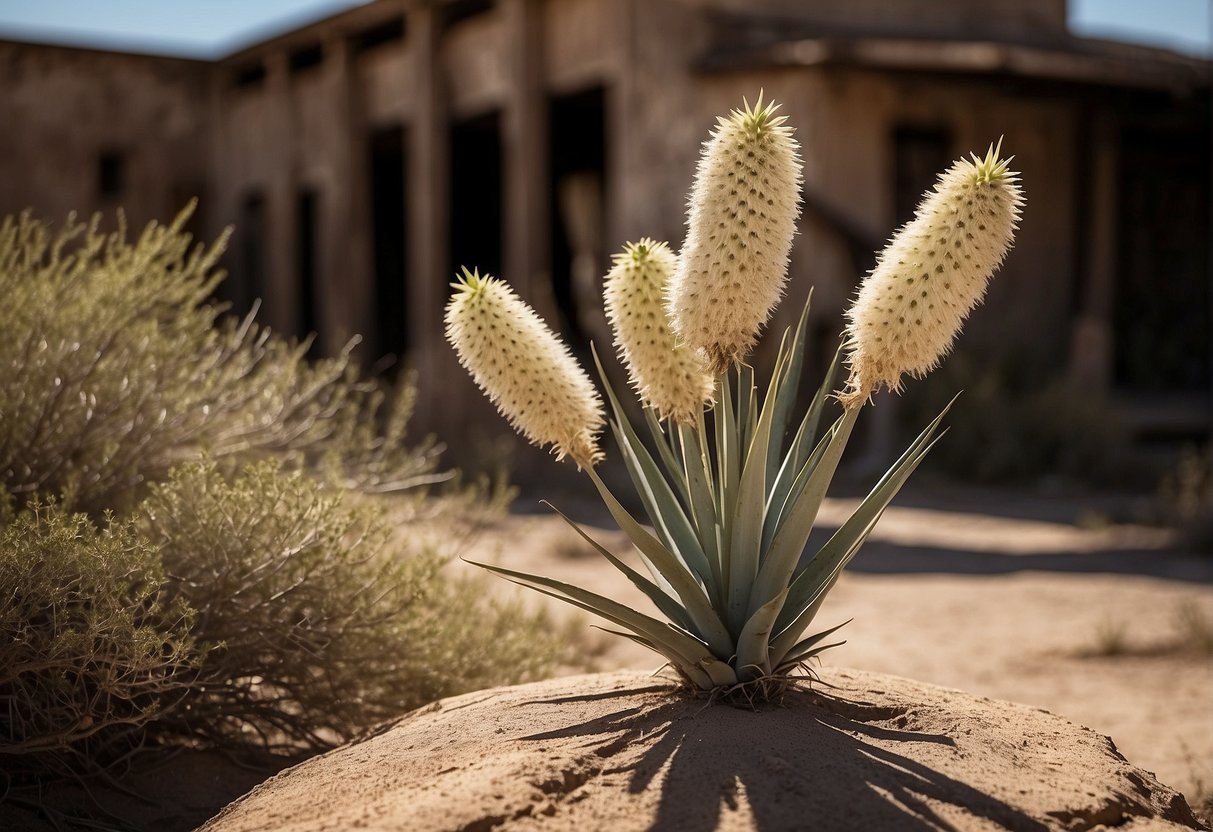
To answer that question, we need to take a closer look at the historical significance of yucca plants at old homesites. Yucca plants have been used by humans for thousands of years, for everything from food and medicine to fiber and soap. Native American tribes in the Southwest relied on yucca plants for their survival, and early settlers in the region quickly learned to appreciate their many uses. As a result, yucca plants were often cultivated and intentionally planted near homesites.
Of course, yucca plants don’t need human intervention to grow and thrive. They are hardy, drought-tolerant plants that can survive in a variety of environments. But the presence of an old homesite can provide some key advantages for yucca plants, including nutrient-rich soil and protection from the elements. In this article, we’ll explore the reasons why yucca plants grow at old homesites and what you can do to cultivate and care for them in your own garden.
Key Takeaways
- Yucca plants have a long history of use by humans for food, medicine, and other purposes.
- Old homesites often provide ideal growing conditions for yucca plants, including nutrient-rich soil and protection from the elements.
- If you want to grow yucca plants in your own garden, it’s important to understand their cultivation and care requirements.
Historical Significance of Yucca Plants at Old Homesites
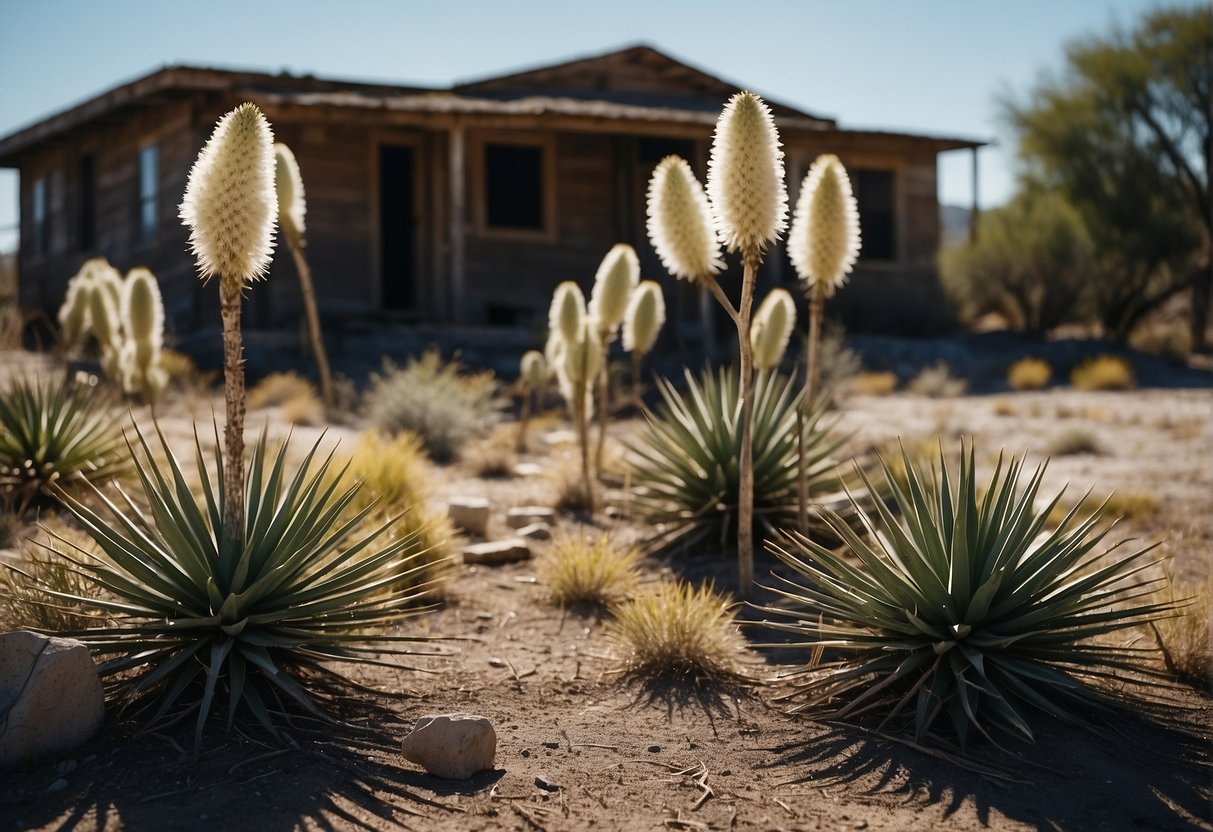
If you have ever come across an old homesite, you may have noticed that yucca plants are often found growing in the area. While it may seem like a coincidence, there is actually a historical significance behind the presence of yucca plants at old homesites.
Yucca’s Role in Early American Landscaping
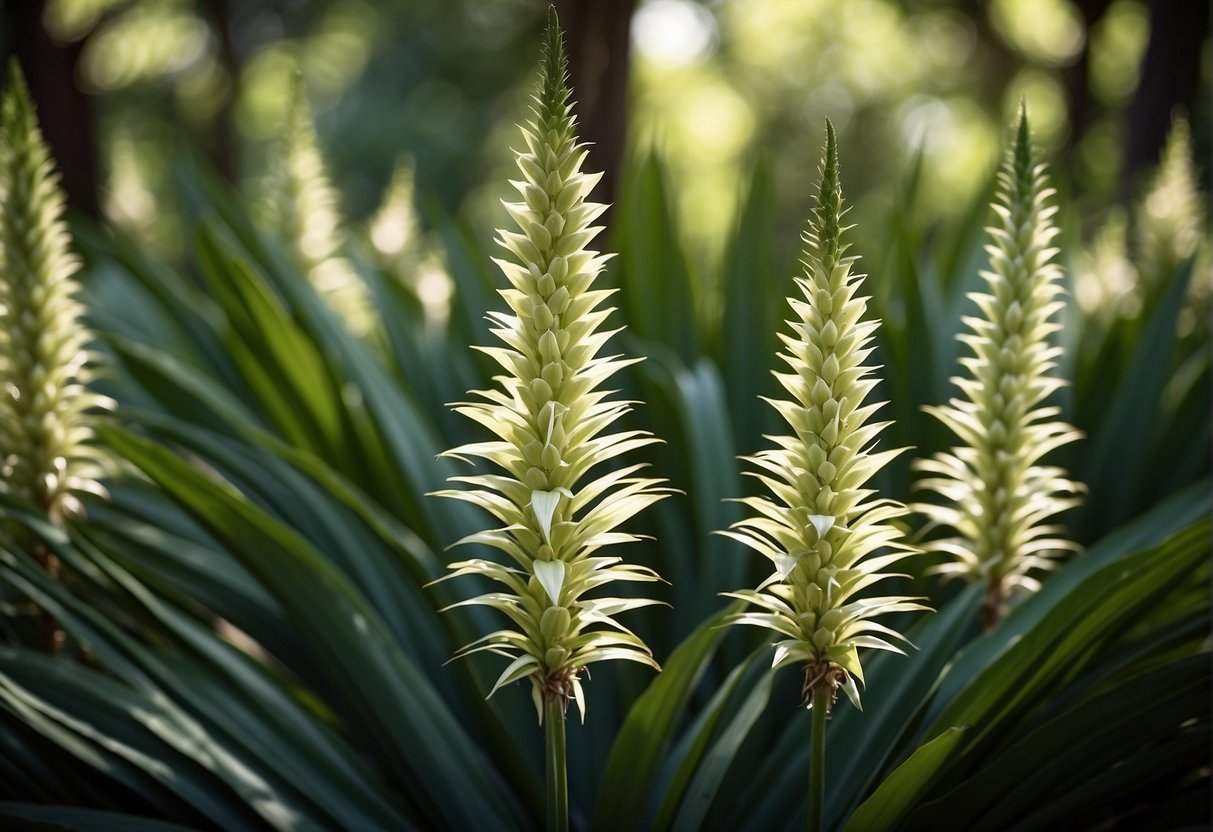
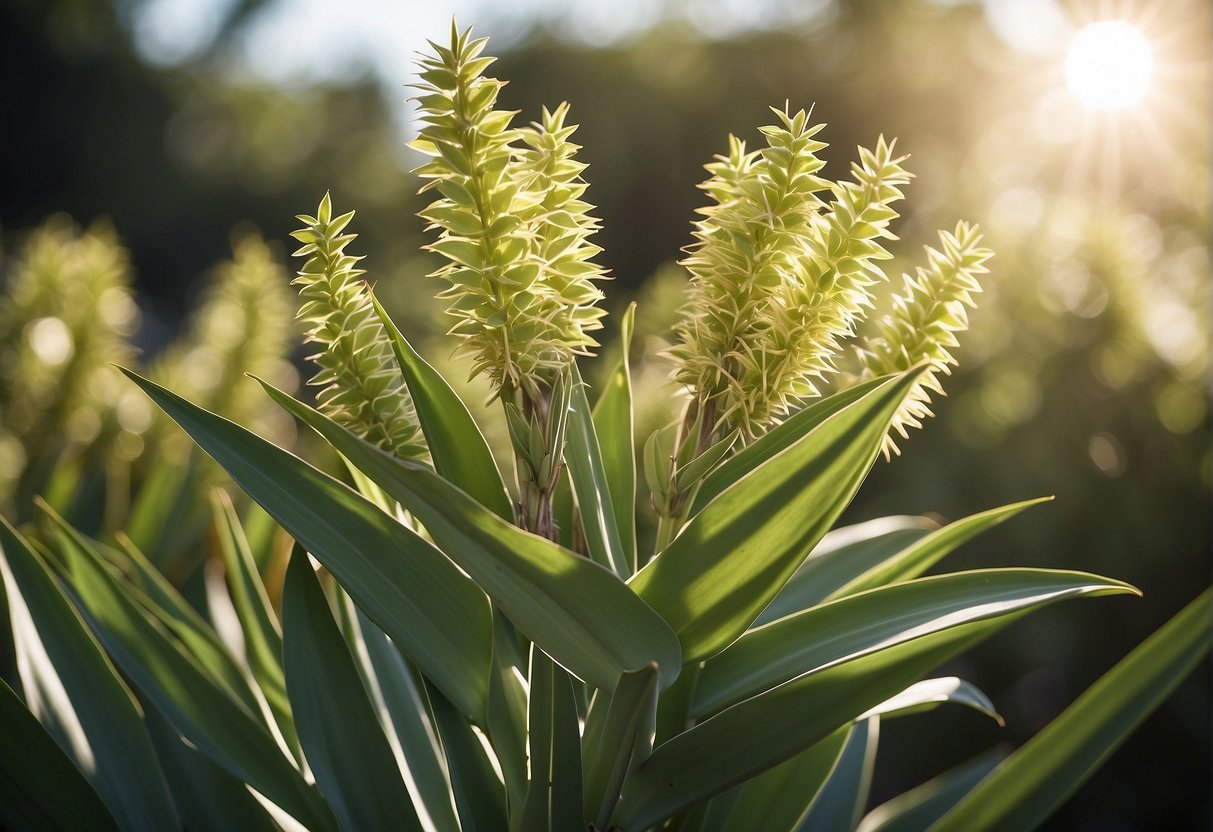
Yucca plants have been used in landscaping for centuries, especially in early American gardens. The plant’s unique shape and texture made it a popular choice for ornamental purposes. In fact, yucca plants were often used as a focal point in gardens, and their tall spikes of white flowers added a touch of elegance to any landscape.
Survival and Resilience of Yucca Plants
Another reason why yucca plants are often found at old homesites is because of their survival and resilience. Yucca plants are a species of perennial plants that are native to Mexico and parts of the United States. They are known for their ability to survive in harsh conditions, including drought and extreme temperatures. This resilience has allowed yucca plants to thrive even in abandoned homesites, where they continue to grow and spread.
Despite their resilience, yucca plants are also vulnerable to certain threats, such as deer. While yucca plants are drought-tolerant and able to survive in harsh conditions, they are also a favorite food of deer. As a result, yucca plants may struggle to survive in areas with high deer populations.
In conclusion, the presence of yucca plants at old homesites is not a coincidence. Yucca’s role in early American landscaping and their survival and resilience have made them a common sight in abandoned homesites. Whether you appreciate yucca plants for their historical significance or their unique beauty, they are an important part of our natural and cultural heritage.
Cultivation and Care of Yucca Plants
Yucca plants are hardy, evergreen shrubs that are easy to grow and care for. Whether you’re planting them in your garden or keeping them as houseplants, yuccas require minimal maintenance and can thrive in a variety of conditions. In this section, we’ll cover the optimal growing conditions for yucca plants, as well as some common challenges and solutions in yucca maintenance.
Optimal Growing Conditions for Yucca
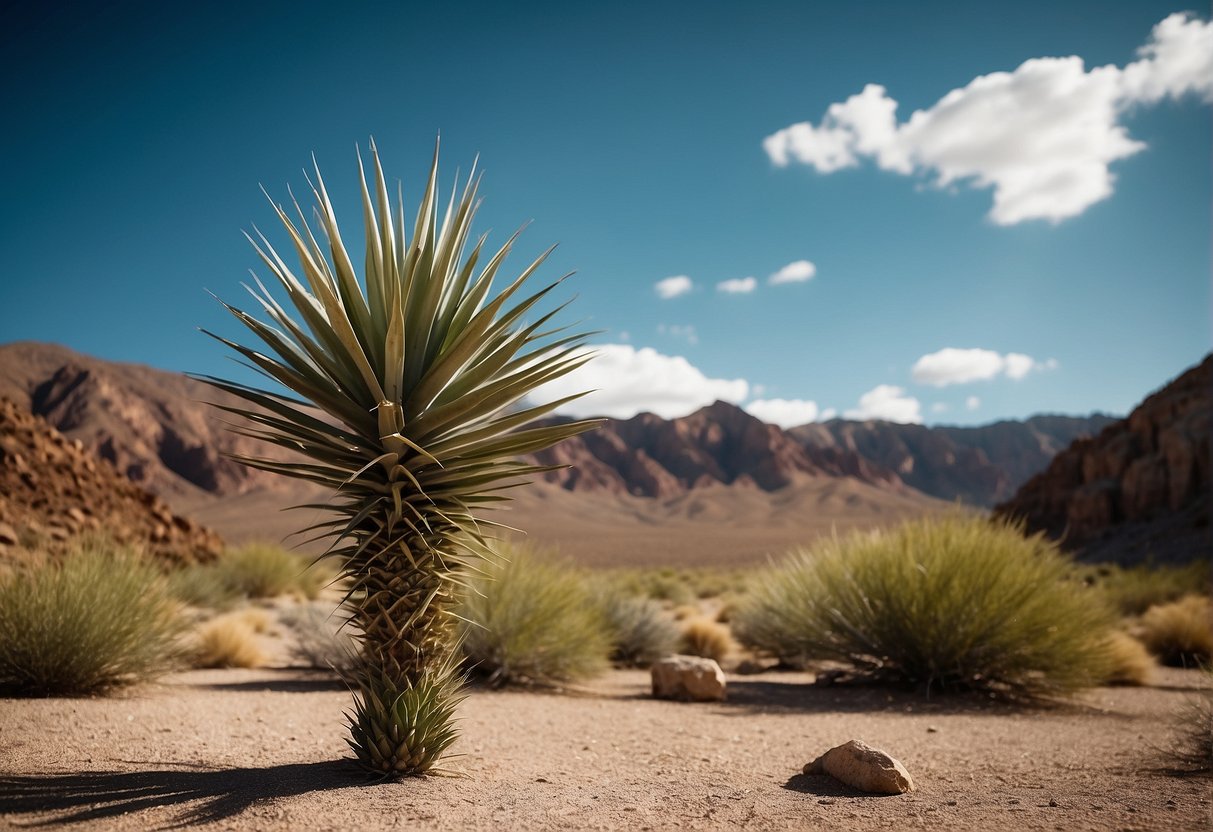
Yucca plants are native to North America and are well-suited to hot, dry climates. They prefer full sun and well-draining soil, and can tolerate a wide range of temperatures and humidity levels. Yuccas are drought-tolerant and can go for long periods without water, making them an ideal plant for low-maintenance gardens.
When planting yuccas, it’s important to choose a location that gets plenty of sunlight and has good drainage. Yuccas prefer sandy soil, but can also grow in clay soils as long as they’re well-draining. If you’re planting yuccas in a container, make sure it has drainage holes to prevent root rot.
Yuccas are also easy to propagate from stem cuttings or offsets. Simply cut off a stem or offset and plant it in well-draining soil. Yuccas can also be grown from seed, although this method takes longer and requires more patience.
Common Challenges and Solutions in Yucca Maintenance
While yuccas are generally easy to care for, they can still face a few challenges. One common problem is overwatering, which can lead to root rot and yellow leaves. To prevent overwatering, make sure the soil is completely dry before watering again, and avoid watering during the winter months when the plant is dormant.
Another challenge in yucca maintenance is pests, such as mealybugs and scale insects. To prevent these pests, keep your yucca plants clean and free of debris, and check them regularly for signs of infestation. If you do notice pests, you can use a mild liquid soap or insecticidal spray to get rid of them.
Finally, pruning is an important part of yucca maintenance. Prune your yucca plants in early spring to remove any dead or damaged leaves, and to promote new growth. You can also repot your yuccas every few years to promote healthy growth and prevent root-bound plants.
By following these tips and maintaining proper care, you can enjoy healthy and vibrant yucca plants in your garden or home.
Frequently Asked Questions
Why are yucca plants commonly found at abandoned homesteads?
Yucca plants are often found at abandoned homesteads due to their ability to thrive in harsh environments and poor soil conditions. They are hardy plants that can survive in dry, arid climates and can grow in a variety of soil types. Additionally, yucca plants have deep roots that can tap into water sources that are deep underground, allowing them to survive even during droughts.
What factors contribute to the prevalence of yucca plants at old homesites?
The prevalence of yucca plants at old homesites can be attributed to several factors. One of the main factors is the fact that yucca plants are native to many regions of North America, including areas where old homesites are often found. Additionally, yucca plants are often used as ornamental plants in landscaping, which may have led to their introduction and subsequent naturalization at these sites.
How do yucca plants survive in the environments of old homesites?
Yucca plants are able to survive in the environments of old homesites due to their adaptations to harsh conditions. They have thick, waxy leaves that help to retain moisture, and their deep roots allow them to access water sources that are deep underground. Additionally, yucca plants are able to tolerate poor soil conditions and can grow in a variety of soil types.
What historical or cultural significance do yucca plants have in relation to old homesites?
Yucca plants have a long history of use by Native American tribes for medicinal and practical purposes. They were used to treat a variety of ailments, and their fibers were used to make clothing, baskets, and other items. As a result, yucca plants have cultural significance for many Native American communities and may have been intentionally planted at old homesites for this reason.
Why might yucca plants be seen as a symbol when growing at historical sites?
Yucca plants may be seen as a symbol when growing at historical sites due to their association with resilience and adaptability. They are able to survive in harsh environments and poor soil conditions, which may be seen as a metaphor for the resilience of the people who once lived at these sites.
What ecological role do yucca plants play at sites of former human habitation?
Yucca plants play an important ecological role at sites of former human habitation by providing habitat and food for a variety of wildlife species. They are often visited by pollinators such as moths and bees, and their fruit and seeds are eaten by a variety of birds and mammals. Additionally, yucca plants help to stabilize soil and prevent erosion, which can be important in areas that have been disturbed by human activity.