
If you’ve observed a white powder-like substance on your yucca plants, it’s possible you’re facing an issue with powdery mildew. This fungal infection can inflict considerable harm on your plants if it isn’t addressed. Nonetheless, recognizing powdery mildew on yucca plants might be difficult, particularly for those who aren’t accustomed to the signs.
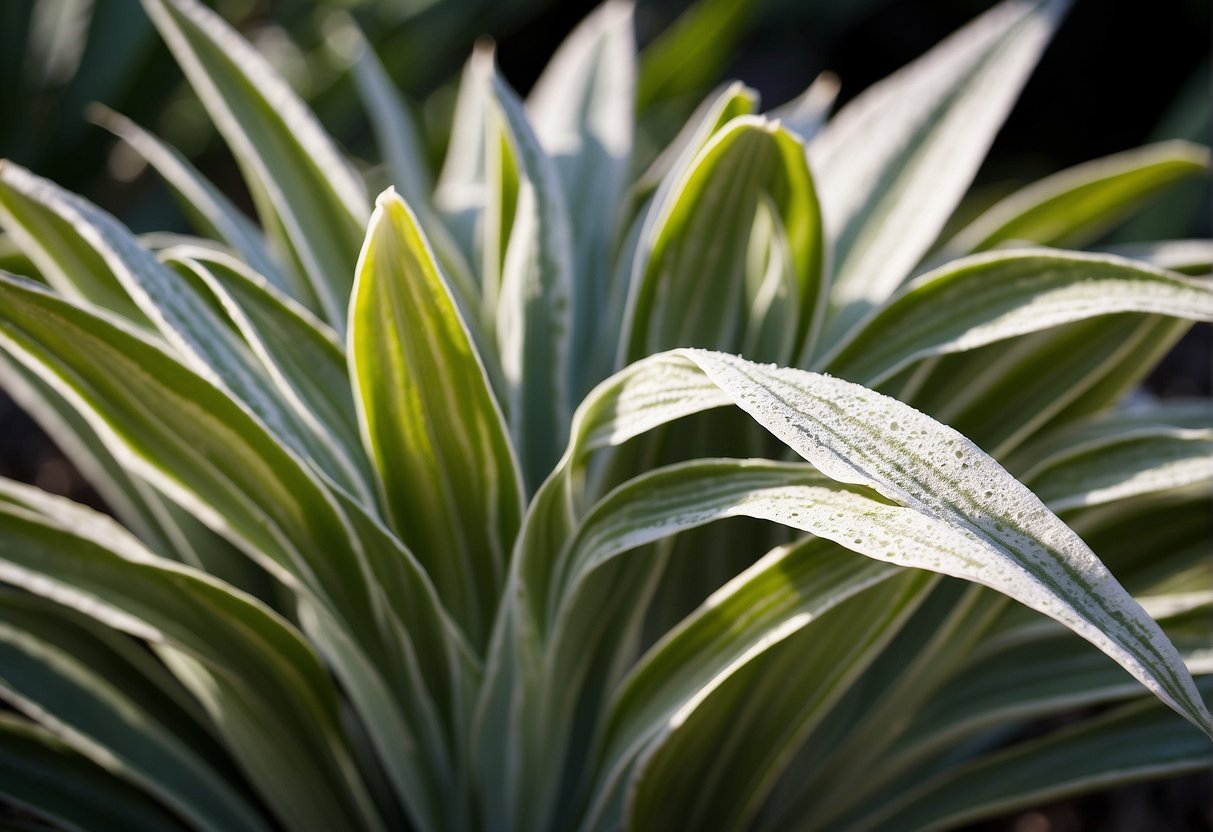
Powdery mildew is a common fungal disease that affects a wide range of plants, including yucca plants. It is caused by various species of fungi that thrive in warm, humid conditions. The disease appears as a white or grayish powder on the leaves, stems, and flowers of infected plants. If left untreated, powdery mildew can cause stunted growth, leaf drop, and even death of the plant. In this article, we will discuss how to identify powdery mildew on yucca plants and the prevention and treatment strategies you can use to control the disease.
Key Takeaways
- Powdery mildew is a fungal disease that appears as a white or grayish powder on the leaves, stems, and flowers of infected yucca plants.
- Identifying powdery mildew on yucca plants can be challenging, but it is essential to catch the disease early to prevent damage to the plant.
- Prevention and treatment strategies, such as improving air circulation and using fungicides, can help control powdery mildew on yucca plants.
Identifying Powdery Mildew on Yucca
If you have noticed white spots on the leaves and stems of your yucca plant, it is likely that it has been infected with powdery mildew. Powdery mildew is a fungal infection that can affect a wide variety of plants, including yucca.
Visual Symptoms on Leaves and Stems
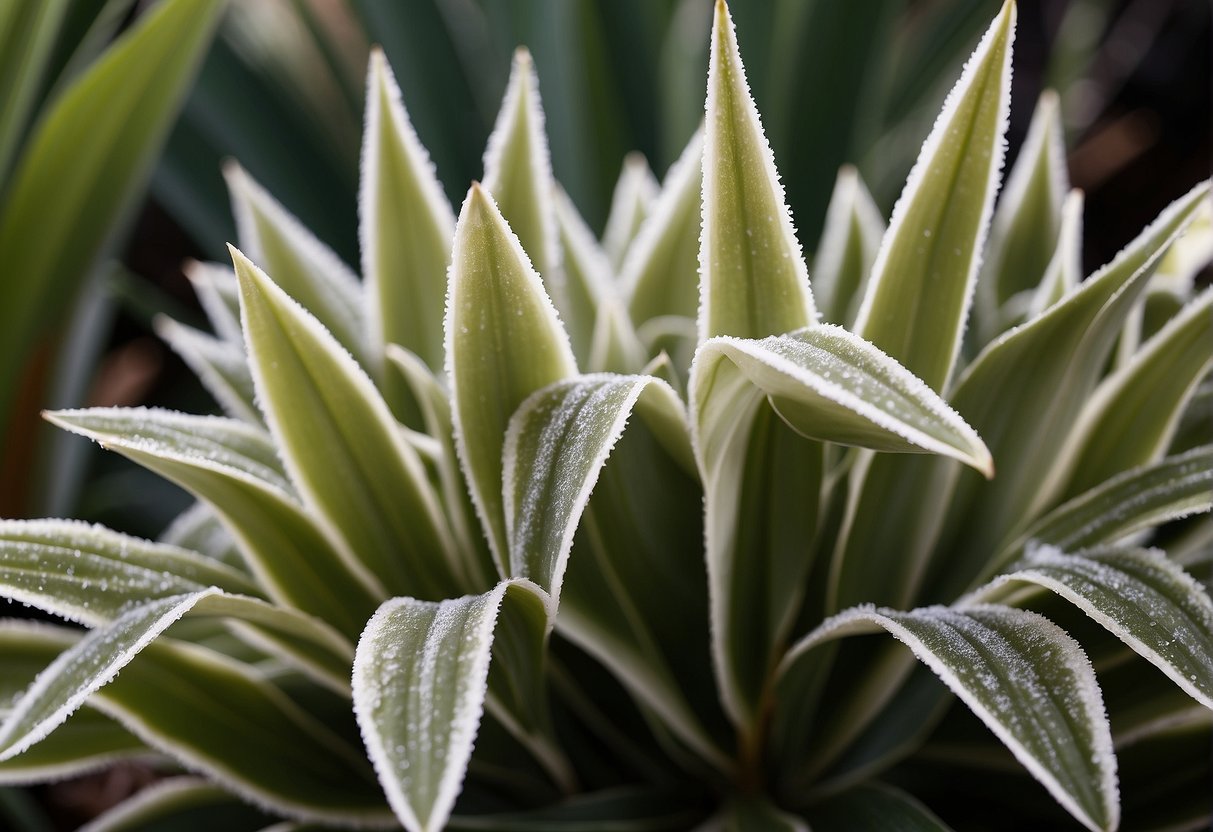
The first sign of powdery mildew on yucca is the appearance of small, white or grayish-white spots on the leaves and stems of the plant. These spots can quickly spread and cover the entire surface of the leaves and stems, giving them a powdery or fuzzy appearance. In severe cases, the leaves may turn yellow and fall off the plant.
Effects on Plant Health and Growth
Powdery mildew can have a negative impact on the health and growth of your yucca plant. The fungus can weaken the plant by reducing its ability to photosynthesize, which can lead to stunted growth and poor fruit or flower production. In addition, the leaves of infected plants may become distorted or deformed, further reducing their ability to function properly.
To prevent the spread of powdery mildew, it is important to remove infected leaves and stems as soon as possible. You can also reduce the risk of infection by keeping your yucca plant in a well-ventilated area with plenty of sunlight. Fungicides can also be used to control powdery mildew, but it is important to follow the instructions carefully and use them only as directed.
In conclusion, powdery mildew is a common fungal infection that can affect yucca plants. By being able to identify the visual symptoms of powdery mildew and understanding its effects on plant health and growth, you can take steps to prevent and control the spread of this fungal infection.
Prevention and Treatment Strategies
Cultural Practices for Prevention
Preventing powdery mildew on yucca plants requires a combination of cultural practices. Start by planting yuccas in a location with good air circulation and plenty of sunlight. Avoid planting them in areas with high humidity, as this can promote fungal growth. Water yuccas deeply and infrequently, as overwatering can create a damp environment that is conducive to fungal growth.
Pruning is also an effective cultural practice for preventing powdery mildew. Remove any infected leaves as soon as you notice them, and prune back any branches that are touching the ground or nearby plants. This will help to increase air circulation and prevent the spread of the fungus.
Effective Treatment Options
If you do notice powdery mildew on your yucca plants, there are several treatment options available. One effective treatment is to apply a fungicide. Look for a fungicide that is labeled for use on yucca plants and follow the instructions carefully.
In addition to fungicides, there are several organic treatments that can be effective against powdery mildew. Neem oil, for example, is a natural fungicide that can be applied directly to the leaves of the plant. Baking soda and milk are also effective treatments. Mix one tablespoon of baking soda and one tablespoon of vegetable oil with one gallon of water, and spray the solution on the affected leaves. Alternatively, mix one part milk with two parts water and spray the solution on the leaves.
It is important to note that treatment alone will not be effective if the underlying cultural practices are not addressed. Be sure to continue practicing good cultural practices, such as pruning and providing good air circulation, in addition to using treatments. This will help to prevent future outbreaks of powdery mildew on your yucca plants.
Frequently Asked Questions
What are the symptoms of powdery mildew on yucca plants?
Powdery mildew on yucca plants appears as a white or gray powdery substance on the leaves, stems, and flowers. The affected areas may also show signs of yellowing, browning, or curling.
How can I identify the early signs of powdery mildew on my yucca?
Early signs of powdery mildew on yucca plants include the appearance of small white or gray spots on the leaves, stems, and flowers. As the infection progresses, the spots will grow in size and number, eventually forming a powdery coating.
What treatment options are effective against powdery mildew on yucca plants?
Treatment options for powdery mildew on yucca plants include removing infected plant parts, improving air circulation, reducing humidity, and applying fungicides. Natural remedies like neem oil and baking soda can also be effective in controlling the infection.
Can yucca plants recover from an infection of powdery mildew?
Yes, yucca plants can recover from an infection of powdery mildew with proper treatment. However, severe infections may cause permanent damage to the plant.
What are the common causes of powdery mildew on houseplants like yucca?
The common causes of powdery mildew on houseplants like yucca include high humidity, poor air circulation, and overcrowding. Overwatering and using contaminated soil or tools can also contribute to the spread of the infection.
Is powdery mildew on yucca plants dangerous to humans or pets?
Powdery mildew on yucca plants is not dangerous to humans or pets. However, it can cause respiratory problems in individuals with allergies or asthma. It is recommended to wear gloves and a mask when handling infected plants to avoid inhaling the spores.