Home » Blog » What Does Beautyberry Look Like: A Visual Guide
What Does Beautyberry Look Like: A Visual Guide
December 27, 2024
Should you have a passion for gardening or just appreciate the splendor of the natural world, beautyberry might be familiar to you. Known as Callicarpa Americana, this eye-catching bush originates from the southeastern region of the United States and is celebrated for its distinctive looks and low maintenance requirements. In this piece, we will delve into the appearance of beautyberry, methods for its identification, and guidelines for its upkeep.
Physical Characteristics and Identification:
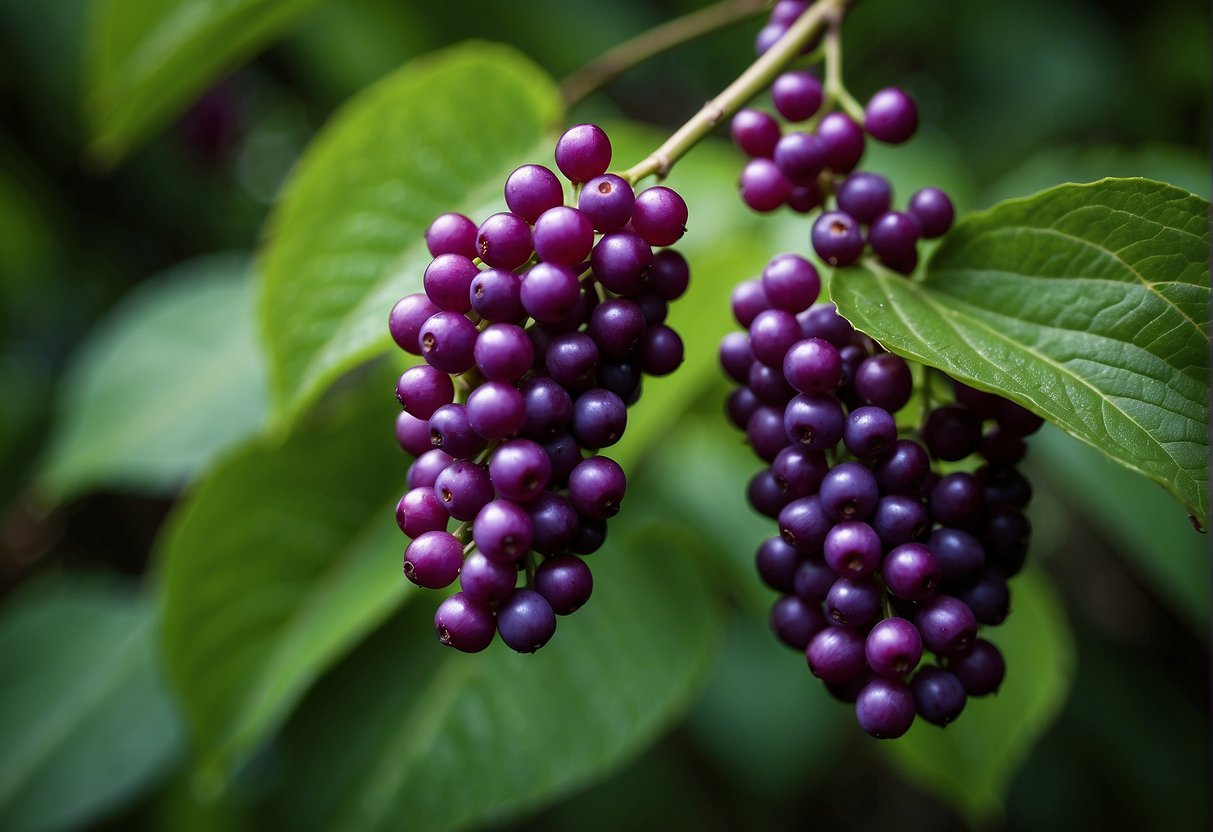
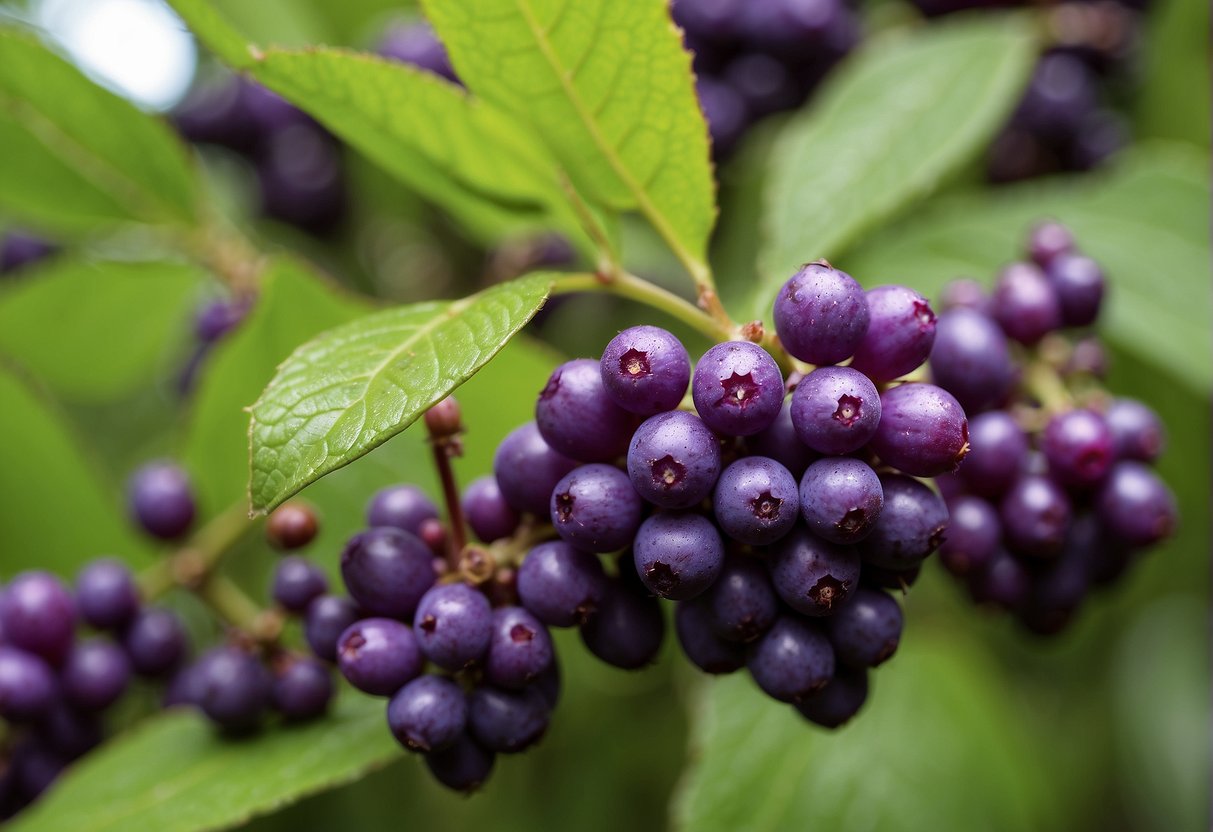
Beautyberry is a deciduous shrub that can grow up to 8 feet tall and 6 feet wide. Its leaves are simple, opposite, and ovate, with serrated edges. The real beauty of this plant, however, comes from its bright purple, magenta, or white berries, which grow in clusters along the stem. These berries are not only visually striking but also attract birds and other wildlife to your garden.
Cultivation and Care:
Beautyberry is a hardy plant that thrives in full sun to partial shade and can tolerate a variety of soil types. It prefers well-draining soil and regular watering, especially during the first year after planting. Pruning is not necessary but can help shape the plant and promote new growth. With minimal care, beautyberry can be a stunning addition to any garden.
Key Takeaways
Beautyberry is a deciduous shrub native to the southeastern United States.
Its leaves are ovate and serrated, and it produces bright purple, magenta, or white berries in clusters along the stem.
Beautyberry is easy to care for, thriving in a variety of soil types and requiring minimal pruning.
Physical Characteristics and Identification
Plant Structure and Foliage
Beautyberry is a deciduous shrub that can grow up to 6 feet tall and wide. It has an open, rounded shape with arching branches that give it a graceful appearance. The leaves are simple, opposite, and ovate, measuring 2 to 6 inches long and 1 to 3 inches wide. They are bright green in the spring and summer, turning yellow in the fall before dropping off.
Flowering and Fruit Production
Beautyberry produces clusters of small, pink flowers in the late spring and early summer. The flowers are not very showy but attract pollinators such as bees and butterflies. After flowering, the plant produces clusters of bright purple berries that are about 1/4 inch in diameter. The berries are arranged in tight clusters along the branches and can persist well into the fall.
To identify beautyberry, look for a deciduous shrub with arching branches and bright green leaves that turn yellow in the fall. In the late spring and early summer, it produces small, pink flowers followed by clusters of bright purple berries in the fall. The berries are arranged in tight clusters along the branches and are a distinctive feature of the plant.
Cultivation and Care
Planting and Growing Conditions
If you want to grow beautyberry in your garden, you need to ensure that it is planted in the right conditions. Beautyberry thrives in well-drained soil that is rich in organic matter. The ideal soil pH for beautyberry is between 5.5 and 6.5. It is best to plant beautyberry in a location that receives partial shade, although it can also grow in full sun. Beautyberry is a deciduous shrub that can grow up to 6 feet tall and wide, so make sure to give it enough space to grow.
Maintenance and Pruning
Beautyberry is a low maintenance plant that requires little care. However, it is still important to prune it regularly to keep its shape and promote new growth. Pruning should be done in late winter or early spring before new growth begins. You can also prune it after it has finished blooming in the summer. Cut back any dead or damaged branches to the ground.
Propagation Techniques
Beautyberry can be propagated through seeds or cuttings. If you want to propagate beautyberry through seeds, you should collect the seeds in the fall and plant them in the spring. Beautyberry can also be propagated through softwood cuttings taken in the summer. To propagate through cuttings, make sure to use rooting hormone and plant the cuttings in well-drained soil.
Overall, beautyberry is an ornamental plant that is easy to grow and care for. It is a great addition to any garden, as it produces beautiful flowers and attracts birds and butterflies. With the right planting and growing conditions, maintenance, and propagation techniques, you can enjoy the beauty of this plant in your own backyard.
Frequently Asked Questions
What are the identifying characteristics of a beautyberry bush?
Beautyberry, also known as Callicarpa, is a deciduous shrub that can grow up to 6 feet tall and wide. Its leaves are oval-shaped, pointed, and have a slightly serrated edge. The most distinctive feature of the beautyberry bush is its bright purple berries that grow in clusters along the stem. The berries are about the size of a pea and can persist on the plant well into winter.
Can beautyberry shrubs thrive in shaded areas?
Beautyberry shrubs prefer full sun to partial shade. They can tolerate some shade, but too much shade can result in reduced flowering and fruiting.
What regions are suitable for growing beautyberries?
Beautyberry shrubs are native to the southeastern United States, but they can also be grown in other regions with similar climates. They prefer moist, well-drained soil and are hardy in USDA zones 6-10.
Are beautyberry plants harmful to pets?
While beautyberry plants are not toxic to pets, the berries can cause gastrointestinal upset if ingested in large quantities. It is best to keep pets away from the plant to prevent them from eating the berries.
How does the appearance of beautyberry change with the seasons?
In spring, beautyberry shrubs produce small, pinkish flowers that are not particularly showy. As summer progresses, the leaves and stems of the plant become more robust and the berries begin to form. By fall, the berries are fully ripe and the leaves begin to change color, turning yellow or purple before dropping off in winter.
What distinguishes Asian beautyberry from American beautyberry?
Asian beautyberry, also known as Callicarpa japonica, is a smaller shrub that typically grows to about 3 feet tall and wide. Its leaves are smaller and more rounded than American beautyberry, and its berries are a darker shade of purple. Additionally, Asian beautyberry is more tolerant of shade than its American counterpart.
Hi Lovelies ! I made this blog to share my tips about Home Improvement, Children, Pets, Food, Gadgets, Automotive, Health & Beauty, and ways to be frugal while maintaining a natural lifestyle. Interested to be a Guest Blogger on my website? Please email me at: [email protected]