Home » Blog » How to Trim Yucca Plants in the Fall: A Step-by-Step Guide
How to Trim Yucca Plants in the Fall: A Step-by-Step Guide
December 30, 2024
Cutting back yucca plants during the autumn is crucial for their upkeep and health. Regularly trimming your yucca plants ensures they stay in top condition and look their best. For those who haven’t pruned yucca plants before, the task may seem daunting. However, with the appropriate equipment and methods, it becomes an easy task that you can quickly learn.
Before you start pruning your yucca plants, it’s important to understand the basics of their growth patterns. Yucca plants are slow-growing and can take several years to reach their full height. They also have a unique growth pattern where the leaves grow in a rosette shape around a central stem. Understanding these growth patterns will help you to determine the best time to prune your yucca plants and which leaves to remove.
Key Takeaways
Pruning yucca plants in the fall is an essential part of their care and maintenance.
Understanding the growth patterns of yucca plants is important before pruning.
Proper pruning techniques can help keep your yucca plants healthy and looking their best.
Preparing to Prune Yucca Plants
Before you start pruning your yucca plants, it’s important to prepare yourself and your tools. This will help ensure that the job goes smoothly and that you don’t accidentally damage the plant or injure yourself. Here are some things to keep in mind as you prepare to prune your yucca plants:
Assessing Your Yucca’s Health
Before you start pruning, take a close look at your yucca plant to assess its health. Look for signs of disease or damage, such as yellowing leaves or brown spots. If you notice any issues, you may need to address them before pruning. Additionally, if your yucca plant is very old or has not been pruned in a long time, you may need to take extra care when pruning to avoid damaging the plant.
Gathering the Right Tools
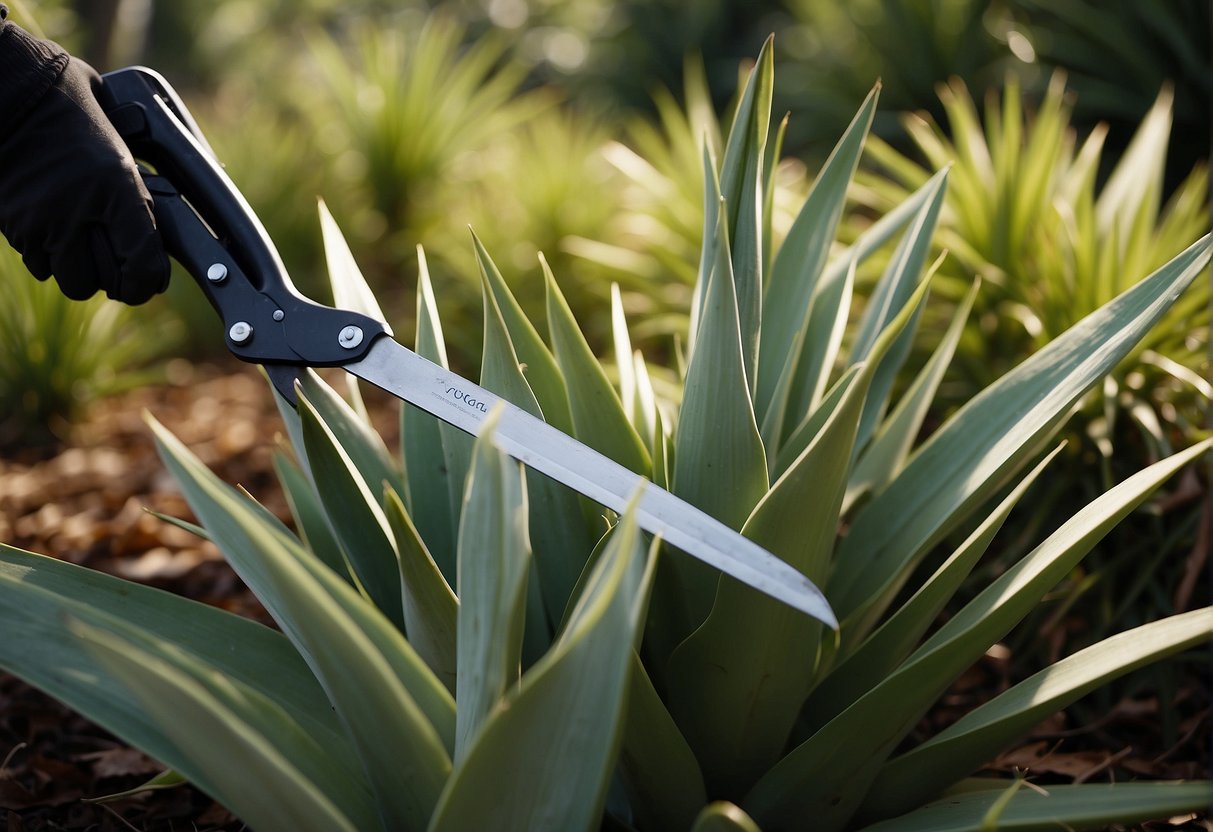
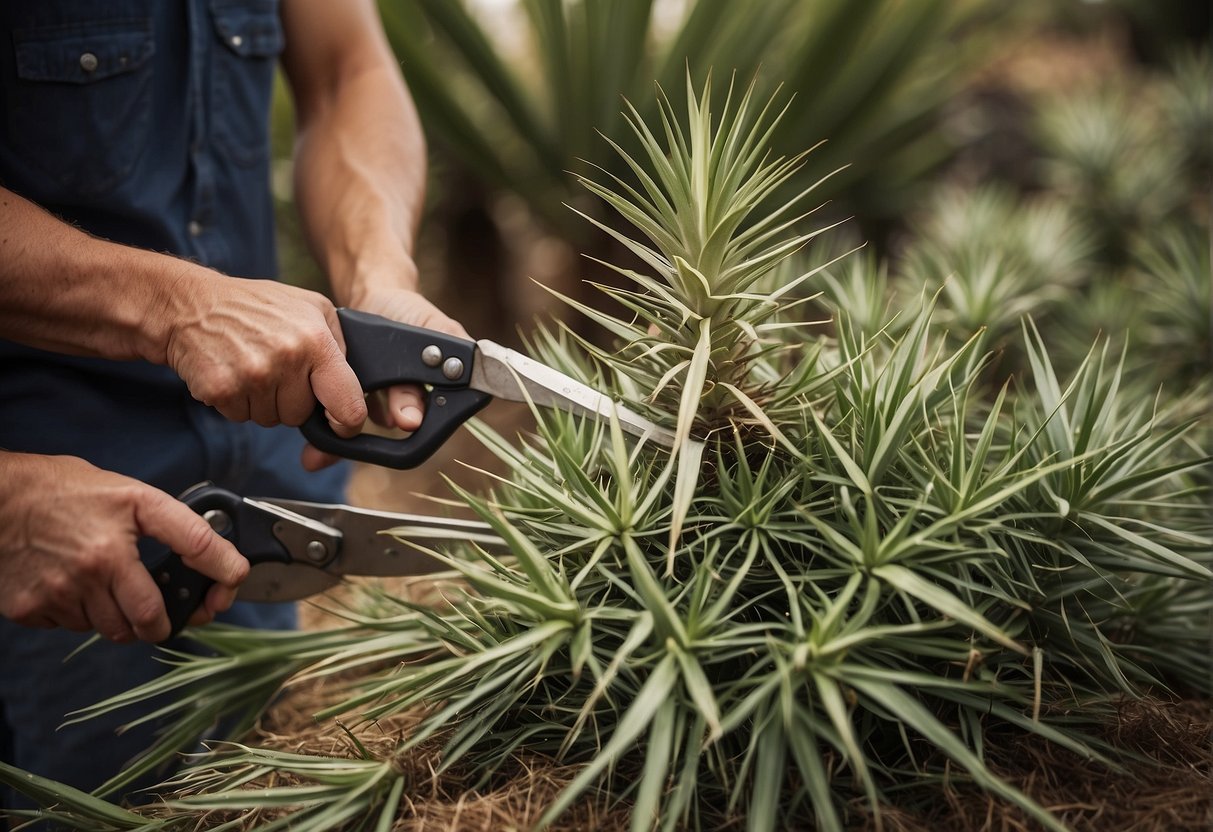
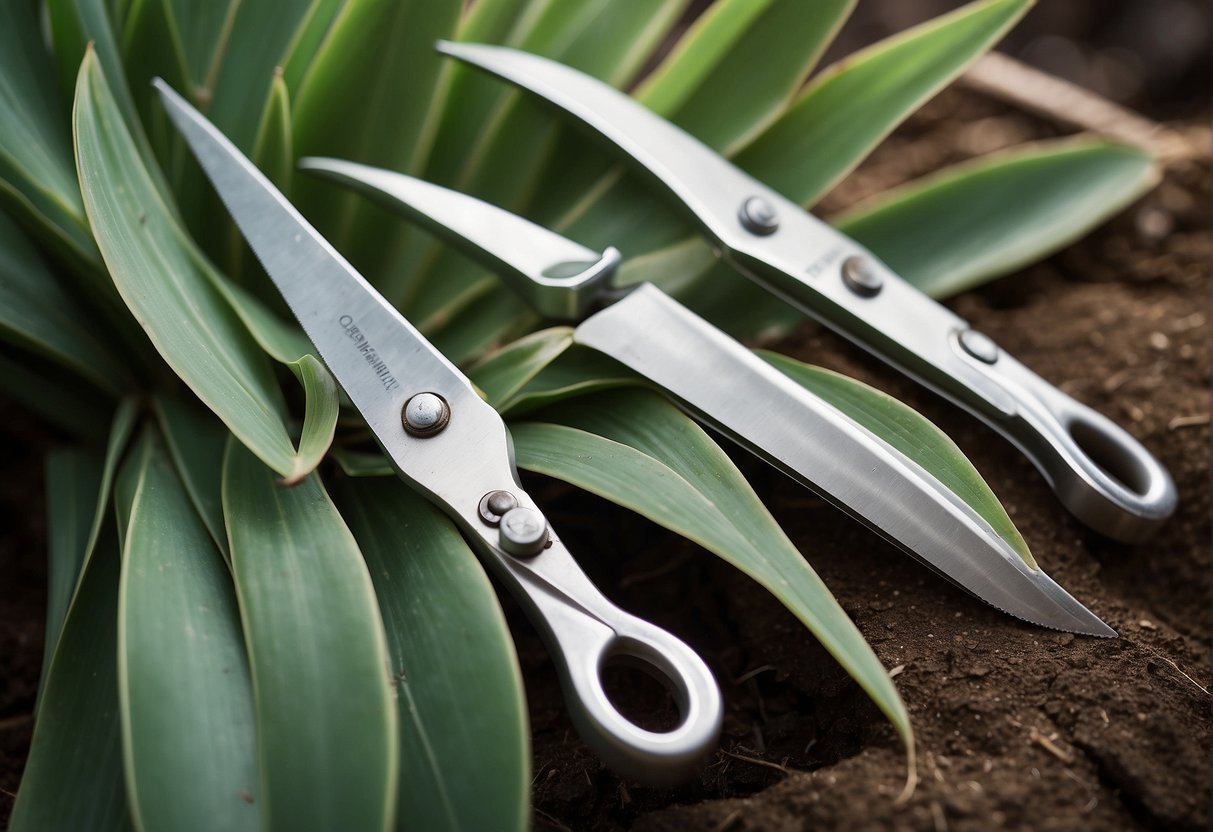
To prune your yucca plant, you’ll need a few basic tools. These include pruning shears, a sharp knife, and protective gear such as gloves and safety glasses. Make sure your tools are in good condition and sharpened before you start pruning. This will help you make clean cuts and avoid damaging the plant.
Safety Considerations for Pruning
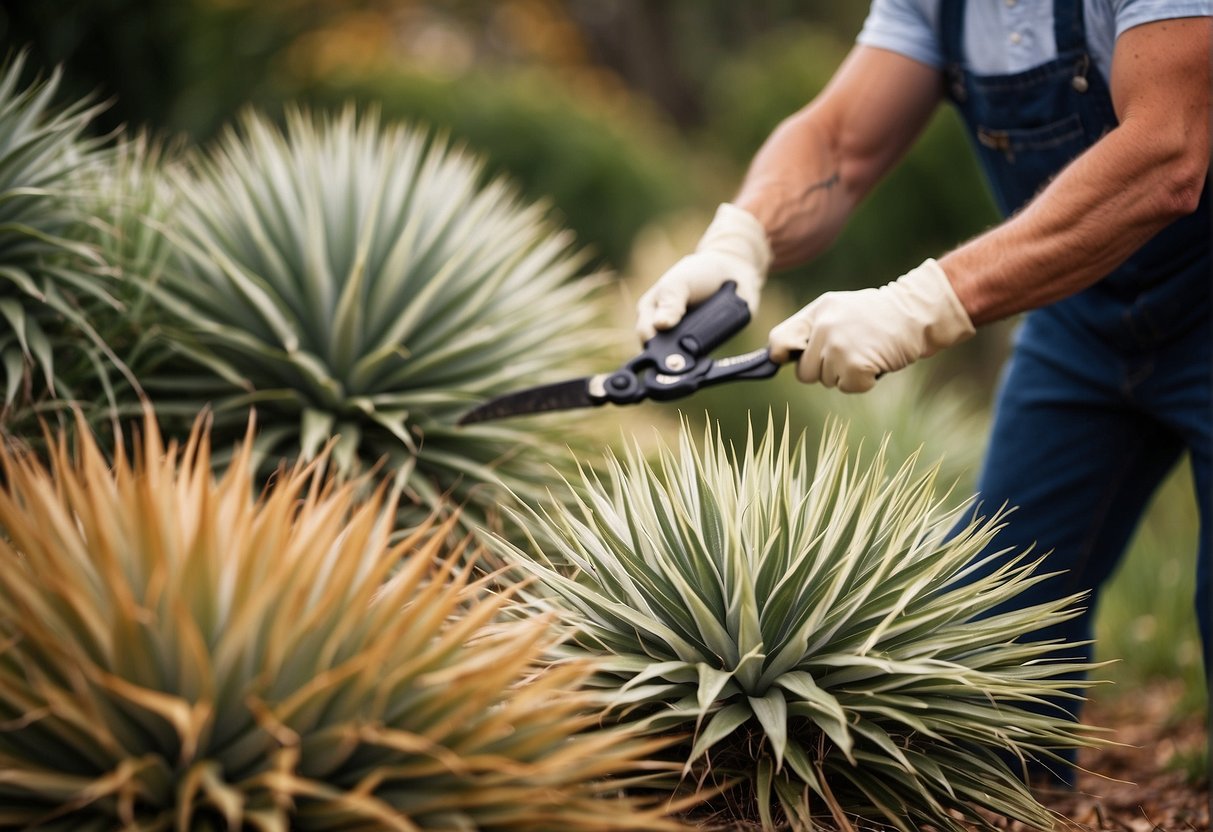
Pruning yucca plants can be dangerous if you’re not careful. To avoid injury, make sure you wear protective gear such as gloves and safety glasses. Additionally, be careful when using sharp tools like pruning shears and knives. Make sure you have a good grip on your tools and that you’re not cutting towards your body. Finally, be mindful of your surroundings and make sure you’re not standing on an unstable surface or near any hazards.
By taking the time to prepare yourself and your tools, you can ensure that your yucca plant stays healthy and looks great. So, gather your tools, put on your protective gear, and get ready to prune your yucca plant!
Executing the Pruning Process
Pruning yucca plants in the fall is essential to maintain their health and promote new growth. Here are some tips and techniques to help you execute the pruning process effectively.
Identifying Areas to Prune
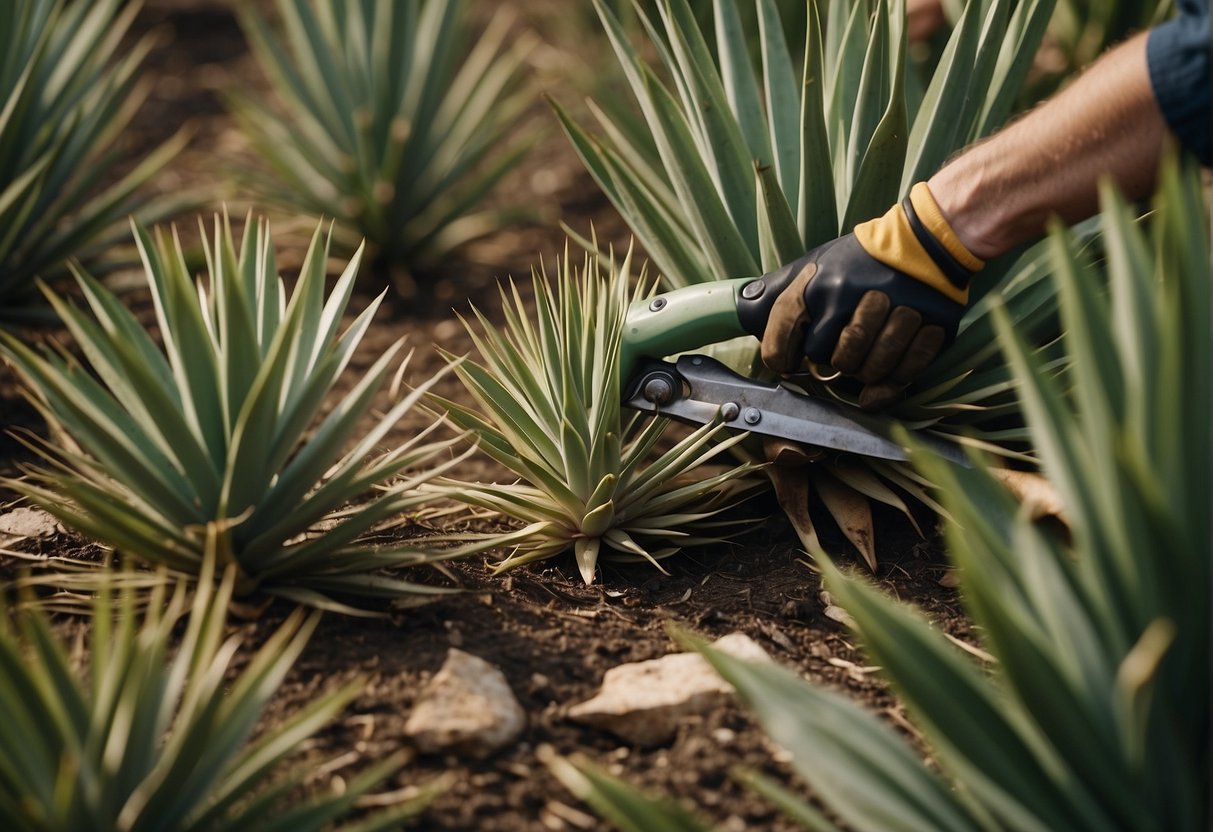
Before you start pruning your yucca plant, it is essential to identify the areas that need pruning. Look for damaged or dead leaves, flower stalks that have finished blooming, and any new growth that needs shaping.
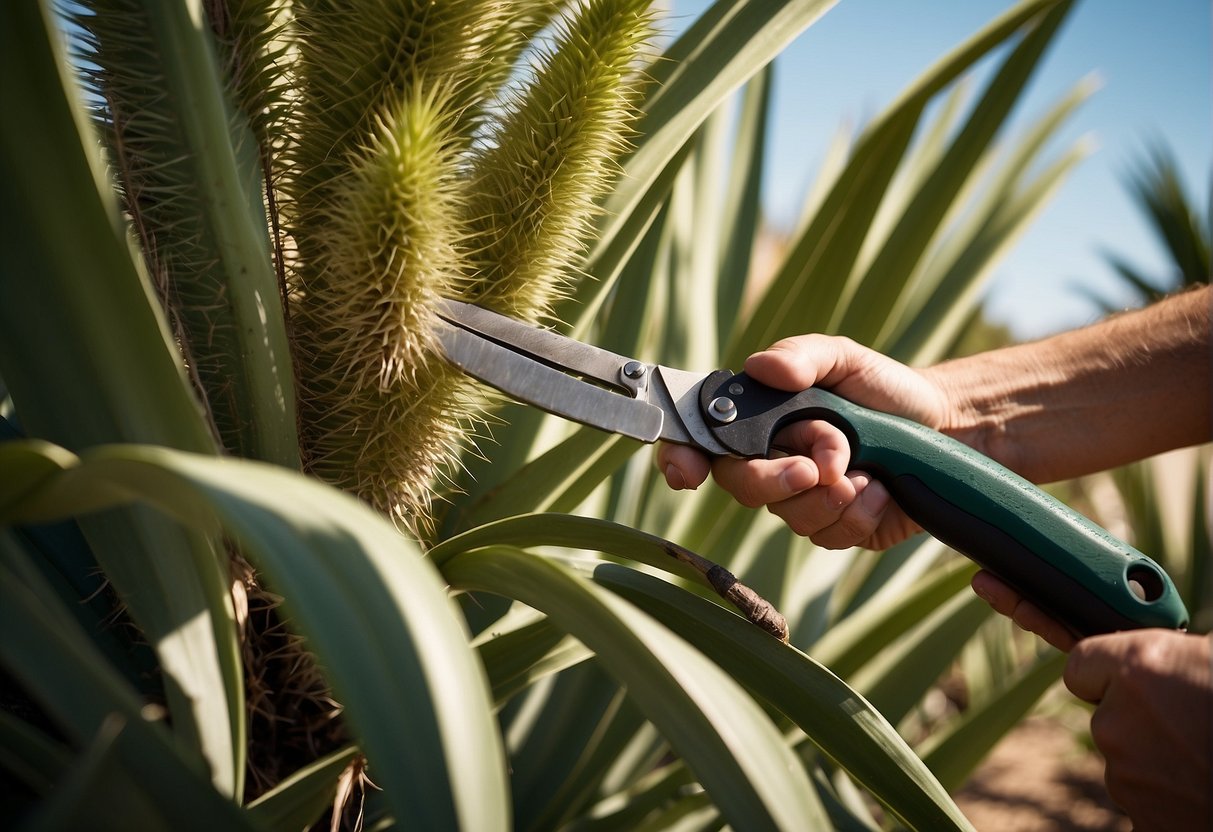
Damaged or dead leaves should be removed as they can attract pests and diseases. Flower stalks that have finished blooming should be cut back to the base of the plant to encourage new growth. New growth can be pruned to shape the plant or to remove any unwanted branches.
Pruning Techniques and Tips
When pruning yucca plants, it is essential to use sharp, clean pruning tools to avoid damaging the plant. Use pruning shears or a pruning saw to cut through thick stems and branches.
When cutting back flower stalks, make sure to cut them as close to the base of the plant as possible. For new growth, prune just above a leaf node to encourage branching. When pruning to shape the plant, make sure to maintain the natural shape of the yucca.
Post-Pruning Yucca Care
After pruning your yucca plant, it is essential to provide proper care to promote new growth. Water the plant deeply to help it recover from the pruning process. Fertilize with a balanced fertilizer to provide the necessary nutrients for healthy growth.
Compost can also be added around the base of the plant to improve soil health and retain moisture. Avoid overwatering and make sure the soil has good drainage to prevent root rot.
By following these pruning techniques and tips, you can keep your yucca plant healthy and looking its best.
Frequently Asked Questions
What is the proper method for pruning an overgrown yucca plant?
If your yucca plant has become overgrown, you can prune it back in the fall. Use a pair of sharp pruning shears to cut the stems back to the desired size. Be sure to cut just above a leaf or stem node to encourage new growth.
How do you prepare a yucca plant for winter?
In the fall, you should remove any dead or damaged leaves from your yucca plant. You should also cut back any stems that have become too long or overgrown. This will help your yucca plant to conserve energy during the winter months.
Will a yucca plant grow back if you cut the top off?
Yes, a yucca plant will usually grow back if you cut the top off. However, it may take some time for the plant to regrow, and it may not grow back as tall or as full as it was before.
Should I cut the brown tips off my yucca plant?
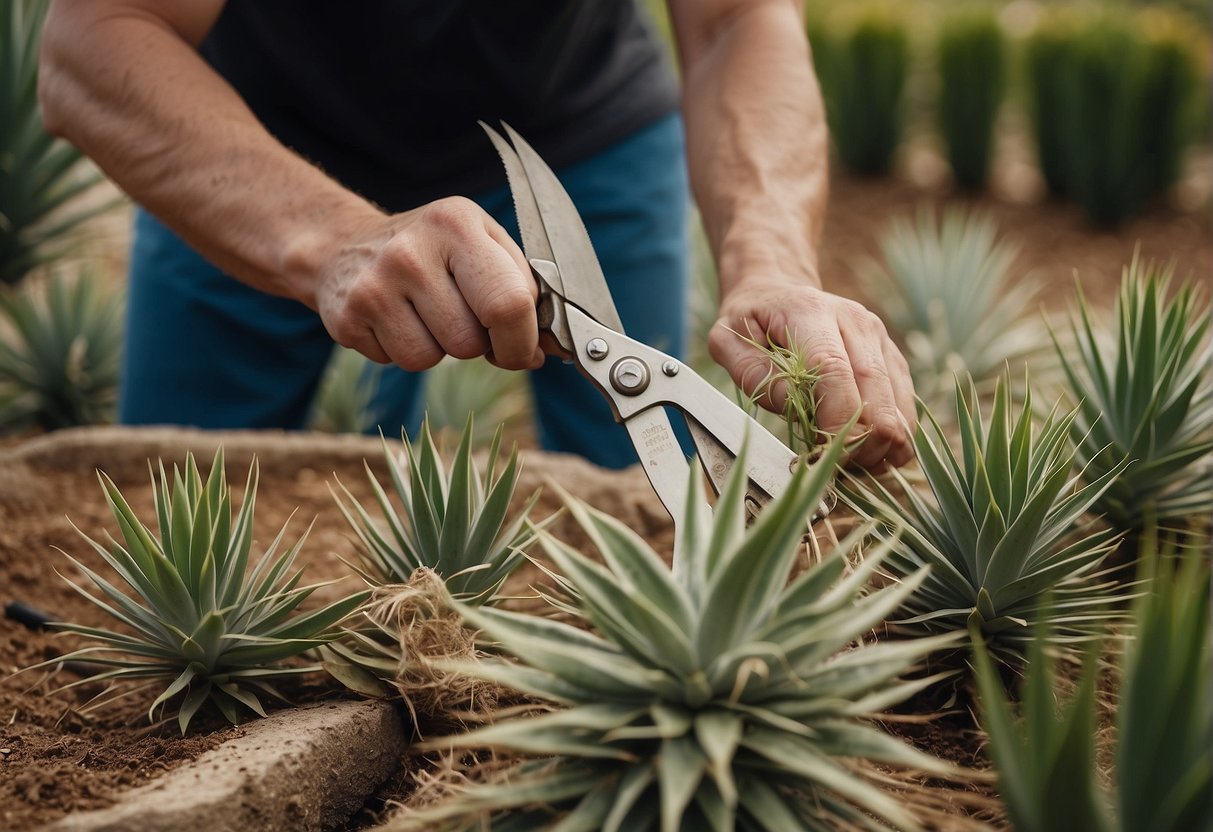
Yes, you should cut the brown tips off your yucca plant. This will help to keep the plant healthy and looking its best. Use a pair of sharp scissors to cut off the brown tips, being careful not to damage the healthy green parts of the plant.
What are the consequences of cutting a yucca trunk?
Cutting a yucca trunk can be a drastic measure, and it should only be done if absolutely necessary. If you do cut the trunk, the plant may not grow back, or it may grow back slowly and in a different shape or form.
How can you prevent a yucca from growing too tall?
To prevent a yucca from growing too tall, you can prune it back regularly. Use a pair of sharp pruning shears to cut back any stems or leaves that have become too long or overgrown. This will help to keep the plant at a manageable size.
Hi Lovelies ! I made this blog to share my tips about Home Improvement, Children, Pets, Food, Gadgets, Automotive, Health & Beauty, and ways to be frugal while maintaining a natural lifestyle. Interested to be a Guest Blogger on my website? Please email me at: [email protected]