Home » Blog » How to Trim Back Outdoor Yucca Plants: A Step-by-Step Guide
How to Trim Back Outdoor Yucca Plants: A Step-by-Step Guide
December 31, 2024
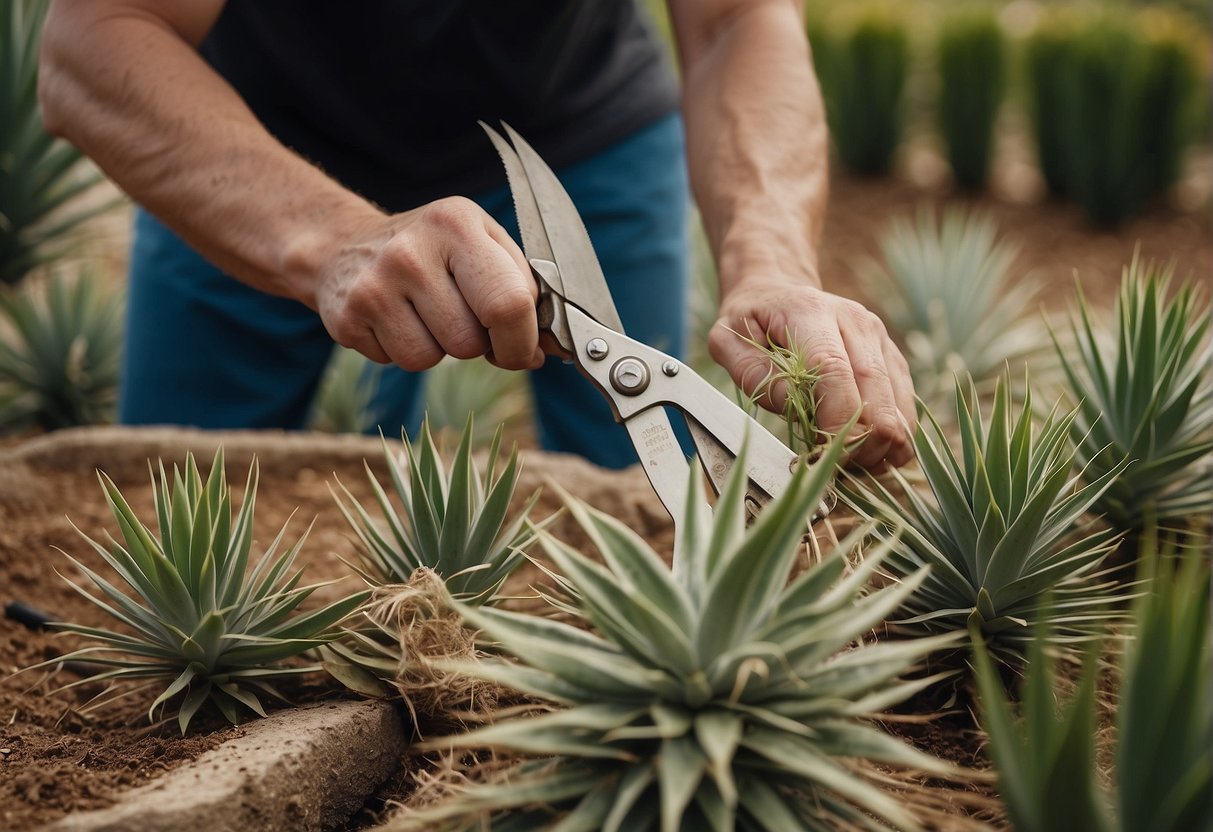
For those who have outdoor yucca plants adorning their gardens, it’s well-known that they demand consistent upkeep to ensure they remain in prime condition. An integral aspect of their maintenance involves pruning your yucca plants. By eliminating dead foliage, old flowers, and various types of litter, you’re not only promoting robust growth but also averting potential diseases. This article is dedicated to guide you through the necessary information on how to properly prune outdoor yucca plants.
Understanding Yucca Plant Care is crucial to keeping your plants healthy and thriving. Yuccas are hardy plants that are well-suited to a variety of growing conditions. However, they do require some specific care to stay healthy. In addition to regular watering and fertilizing, yuccas need to be pruned and trimmed to remove dead or damaged leaves and flowers. By following the right pruning and maintenance techniques, you can keep your yucca plants looking their best for years to come.
Key Takeaways
Trimming back outdoor yucca plants is an essential part of their care routine.
Understanding Yucca Plant Care is crucial to keeping your plants healthy and thriving.
By following the right pruning and maintenance techniques, you can keep your yucca plants looking their best for years to come.
Understanding Yucca Plant Care
If you’re looking for a low-maintenance plant that can add a touch of desert beauty to your outdoor space, look no further than the yucca plant. Yuccas are hardy plants that can survive in a variety of conditions, but to ensure optimal growth and health, there are a few things to keep in mind.
Optimal Growing Conditions
Yuccas thrive in full sun, so be sure to plant them in a spot that gets plenty of direct sunlight throughout the day. They also prefer well-draining soil, so choose a soil mix that won’t hold onto excess moisture. If you’re planting your yucca in a pot, make sure it has drainage holes to prevent overwatering.
When it comes to watering, yuccas are drought-tolerant and can go long periods without water. In fact, overwatering is one of the most common problems with yuccas, as it can lead to root rot and other issues. Water your yucca only when the soil is completely dry, and be sure to avoid getting water on the leaves, as this can encourage disease.
Common Yucca Pests and Problems
While yuccas are generally hardy plants, they can be susceptible to a few pests and diseases. One of the most common problems is overwatering, which can lead to root rot and other fungal diseases. To avoid this, make sure your yucca is planted in well-draining soil and only water it when the soil is completely dry.
Yuccas can also be prone to infestations from mealybugs, spider mites, and scale insects. If you notice any of these pests on your yucca, treat them with an insecticidal soap or oil spray, being sure to follow the instructions carefully.
In summary, yucca plant care is relatively straightforward and low-maintenance. By providing your yucca with full sun, well-draining soil, and minimal watering, you can enjoy healthy growth and beautiful foliage for years to come. Keep an eye out for common pests and problems, and address them promptly to ensure your yucca stays healthy and beautiful.
Pruning and Maintenance Techniques
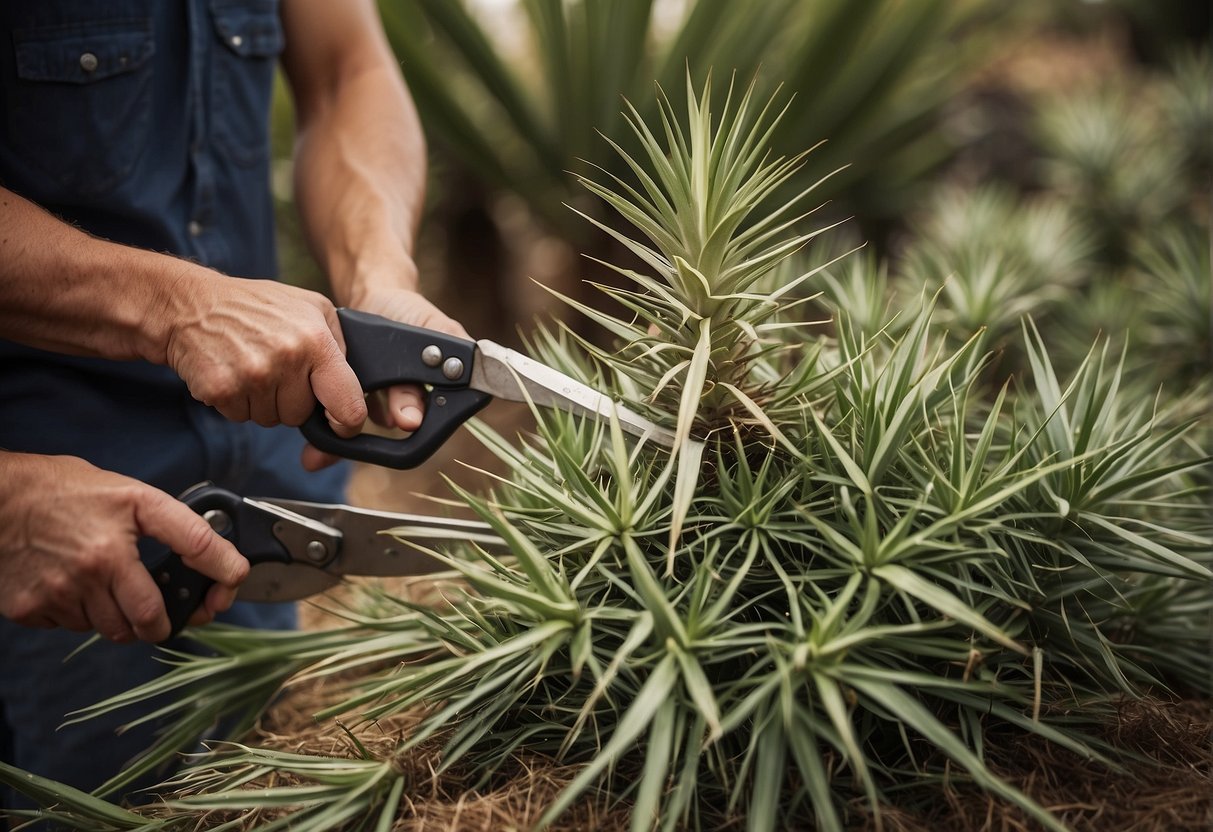
If you have outdoor yucca plants, it is important to prune and maintain them regularly to keep them healthy and looking their best. Pruning helps to remove dead leaves, blooms, and damaged leaves, and can also stimulate new growth. Here are some best practices for pruning and maintaining your yucca plants:
Best Practices for Pruning
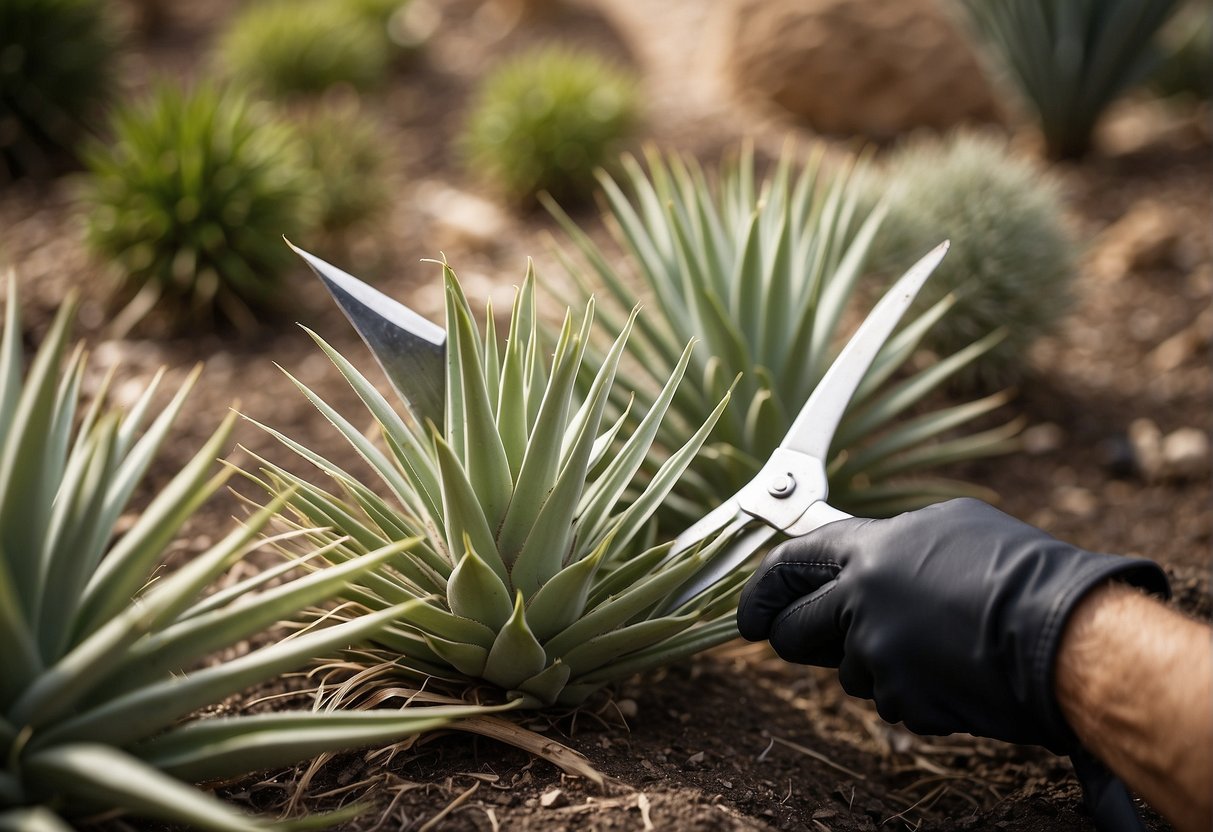
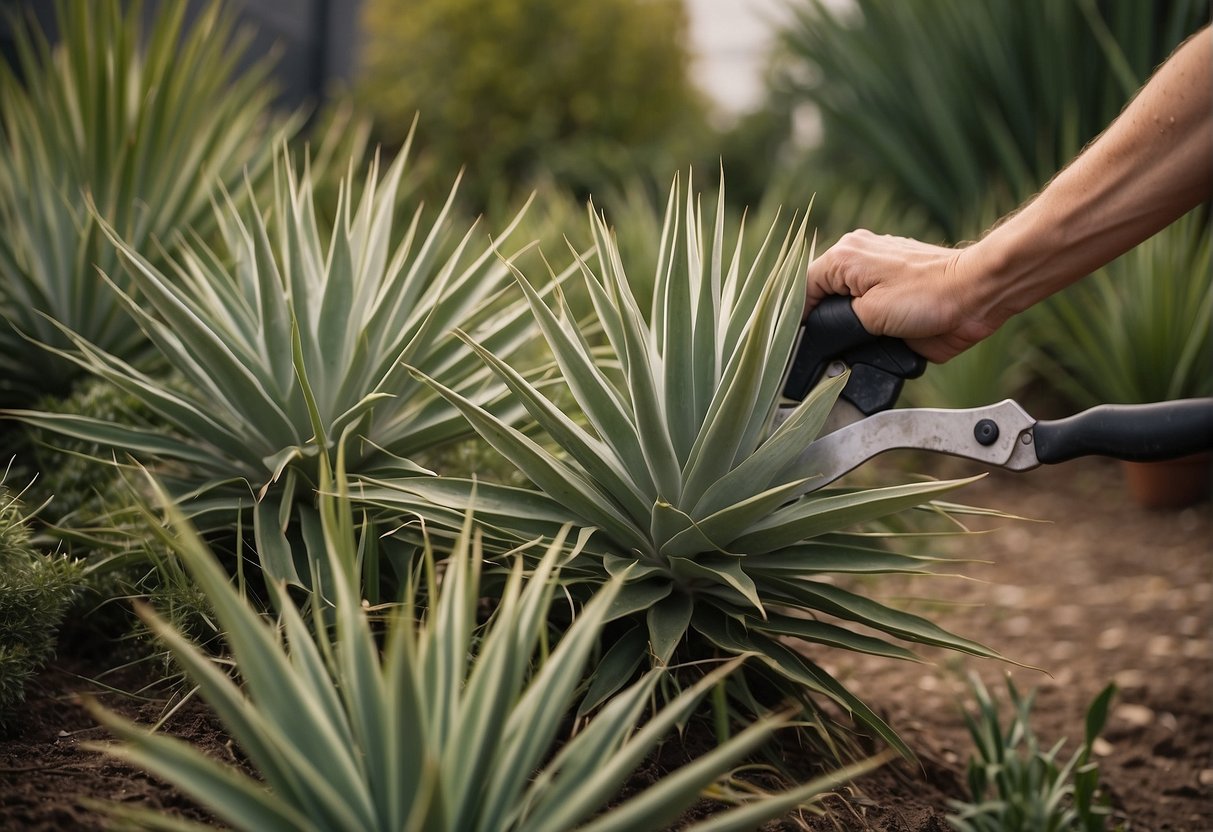
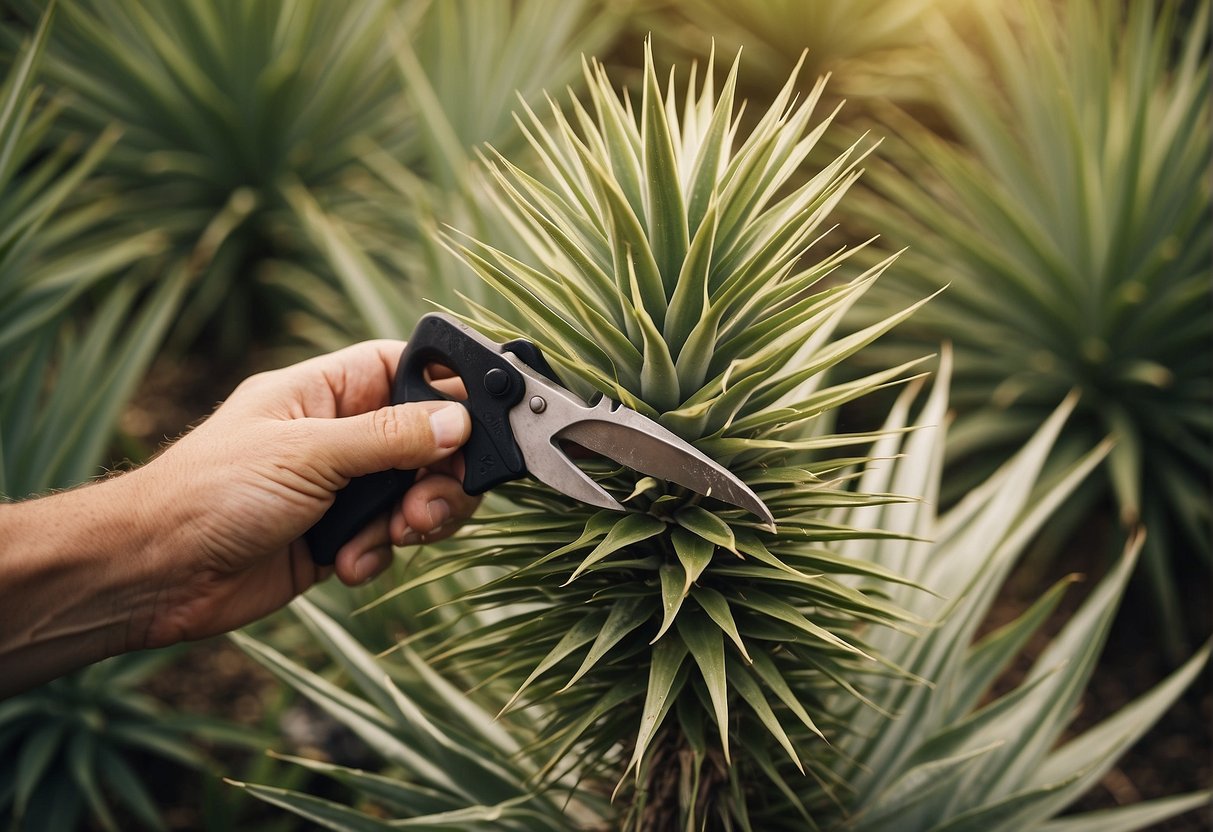
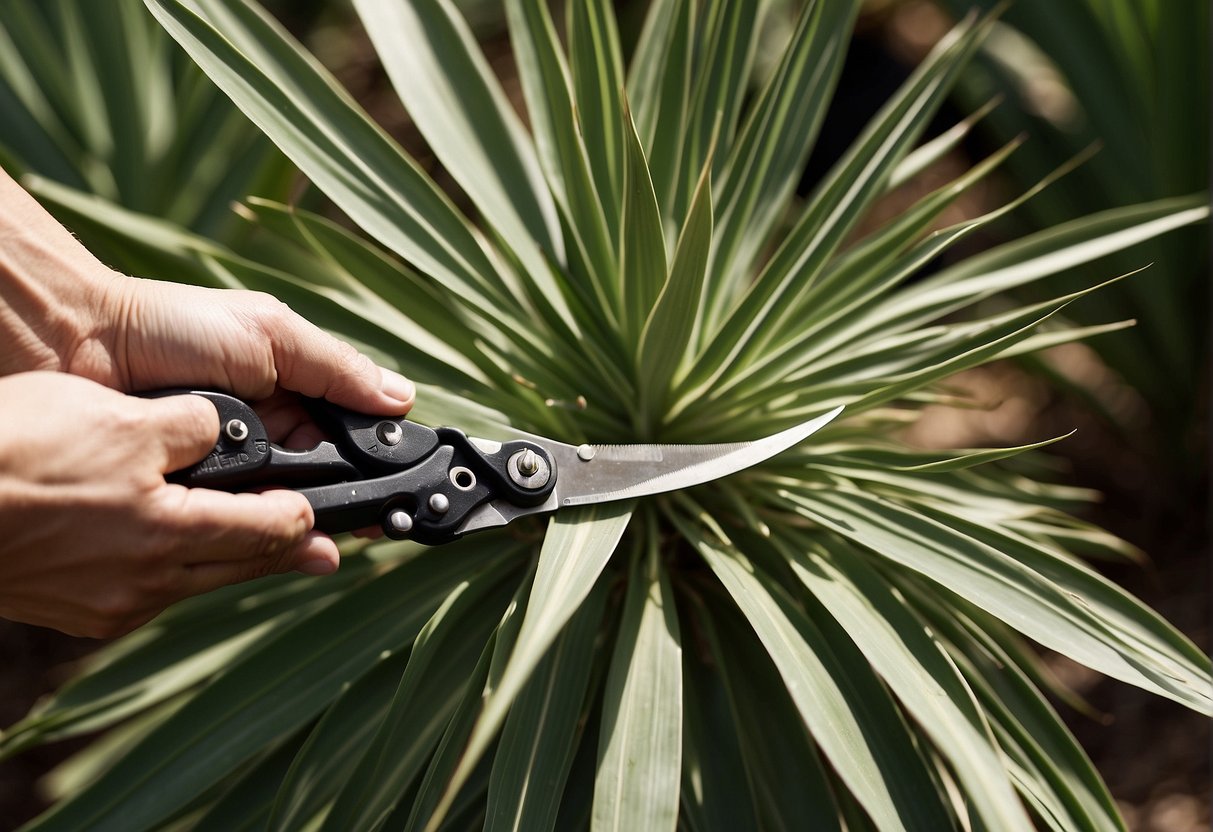
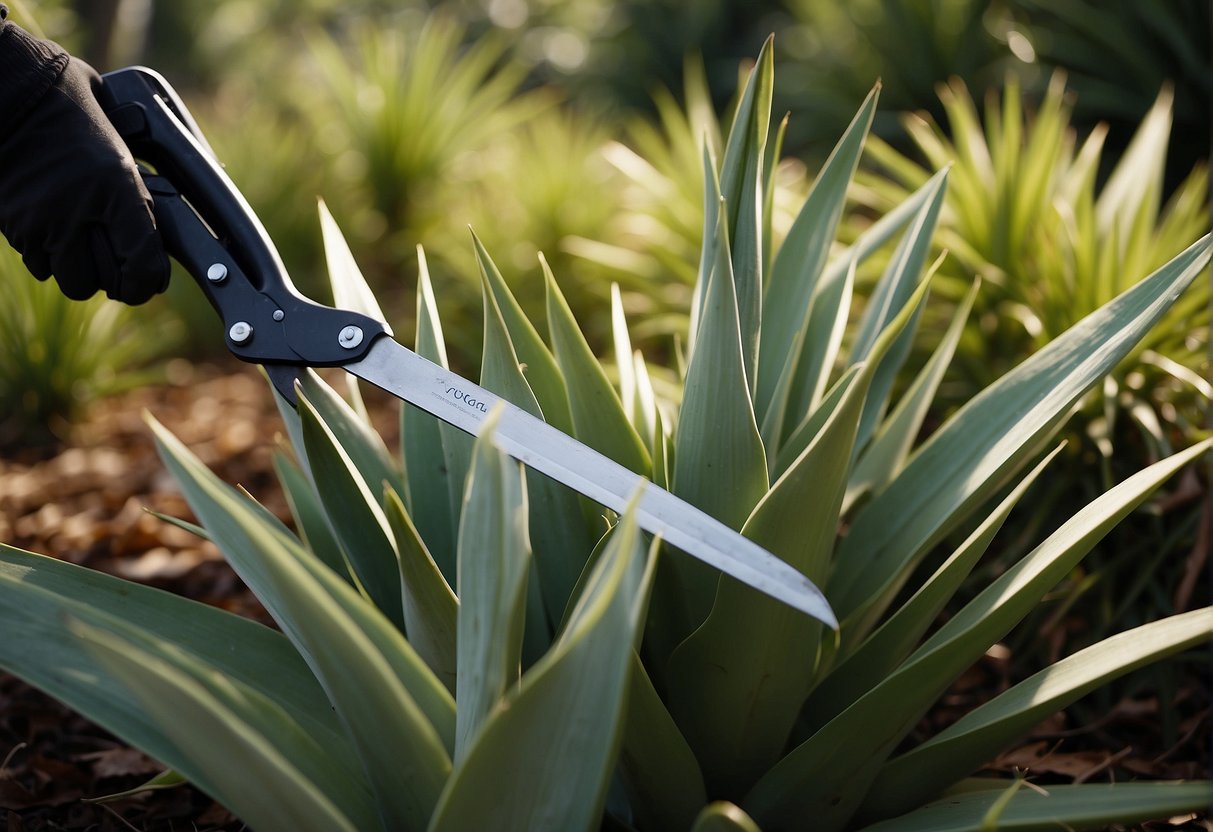
The best time to prune yuccas is in early spring, before new growth begins. Use sharp pruning shears, a pruning saw, or a sharp knife to make clean cuts. When pruning, remove the lower leaves first, as they are the oldest and least productive. Cut back any overgrown or woody stems to rejuvenate the plant.
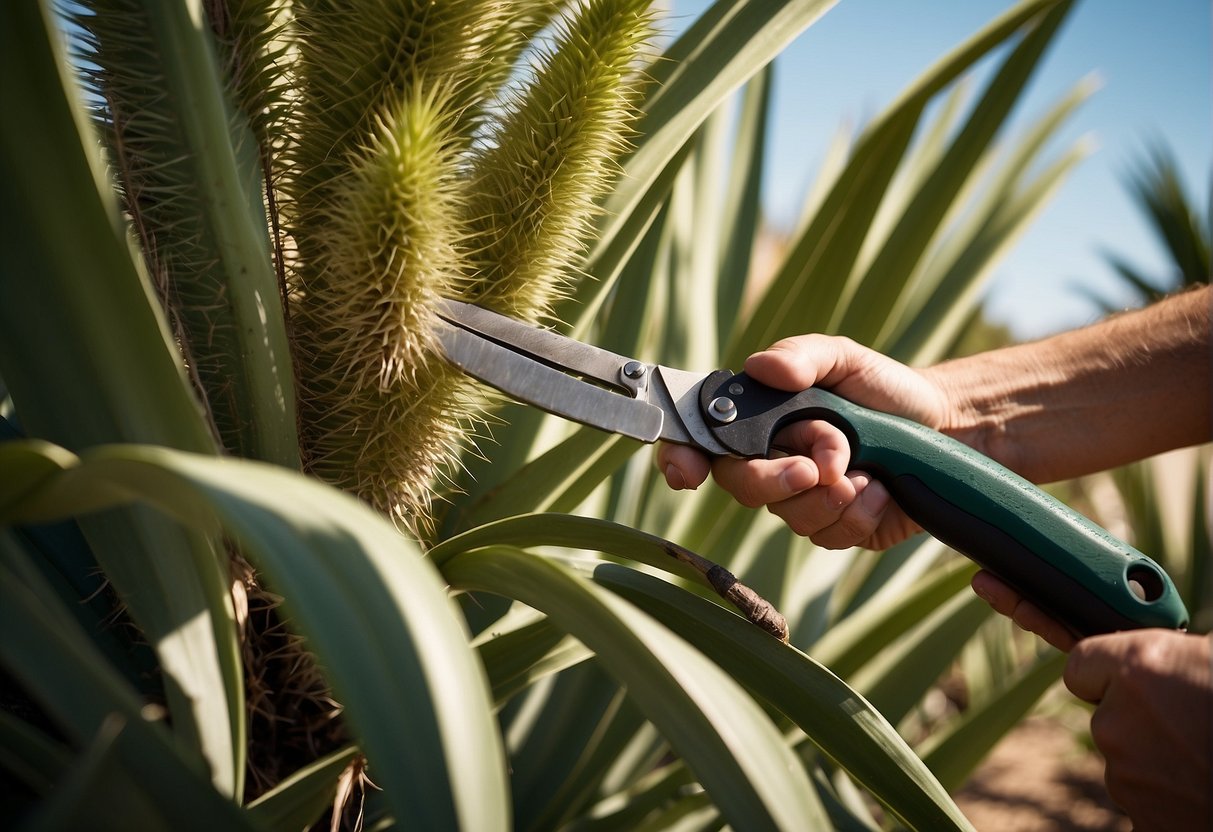
When pruning yucca plants, it is important to wear gloves and protective clothing, as the leaves are sharp and can cause injury. Cut away any dead leaves or blooms, and remove any damaged leaves to prevent disease. If you want to propagate your yucca plant, you can do so by removing offsets or new shoots and planting them in well-draining soil.
Post-Pruning Care and Propagation
After pruning, water your yucca plant deeply to help it recover. You can also fertilize it with compost or organic matter to provide nutrients for new growth. If you have removed any offsets or new shoots, plant them in a separate pot with well-draining soil and water them regularly until they take root.
By following these pruning and maintenance techniques, you can keep your outdoor yucca plants healthy and looking their best. Remember to prune in early spring, remove dead and damaged leaves, and provide post-pruning care to help your yucca plants regrow and thrive.
Frequently Asked Questions
What is the proper technique for pruning an overgrown yucca plant outdoors?
To prune an overgrown yucca plant, you should first remove any damaged or diseased leaves. Then, using a sharp pair of pruning shears, cut back the stem to the desired height. Be sure to cut at an angle to prevent water from collecting on the cut surface.
Can you cut the top off a yucca plant and expect it to regrow?
Yes, you can cut the top off a yucca plant and expect it to regrow. However, it’s important to make the cut at a point where there are still healthy leaves. This will allow the plant to continue photosynthesizing and producing energy to fuel regrowth.
What are the best practices for yucca plant care during the winter months?
During the winter months, it’s important to protect your yucca plant from frost and freezing temperatures. You can cover the plant with a blanket or tarp, or move it indoors if possible. Additionally, you should reduce watering to prevent the plant from becoming waterlogged, which can lead to root rot.
How do you manage and resolve common problems with outdoor yucca plants?
Common problems with outdoor yucca plants include pest infestations, fungal infections, and root rot. To manage these issues, it’s important to regularly inspect your plant for signs of damage or disease. You can use insecticidal soap or neem oil to treat pest infestations, and fungicides to treat fungal infections. If your plant is suffering from root rot, you may need to repot it in fresh, well-draining soil.
Is it possible to cut a yucca trunk and propagate a new plant from it?
Yes, it’s possible to cut a yucca trunk and propagate a new plant from it. To do so, cut a section of the trunk that includes at least one node (where a leaf attaches to the stem). Plant the cutting in well-draining soil and keep it moist until roots develop.
How often should you trim a yucca plant to maintain its health and appearance?
You should trim a yucca plant once a year to maintain its health and appearance. This will help prevent the plant from becoming overgrown and unsightly. However, be sure not to trim more than one-third of the plant’s total height at any one time, as this can stress the plant and inhibit regrowth.
Hi Lovelies ! I made this blog to share my tips about Home Improvement, Children, Pets, Food, Gadgets, Automotive, Health & Beauty, and ways to be frugal while maintaining a natural lifestyle. Interested to be a Guest Blogger on my website? Please email me at: [email protected]