Home » Blog » How to Treat Yucca Plants: A Comprehensive Guide
How to Treat Yucca Plants: A Comprehensive Guide
December 31, 2024
Yucca plants have become a favored option for gardening both inside and outside, thanks to their distinctive architectural appearance and minimal upkeep needs. Nevertheless, yuccas, akin to other plants, necessitate appropriate attention to flourish and achieve their maximum growth. Within this piece, we aim to offer you vital advice on nurturing your yucca plant, covering methods of propagation, typical problems, and answers to common queries.
Yucca Plant Care Essentials: Yuccas are known for their low maintenance requirements, but they still need proper care to survive. We will guide you through the essential steps to keep your yucca plant healthy, such as watering, soil requirements, and fertilization. Additionally, we will provide you with tips on how to prune and maintain your yucca plant’s unique shape.
Propagation and Common Issues: We will also cover propagation techniques and common issues that yucca plant owners may face. We will guide you through the process of propagating yuccas through cuttings, offsets, and seeds. Additionally, we will discuss common issues such as pests, diseases, and environmental stressors that can affect your yucca plant’s health and how to address them.
Key Takeaways
Proper care is essential for your yucca plant’s health and longevity.
Yuccas are easy to propagate through cuttings, offsets, and seeds.
Common issues such as pests, diseases, and environmental stressors can be addressed with proper care and attention.
Yucca Plant Care Essentials
If you want your yucca plant to thrive, you need to provide it with the right care. Here are the essential things you need to know to keep your yucca plant healthy.
Watering and Soil Requirements
Yucca plants are drought-tolerant, which means they don’t need a lot of water. Overwatering can actually harm the plant, so it’s important to be careful. Water your yucca plant only when the soil is completely dry, and make sure the soil is well-draining to prevent water from accumulating in the pot. Use a potting soil that is specifically designed for cacti and succulents, as these plants require a soil mix that is low in organic matter and high in sand or grit.
Light and Temperature
Yucca plants need plenty of light to thrive, but they can also tolerate some shade. Place your plant in a spot where it will receive direct sunlight for at least a few hours each day, but not in full sun all day long. Yucca plants prefer temperatures between 60 and 95 degrees Fahrenheit, and they can tolerate a wide range of temperatures as long as they are not exposed to frost.
Feeding and Pruning
Yucca plants don’t need a lot of fertilizer, but you can give them a boost by feeding them with a balanced fertilizer once or twice a year. Pruning is not necessary for yucca plants, but you can remove dead or damaged leaves to keep the plant looking neat and tidy. Be careful when handling yucca plants, as their leaves are sharp and can cause injury if not handled properly.
By following these care essentials, you can ensure that your yucca plant stays healthy and green.
Propagation and Common Issues
Propagation Techniques
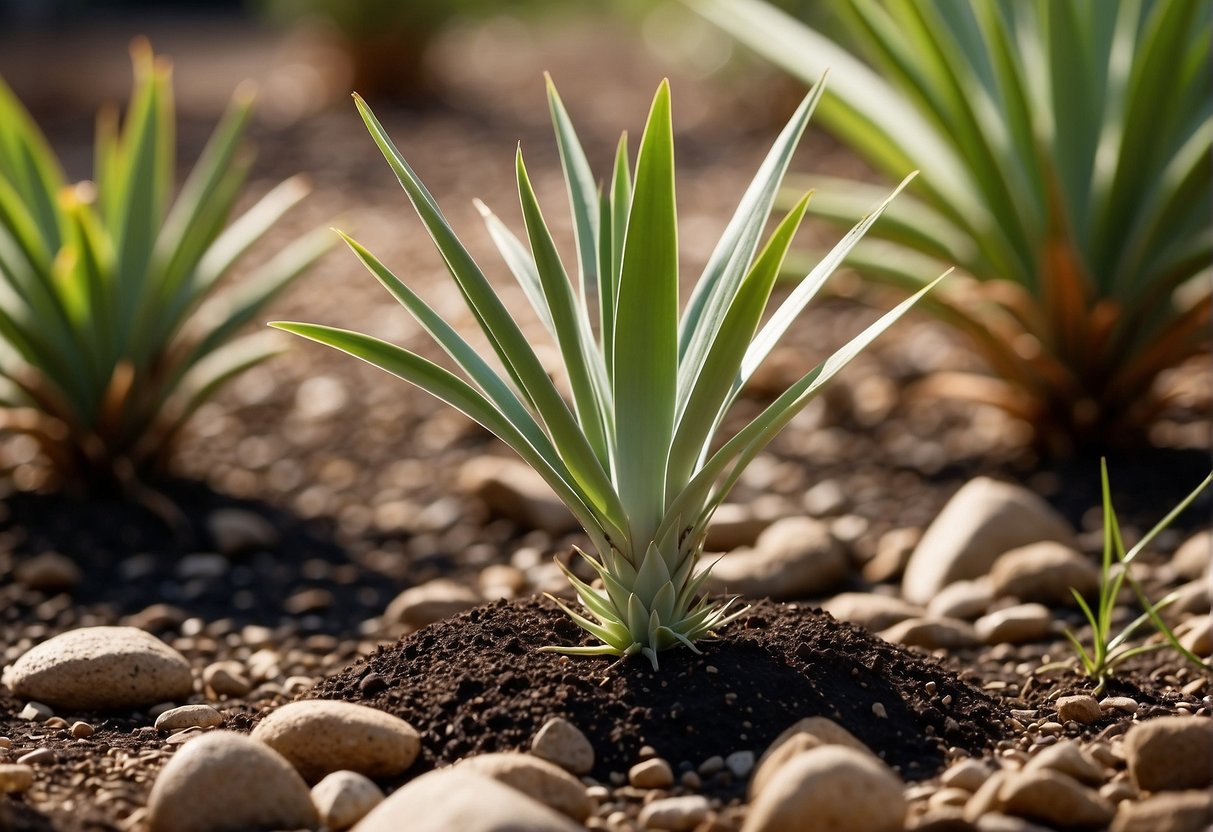
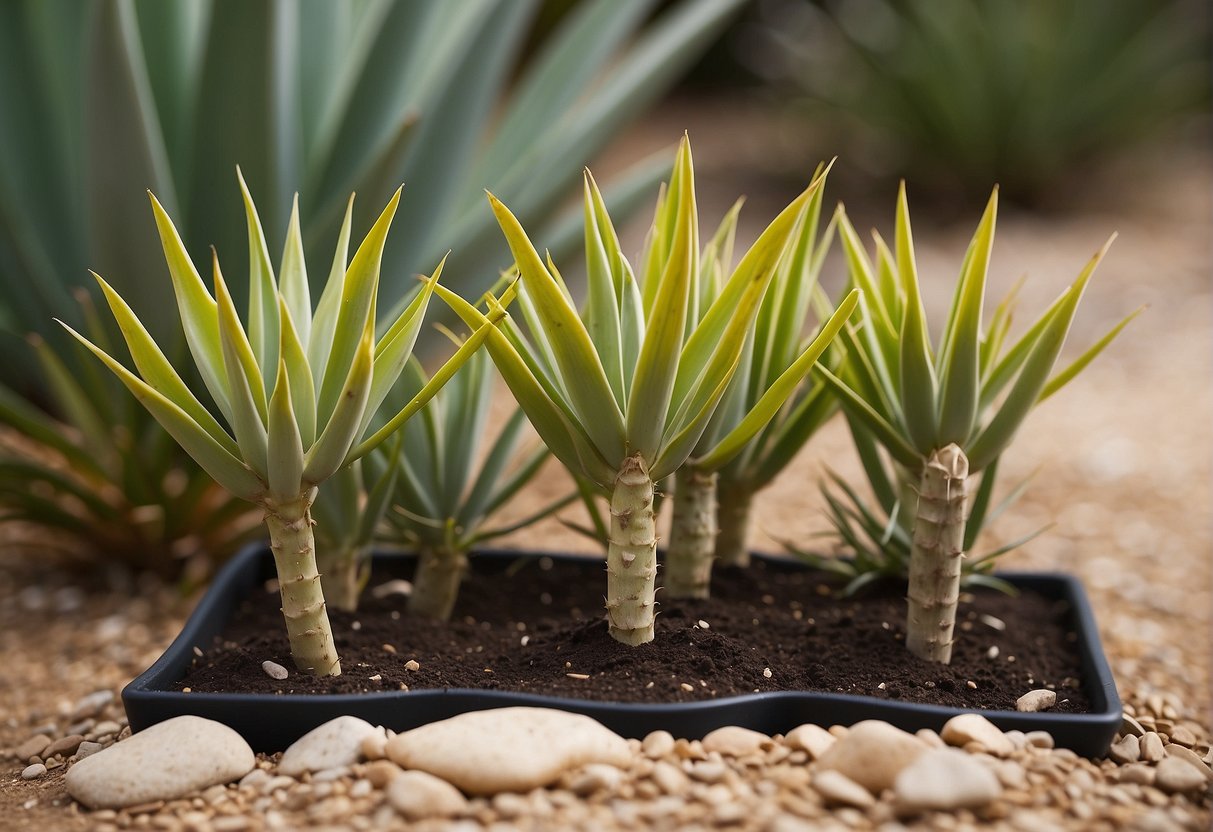
Yucca plants can be propagated through stem cuttings or seeds. Stem cuttings should be taken in the spring or summer and left to dry for a few days before planting in well-draining soil. Seeds should be planted in the spring and kept moist until they germinate.
When replanting or repotting your yucca, make sure to choose a container with drainage holes and use well-draining soil. Yucca plants prefer to be slightly root-bound, so choose a container that is only slightly larger than the root ball.
Pest and Disease Management
Yucca plants are generally hardy and resistant to pests and diseases. However, they can still be susceptible to mealybugs, scale, aphids, spider mites, and root rot.
To manage pests, use neem oil or insecticidal soap and follow the instructions carefully. For root rot, make sure that your plant is not overwatered and that the soil is well-draining. If the rot has spread too far, it may be necessary to remove the affected parts of the plant.
Overall, with proper care and maintenance, your yucca plant should thrive and provide you with years of enjoyment.
Frequently Asked Questions
What are the optimal conditions for growing a yucca plant indoors?
To grow a healthy yucca plant indoors, you should provide it with bright, indirect light and well-draining soil. Yucca plants prefer temperatures between 60-80°F (15-27°C) and can tolerate low humidity. It’s important not to overwater the plant, as yuccas are drought-tolerant and can suffer from root rot if kept too moist.
How should I care for my yucca plant during the winter months?
During the winter months, yucca plants can tolerate cooler temperatures and may require less water. It’s important to keep the soil slightly dry to prevent root rot. If your yucca plant is near a drafty window, move it to a warmer location to prevent cold damage.
What are the signs of overwatering in yucca plants, and how can I address them?
Overwatering can cause yucca leaves to turn yellow and mushy, and the plant may develop root rot. To address overwatering, reduce watering frequency and make sure the soil is well-draining. If the roots are already damaged, you may need to repot the plant in fresh soil.
How do I prune a yucca plant that has grown too large?
To prune a yucca plant, use clean, sharp pruning shears to remove any dead or damaged leaves. You can also cut back the main stem to control the size of the plant. Be sure to wear gloves, as yucca leaves have sharp edges.
Can brown leaves on a yucca plant be a sign of distress, and how should they be treated?
Brown leaves on a yucca plant can be a sign of underwatering, overwatering, or pest infestations. To treat brown leaves, identify the underlying cause and adjust your care accordingly. If the leaves are severely damaged, you can prune them off to promote new growth.
What steps should I take to revive a yucca plant that appears unhealthy?
If your yucca plant appears unhealthy, check the soil moisture level and adjust your watering schedule as needed. You can also inspect the plant for pest infestations or signs of disease. If the plant is severely damaged, you may need to prune it back and repot it in fresh soil.
Hi Lovelies ! I made this blog to share my tips about Home Improvement, Children, Pets, Food, Gadgets, Automotive, Health & Beauty, and ways to be frugal while maintaining a natural lifestyle. Interested to be a Guest Blogger on my website? Please email me at: [email protected]